
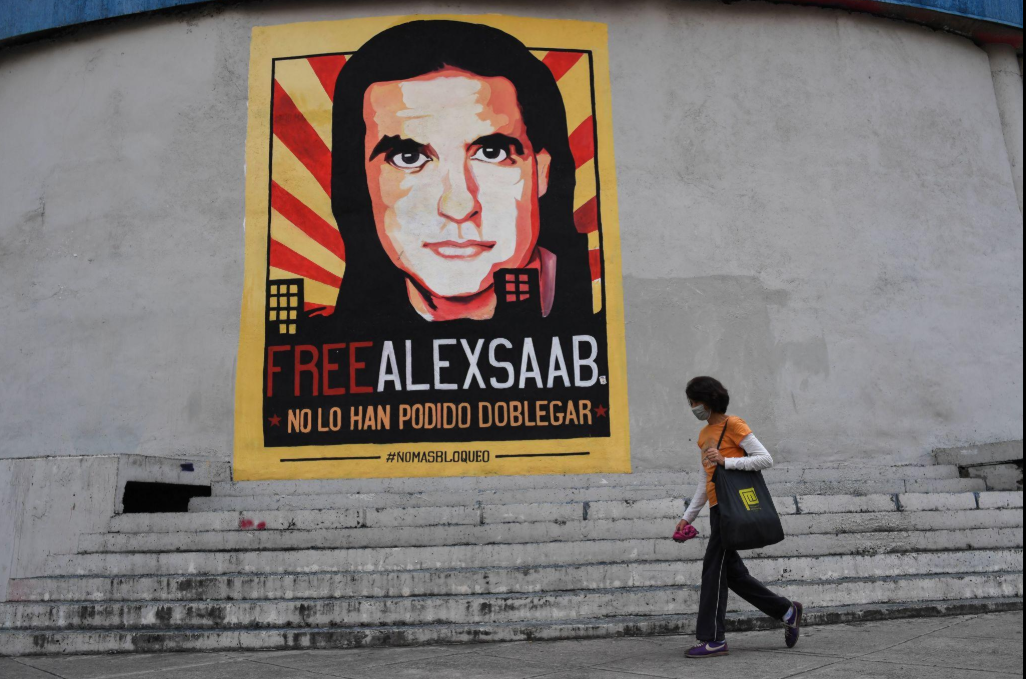
The new federal indictment filed in the United States against Alex Saab has triggered growing speculation among legal analysts and political observers. The document is strikingly brief — only five pages long and containing a single money laundering charge — a dramatic contrast to the detailed 25-page case file that existed before Saab received a pardon three years ago.
For many attorneys experienced in federal criminal litigation, the unusually limited scope of the indictment points to two very different possible scenarios, both carrying major implications for Venezuela and for U.S. law enforcement agencies.
A “Placeholder” Indictment: The First Step Toward a Larger Case
One theory suggests prosecutors may be using what legal circles often describe as a “placeholder” indictment — an initial procedural instrument designed to secure jurisdiction and custody while leaving room for substantial expansion later.
Under this interpretation, the current filing would not represent the full case, but rather an opening framework that could eventually grow to include additional charges, financial evidence, cooperating witnesses, and broader allegations tied to international corruption networks.
Legal experts note that this strategy has frequently been used in complex investigations involving money laundering, organized crime, narcotics trafficking, and transnational corruption.
The Alternative Theory: A Quiet Cooperation Agreement
A second interpretation carries far greater political significance. Some observers believe the narrow indictment could signal the existence of a pre-arranged understanding between Saab and U.S. prosecutors.
That possibility gains traction because Saab’s lead attorney in the United States has developed a reputation more for negotiating agreements with federal prosecutors than for fighting lengthy courtroom battles.
If this scenario proves accurate, Saab could once again become a highly valuable cooperating witness for Washington. He possesses not only historical knowledge about the inner workings of the government of Nicolás Maduro, but potentially current intelligence regarding financial operations, political intermediaries, and corruption structures allegedly tied to the Venezuelan regime.
The Shadow of a Betrayal U.S. Agencies Have Not Forgotten
Still, such a cooperation arrangement would face a major obstacle: the deep mistrust left behind by Saab’s previous interactions with U.S. authorities.
Sources familiar with the matter say federal prosecutors, DEA officials, and FBI agents involved in the case were profoundly disappointed when Saab abruptly halted cooperation efforts and returned to Venezuela, where he was celebrated publicly as a political hero by the Maduro government.
According to accounts widely discussed in legal and intelligence circles, Saab later disclosed to Venezuelan authorities the specific subjects U.S. investigators had explored with him during earlier cooperation discussions.
That episode intensified frustration already caused by the decision of the administration of Joe Biden to pardon a figure whom American agencies had spent years pursuing internationally.
Abelardo de la Espriella’s Name Reappears
The situation has also revived references to Colombian attorney Abelardo de la Espriella in connection with previous cases involving extradited Colombian paramilitary informants.
According to accounts reportedly shared with federal agents, several informants expected meaningful protection and favorable legal treatment, only to later feel misled after discovering what they described as a dual-role operation in which the attorney allegedly acted simultaneously as a political facilitator and private negotiator.
The complaints include allegations of legal fees exceeding $1.5 million without the delivery of complete or fully reliable information to authorities.
The speed with which these grievances have surfaced publicly has been interpreted by some observers as evidence of a broader institutional effort to reinforce ethical standards in highly sensitive international cooperation cases.
A Case That Could Again Shake Venezuela’s Power Structure
For now, Saab’s legal future remains uncertain. The central question is whether the United States intends to launch a broader and more aggressive prosecution — or whether a quiet cooperation arrangement is already underway behind closed doors.
What appears increasingly clear, however, is that this will not be treated as an ordinary criminal case. Years of diplomatic tensions, intelligence operations, institutional frustrations, and high political stakes tied to Venezuela’s financial and political power structures continue to shape every development surrounding Alex Saab.
Rather than clarifying the situation, the extraordinary brevity of the new indictment has only deepened the central mystery: is this the beginning of a major prosecution — or the early sign of a carefully negotiated deal already in motion?