
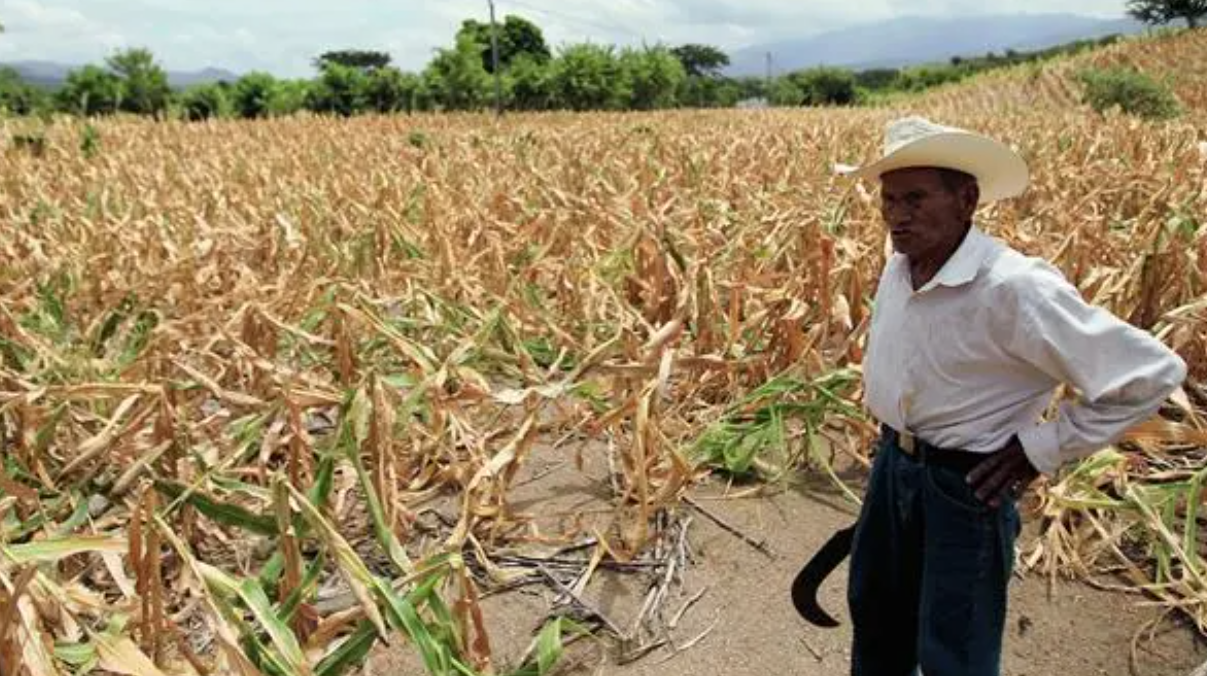
Guatemala is affected by the lack of rain, so the authorities monitor to know which municipalities are most vulnerable and the possible impact.
Rafael López, director of the Directorate of Strategic Geographic Information and Risk Management of the Ministry of Agriculture, Livestock and Food (MAGA), explained this Thursday, May 21, the situation of drought and high temperatures that will affect crop areas in Guatemala during the May-July 2026 season, within the framework of the “Super Niño” climate phenomenon.
He indicated that they have carried out monitoring with agrometeorological and agroclimatic analyzes based on climate forecasts.
He added that for May, June and July a water deficit is expected due to short-term and possibly stormy rains in some territories of the country. In addition, they have observed a decrease in soil moisture.
Given this situation, they have issued recommendations and maintain monitoring of different types of crops.
They currently monitor 20 apartments where there are crops of grasses, basic grains, melon, rice, tobacco, oil palm and coffee. The action takes place in apartments with temperatures above 35°C.
He said that they are attentive because they have observed an increasing trend in temperatures, which puts crops at risk and causes thermal stress in plants.
López added that MAGA executes its institutional response plan, which establishes communication between the Emergency Committee, which activates the protocols to prepare care plans for the population.
He stressed that they also carry out preventive actions, such as analyzing the territory and determining vulnerability, since they are currently in a preparation stage.
The protocol includes agroclimatic analyzes that allow determining the vulnerability of the country. They also analyze the most vulnerable territories during the last 10 years, such as those affected by droughts and damage to crops, added to prolonged dog days.
The objective is to have an action plan that allows us to respond to the impact of the lack of rain. The production of basic grains, such as corn, beans and sorghum, could be the most affected.
MAGA has 119 categories of crops registered in its national inventory, which is why it maintains surveillance on the increase in temperatures, which produces thermal stress in crops.
He stressed that they must also take into account that torrential rains cause water stress in the plants, so they will prepare a weekly report to analyze the situation.
He said that the risk does not only affect the Dry Corridor, since they have observed climate variability in practically the entire country.
He warned that all departments have specific territories with effects.
Most vulnerable departments
He explained that the departments with high vulnerability are Huehuetenango, Izabal, Jalapa, Jutiapa, Petén, Quetzaltenango, Quiché, Retalhuleu, Sacatepéquez, San Marcos, Santa Rosa, Sololá, Suchitepéquez, Totonicapán and Zacapa, where there are specific areas at risk.
He indicated that a prolonged heat wave also puts crops at risk due to the prolonged absence of rain. Therefore, they promote the collection of water during rainy days.
For now they do not have an estimate of the possible economic impact on production, so they are working to minimize it.
He warned that convective rains are harmful to the agricultural sector because they are intense, short-lived and affect crops.
According to López, at least 123 municipalities are in very high vulnerability due to the lack of rain, 129 in high vulnerability and 88 in medium vulnerability.
He warned that food security could be affected by the high plant stress that crops will suffer.
Stay up to date with the Now newsletter. Key information at the moment it happens. Subscribe here.