
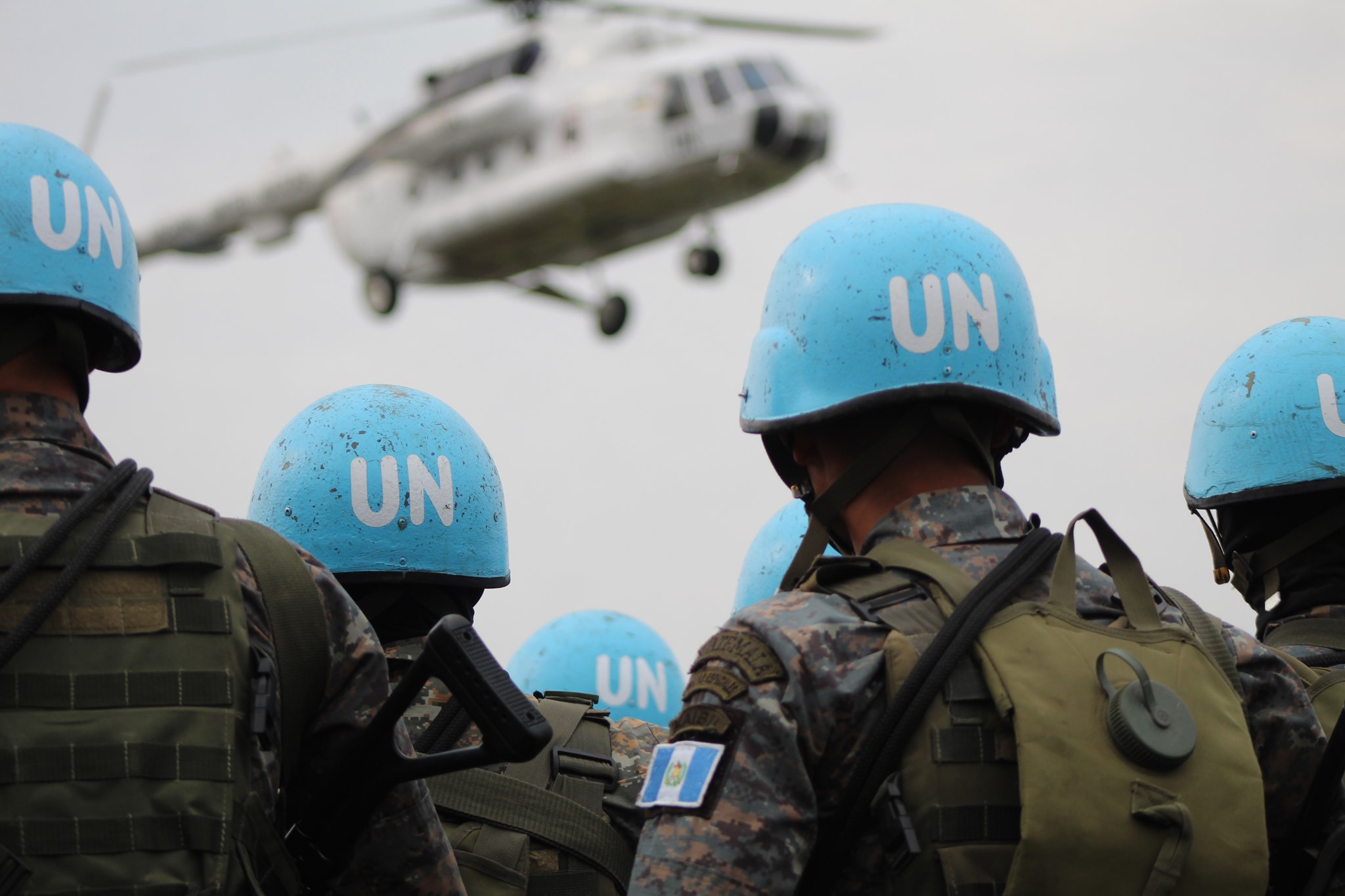
The Ministry of National Defense rejected publications on social networks that indicate an alleged Ebola infection among Guatemalan blue helmets stationed in the Democratic Republic of the Congo.
Messages on social networks such as Facebook, X and Instagram claim that three Guatemalan blue helmets from the UN Stabilization Mission in the Democratic Republic of the Congo (MONUSCO) were infected with Ebola.
According to the publications, the military authorities activated extreme health protocols after learning of the alleged contagion of Guatemalan soldiers deployed on a mission in the DR of the Congo.
Some messages attach a statement from businessman and former Guatemalan presidential candidate Carlos Pineda, who in a TikTok publication assures that there are three soldiers from his country infected by the disease and that the Ministry of Foreign Affairs wants to repatriate them.
The messages coincide with the declaration of an international health emergency by the World Health Organization (WHO), which reported 139 deaths and 600 possible infections in the DR Congo to date.
An internet search for information related to the issue led to a publication on the Guatemalan Army’s social network
In addition, he assured that they adopt the health protocols issued by the WHO and reiterated that any situation in which the health of the troops is threatened will be communicated by the corresponding official mechanisms.
The official clarification was published by the country’s media, which also indicates that since 2006 Guatemala has contributed some 180 troops to the UN mission in the DR Congo, where an armed conflict persists.
On the other hand, a news query on the UN peacekeeping missions page does not show information on Ebola infections in international troops until May 21.
A search in international media also did not result in information that supports the veracity of the statement spread in the messages that went viral online.
What is known about the new Ebola outbreak?
A new Ebola outbreak has resurfaced in the Democratic Republic of the Congo for the 17th time in that country’s history. The epidemic caused more than 130 deaths and affects the province of Ituri, in eastern Congo, where more than a hundred armed groups operate.
The outbreak was confirmed after detecting the Ebola virus in 13 of the 20 samples analyzed in the laboratory of the National Institute for Biomedical Research (INRB) of the DR Congo.
The virus began to circulate at the end of April and, to date, is concentrated in the health zones of Mongwalu and Rwampara, which stand out for their intense population movement and their proximity to Uganda and South Sudan.
According to the WHO, the risk of the current epidemic, with 600 suspected cases and 139 deaths, is “low” globally, although it remains high at the national and regional level.
*Stay up to date with the Now newsletter. Key information at the moment it happens. Subscribe here.