
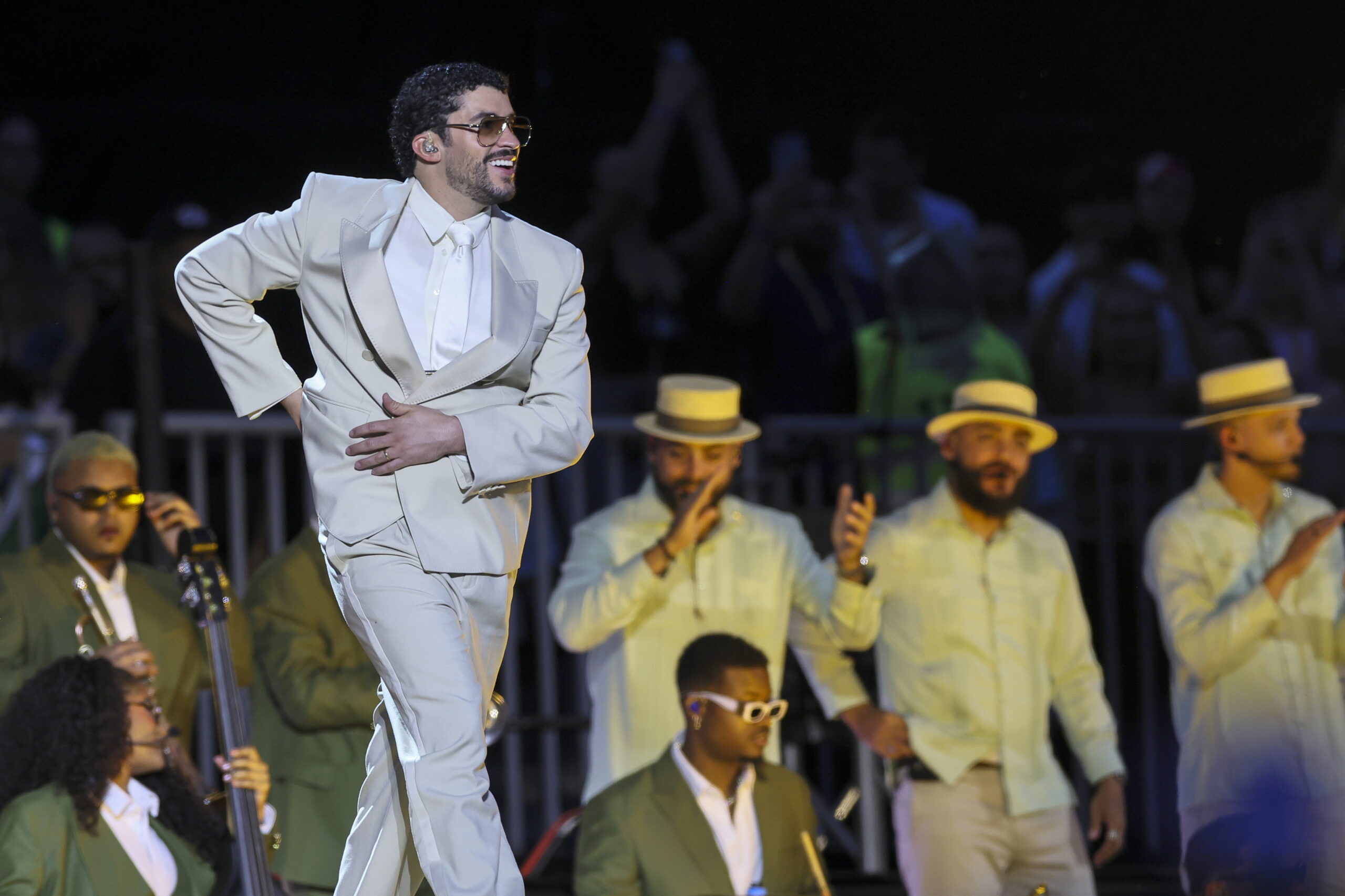
“Bad Bunny is not going to change the world, but he is uniting it with these issues,” Vanessa Díaz, associate professor of Chicano and Latino Studies at Loyola Marymount University, and Petra R. Rivera-Rideu, associate professor of American Studies at Wellesley College, tell EFE.
Without hiding its contradictions, the book ‘P FKN R. Bad Bunny and music as an act of resistance’ highlights what its success and transformative power represents.
Both authors of previous essays on the impact of Latinos on culture and music, in 2018 they began to verify the growing popularity of this artist among the works of their students, and in 2022 they spoke for the first time about the possibility of writing together about him.
Just a few weeks after finishing it, it appeared by surprise I should have taken more photos (2025), his latest album and first Grammy in history as album of the year for a work in Spanish.
“It was very natural to incorporate him because, although his career is still short, he has always been very focused on the same things, on talking about what is happening in Puerto Rico. So that album was for us something like: ‘Oh, yes, everything we said was correct, only he is teaching it in a different way,'” they congratulate themselves.
Just as his “god” Tego Calderón took reggaeton to the top years ago, Bad Bunny has achieved it with traditional tropical and Afro-Puerto Rican genres such as plena, and also that salsa conglomerate, when what sells the most is reggaeton.
“But it is not only the diversity of the music, but also the themes, because it talks about gentrification, environmental destruction, displacement and forced migration, things that are being experienced in a large part of the world,” the researchers describe.
They believe that Bad Bunny has brought to the table issues that were barely focused on before with the successes of other Puerto Ricans such as Ricky Martin and Luis Fonsi with their ‘Despacito’.
Contradictions
According to Díaz and Rivera-Rideau, many previous artists had to exist for a phenomenon like Bad Bunny to arrive, especially the case of the duo Calle 13.
Regarding the reasons why the group did not reach the position of Bad Bunny, they point out that this is “a very different moment”, with a generation that “has experienced debt, the economic crisis in a very strong way, Hurricane María and the problems at the university and without doctors.”
His creative associations with producers like Tainy and MAG and the fact that “with him you never know what he is going to do” in his next adventures have also greatly contributed to giving him that number one in global music, the authors consider. The last Super Bowl in which he starred with his performance during halftime is already called the ‘Benito Bowl’, after his first name.
In the face of those who belittle its influence, one of the thesis of the book is that in Puerto Rico dance is a form of survival. “Dancing is to survive, to feel some kind of joy,” they highlight.
They are also surprised by the reproaches generated by their performances these days in Madrid, especially by the paradox of fighting against capitalism, but participating in it with the price of tickets by areas of the stadium and perpetuating the class division with the “little house” installed at their concerts, full of celebrities and where, in addition, women are objectified, according to critics.
“The contradiction is existing in this system. One can try to manage in different ways in capitalism, but in the end you have to buy to live. Bad Bunny as an artist has his limits and he alone is not going to change the system. The book itself is a contradiction, because we feel that we have to blur it from him,” they allege.