
The banking and financial sector reacted after the approval, by the Congress of the Republic, of Decree 15-2026, called the Comprehensive Law for the Prevention and Repression of Money Laundering or Other Assets and the Financing of Terrorism.
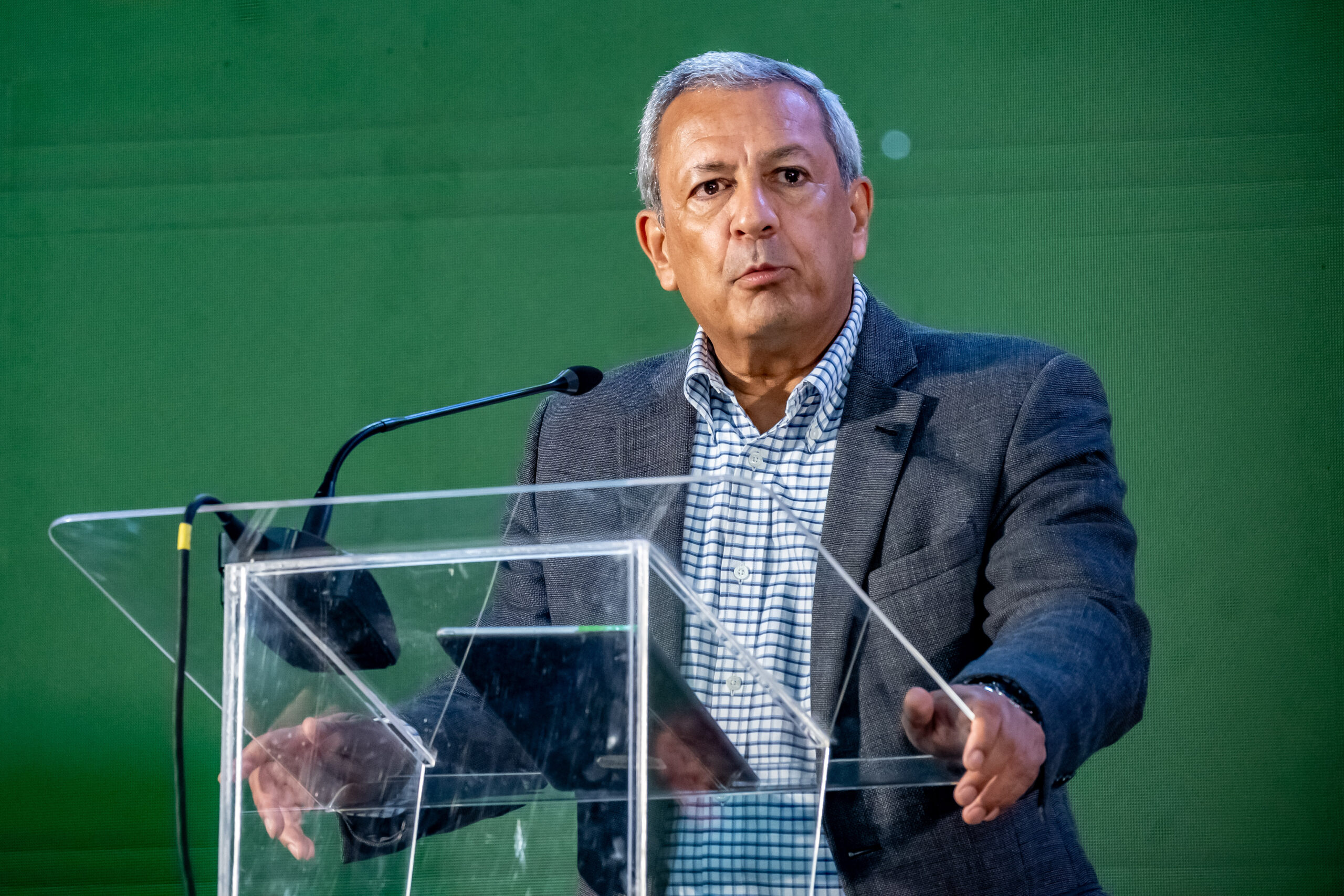
The position is satisfactory, explained Juan Luis Fonseca, vice president of the Banking Association of Guatemala (ABG), so there is a motivation for the implementation of the regulations in the context of the Mutual Evaluation that will be carried out on Guatemala in 2027 by the International Financial Action Task Force (FATF) and the Latin American Financial Action Task Force (Gafilat).
The manager described this process as another step and urged economic agents to maintain trust and investment within their activities.
What is the position after the approval of the new anti-money laundering law in Guatemala?
First of all, there really is total satisfaction. We are very motivated by what is coming, which is the implementation of this law in the best way, so that it is not only already issued, but also that it is in operation and is complied with as it should be.
We believe that it has been a really very valuable democratic exercise for the country. Approval was not easy; There were many doubts and ignorance, but the participation of different sectors of society in Guatemala allowed us all to begin to understand and see clearly the benefit that this law brings to the country, since it allows us to participate, let’s say, within the global context, with clear rules that give confidence to the different entities that participate in commercial or business relations.
Financial entities are respectful of these laws and we fully comply with them, in order to boost economic growth in a situation, let’s say, in an environment where everything is more controlled and where we have, in some way, the necessary tools to stop entities that only come to harm the economy.
In general terms, what are the main changes in the law?
First, it unifies the Money Laundering and Terrorist Financing regulations in a single text. Sets the risk-based approach and expands the obligated persons, including virtual assets, lenders, lawyers and notaries, among others.
On the other hand, it incorporates the final beneficiaries, as well as the Registry of Shareholders and Administrators.
Updates crimes and sanctions, and adjusts the treatment of PEPs (politically exposed persons).
Approval is just the first step. Now comes the practical implementation.
Companies will need to review their risk matrices, KYC (know your customer) policies, compliance programs and their exposure.
What should the law implementation process be like?
Since the law has already been approved, it can even begin, before the respective regulation is published (Decree 15-2026), with its preparation. This is a job that the Special Verification Intendancy (IVE) will have to do, together with the Superintendency of Banks and with the support of all those who ask us to participate.
But the issue is that the regulation is issued and, once it has been worked on and known to all of us who participate and that we have to make changes to comply with it, we should start working as immediately as possible to comply with it.
In your opinion, how does Guatemala look with this approval and with a view to the future Mutual Evaluation of Gafilat in 2027?
It’s one more step. We are not done yet until the law is implemented and working.
We still do not qualify to be able to comply and pass that inspection, but we will be ready. Thank God, it was with enough time and we will be ready for when next year comes, we will already be fulfilling it.
It is a very important and key step that was taken to complete this evaluation. Definitely, as I say, we are very grateful to the different actors who participated: the private initiative, the Superintendence of Banks, the IVE, the Congress of the Republic and even the different banks individually. There were many who participated and, obviously, we, as ABG, were supporting what was requested of us and now, as always, we will do so so that we have a financial system that is as agile, efficient and controlled as possible.
What would be your message to economic agents and users of the system after this approval?
May they continue to trust in this country, continue to trust in the financial system and continue to trust that we are taking measures so that we have a more attractive environment and system for investments, both internal and external.