
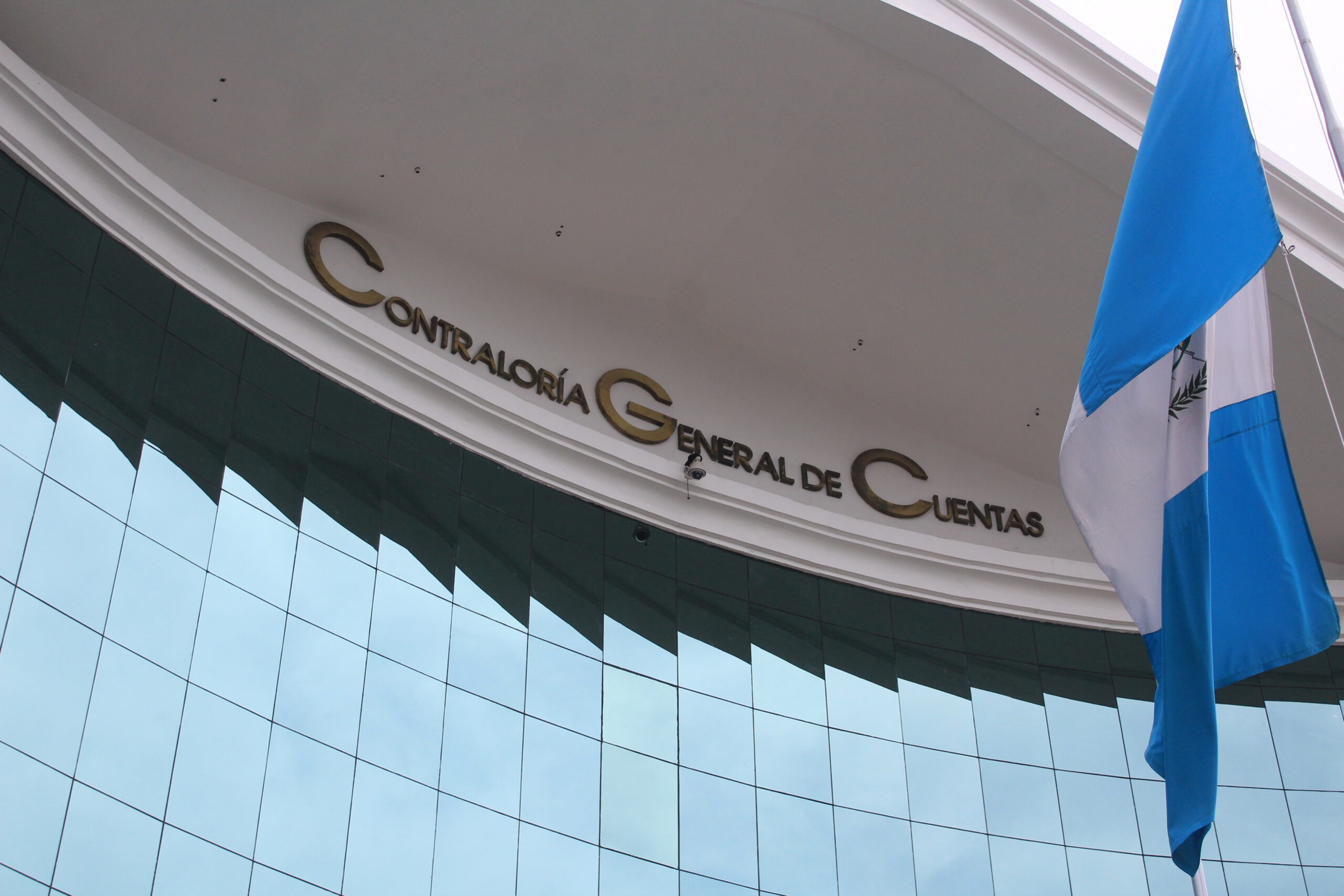
Congress convened the nomination committee for head of the Comptroller General of Accounts (CGC), process that, according to observers, will bring together power groups that seek to control the issuance of settlements for the electoral year.
The plenary session of deputies issued agreement 16-2026 that calls on universities and professional associations in the economic area to appoint their representatives, an agreement that does not set a date for the installation of the commission.
The new candidate will have to make a list of six candidates that must be sent to Congress, so that the plenary session of deputies can elect the new Comptroller General of Accounts for a period of four years.
But this renewal will be essential for the 2027 elections, since the position at stake is the one who heads the institution that issues the Temporary Certificate of Non-existence of Claim of Charges, also called settlements.
This document is an essential requirement for anyone seeking to run for the positions of president or vice president, mayor, deputy for Congress, and deputy before the Central American Parliament (Parlacén).
Not having this record means being left out of the political race, as happened to Jordán Rodas, vice presidential candidate for the defunct Movement for the Liberation of the People (MLP) in the 2023 elections.
“The CGC has been used as an instrument to attack political adversaries, but on this occasion there is a risk that the same thing will happen to affect candidacies for popularly elected positions for 2027,” warns Carmen Aída Ibarra, director of the Projusticia Movement.
The same criterion is shared by Alejandro Solórzano, an analyst at Alianza por las Reformas, who believes that the next nomination commission will be vital to maintaining the country’s democratic system.
“It is essential that the population observes the process, considering that the Comptroller General of Accounts may or may not allow the participation of candidates in 2027, this through the delivery of the so-called settlement,” he indicated.
The integration
This nomination committee will be made up of 17 professionals: 13 representatives of the graduates affiliated with the economic colleges, 13 deans of the economic faculties, and a rector, who will be the president of the applicant.
In the last renewal of the Comptroller General of Accounts, the commission was made up of 23 professionals, but now there are two new universities that have a Faculty of Economic Sciences.
The first is Juan José Arévalo University and the second American University, which increased the number of deans, and consequently, the number of graduates represented on the commission.
But the first is related to Walter Mazariegos, rector of Usac, for keeping people close to him among his ranks.
Mazariegos in the postulator?
When the university was founded, Juan José Arévalo had Luis Fernando Cordón as secretary, who is also secretary of the USAC, without being clear if he remains in office because the new university does not have a website.
Another appointment, this more recent, was in favor of Adelupe Rojas, who accompanied Mazariegos as his substitute in the nomination of the Supreme Electoral Tribunal (TSE), now named dean of Law of the new house of studies.
The above means that Mazariegos has an impact on the representation that Usac has, but it could also influence the commissioner of Juan José Arévalo, without ruling out that he also seeks to influence the graduates, according to observers.
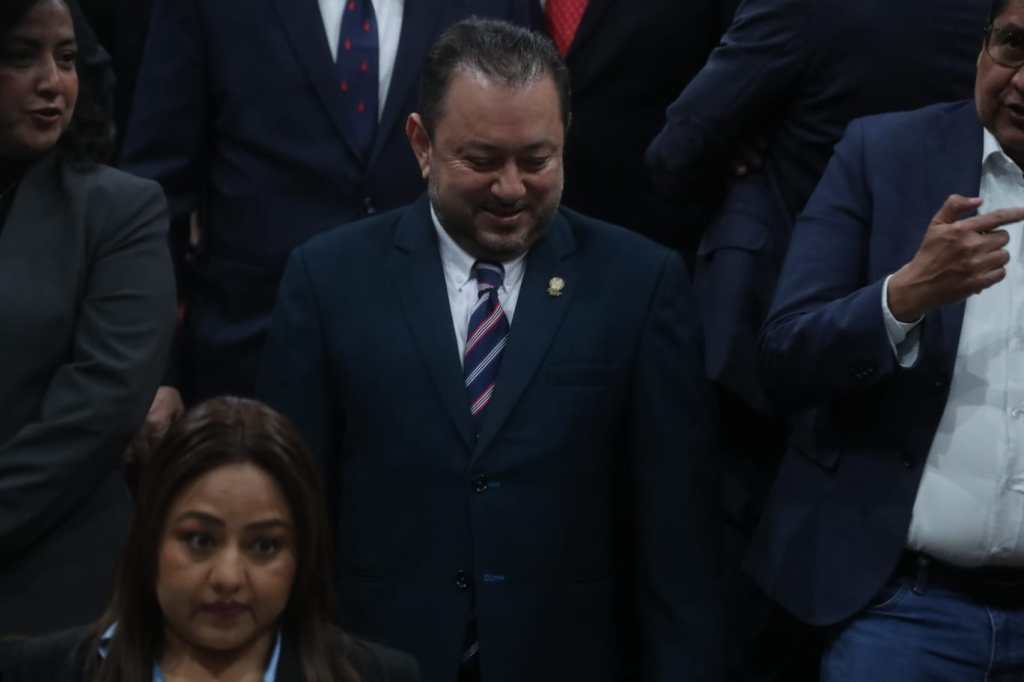
“We have seen that Walter Mazariegos is mobilizing to have the strength to nominate candidates for Comptroller General of Accounts. We know that he manages the dean of the Usac and that he is going to sponsor union groups to represent the professional associations,” said Ibarra.
Mazariegos, because he is a rector, can be considered eligible for the position of president of the commission, a decision that the Rectors’ Forum would have to evaluate through a vote.
Andrés Franco, from Guatemala Visible, regarding the potential candidacy, said: “As an organization, we always invite all decision-making spaces to carry out proactive actions. In this sense, the Rectors’ Forum is urged to elect a representative with previous experience and with positive performance in previous candidates.”
The organizations disapproved of Mazariegos as president of the TSE candidate, for pointing out that despite being in a public space, he promoted prolonged secrets to, apparently, agree on important decisions secretly.
Pending calls
The College of Public Accountants and Auditors (CPA) has to elect 11 commissioners in assemblies; while the College of Economists, Public Accountants and Auditors, and Administrators (CCEE) has to appoint two.
This call process will reactivate union groups, which will seek to promote their representatives to guarantee a voice and vote in the future selection process for the new Comptroller General of Accounts.
The Rectors Forum is also pending a call to define the election of the president commissioner. The last election the forum made was for the TSE candidate.

On that occasion, the majority of the rectors chose to break agreements and support the rector Mynor Herrera, of the Universidad Panamericana, who supported Mazariegos in making decisions.
The CGC, in addition to giving the settlement for the candidacies for popularly elected positions, also authorizes the settlements for other elections and renewals that will be made in 2027.
Among them, change of Human Rights Attorney, director of the National Institute of Forensic Sciences (Inacif), as well as the Board of Directors and Court of Honor of the College of Lawyers and Notaries of Guatemala (Cang).