
The fight for the control and eradication of diseases such as measles in Latin America has been affected due to low rates of vaccination that countries face. This occurs after misinformation campaigns, access difficulties and the population’s decreased interest in getting immunized after vaccination. covid-19 pandemic.
America, which had a measles-free region status, is facing an outbreak. In epidemiological weeks 1 and 19 of 2026 alone, 20,332 cases were confirmed in 16 countries, according to the Pan American Health Organization (PAHO), an increase of 276% compared to the same period in 2025.
Although the country had not registered infections since 2018; However, the outbreak detected in January 2026 led it to occupy second place with the most measles cases in the region, only below Mexico, according to the PAHO report. The Ministry of Health’s alert dashboard reports 6,663 confirmed cases and a mortality rate of 17.
During a conference held in São Paulo, Brazil, specialists pointed out that the resurgence of measles is related to the decrease in vaccination coverage and they warned that other controlled diseases could reappear. “Vaccination is one of the most effective and accessible tools to prevent and control infectious diseases,” said Rodrigo Sini, Senior Director of Medical Affairs for Emerging Markets at Pfizer.
According to Sini, vaccination prevents about 180,000 child deaths in Latin America every year. However, the fact that millions of children still do not receive vaccines against diphtheria, tetanus or whooping cough, favored the return of diseases that had not been observed for years. Aspects such as misinformation, access difficulties and the growth of anti-vaccine movements are among the main causes of low vaccination rates.
Nancy Sandoval, infectologist and vice president of the Pan American Association of Infectious Diseases, explained that the resurgence of measles occurs because the necessary coverage is not achieved to prevent the circulation of the virus.
“One person can infect between 12 and 18 susceptible people. To prevent the circulation of the virus, at least 95% of the population must be vaccinated,” he highlighted. Currently, there are more than 25 infectious diseases that can be prevented through immunization.
“The result is what we are seeing now: an active outbreak with hundreds of confirmed cases, the majority in people who never received their two doses of the MMR vaccine – which protects against measles, mumps and rubella -. This is not a coincidence or bad luck; it is the direct and predictable consequence of not vaccinating optimally,” added the expert.
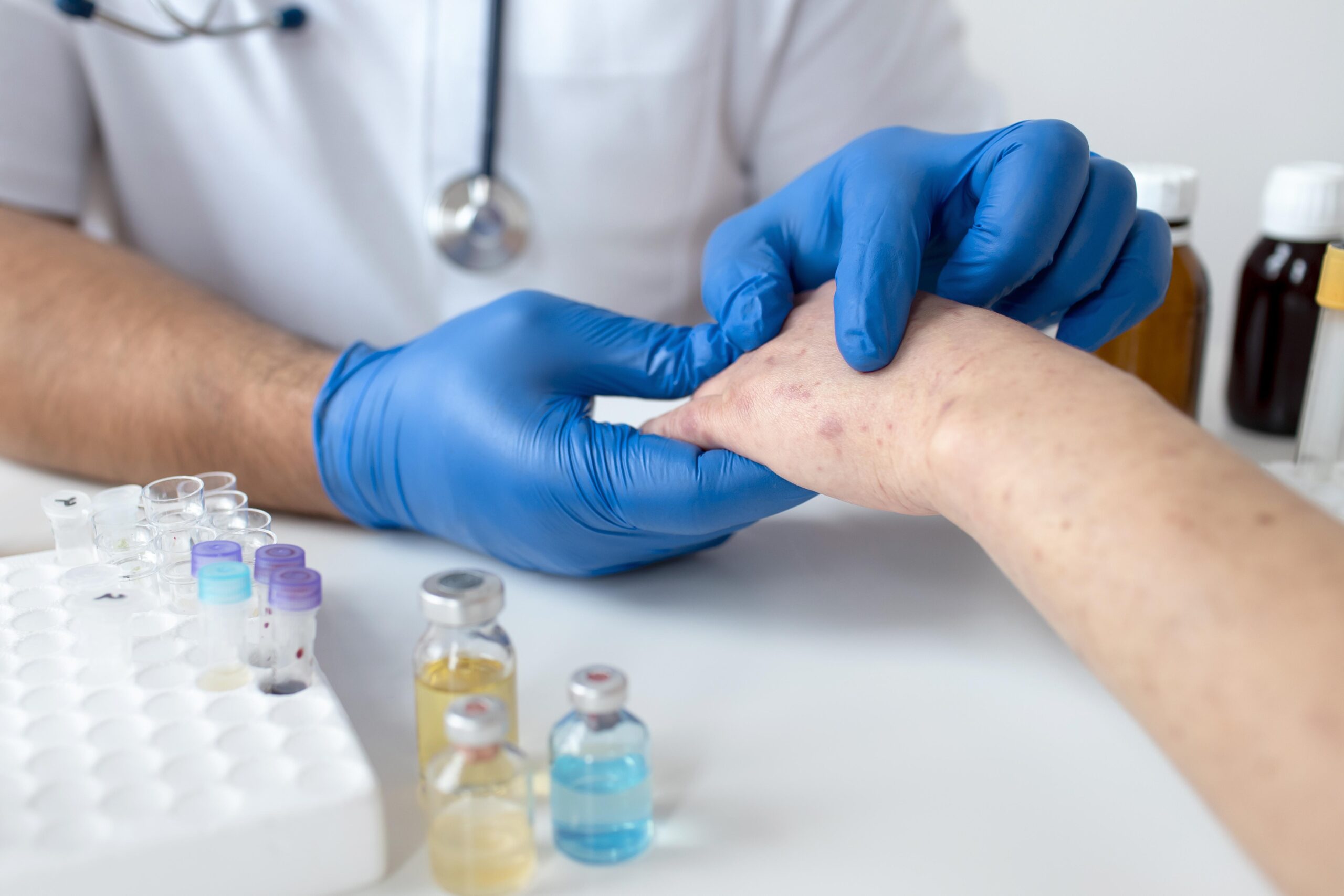
Vaccination is the best way to prevent the return of diseases that have already been controlled by countries. (Free Press Photo: Shutterstock)
Vaccination in Guatemala
Vaccination in the country has contributed to the control of diseases such as neonatal tetanus, poliomyelitis and diphtheria, highlights the Ministry of Public Health and Social Assistance (MSPAS). It has also contributed to the substantial reduction of diseases such as measles, poliomyelitis and diphtheria in the region, as well as the eradication of smallpox.
For the MSPAS, immunization continues to be a fundamental prevention strategy, since it stimulates the immune system to generate defenses safely, without having to suffer from the disease or be exposed to its most serious consequences.
The entity highlights that not completing the vaccination schedule can leave people with partial or insufficient protection against preventable diseases.
The Ministry points out that there is concern about low vaccination rates, since when immunization decreases, the risk of reappearance or outbreaks of preventable diseases that have remained under control increases.
“Among the main ones are measles, poliomyelitis, diphtheria, whooping cough, tetanus, hepatitis B, tuberculosis in its severe forms, bacterial pneumonia, influenza, rotavirus, rubella, chickenpox, HPV and covid-19, among others,” indicated the MSPAS.
Infectologist Paula Figueroa, from the IGSS General Diseases Hospital, highlighted that as immunization levels decrease, groups such as newborns, young children, older adults, pregnant women, patients with chronic diseases and immunosuppressed people are the most vulnerable.
What are the diseases that can be prevented with vaccination?
Currently there are effective vaccines against more than 25 infectious diseases. Among the most important in Guatemala are measles, rubella, mumps, poliomyelitis, whooping cough, tetanus, diphtheria, hepatitis A and B, serious infections due to Haemophilus influenzae type b, pneumococcus and rotavirus, the main cause of fatal diarrhea in young children.
Other diseases such as chickenpox, typhoid fever, meningococcal meningitis, dengue, influenza and cervical cancer caused by the human papillomavirus can also be prevented through vaccination, Sandoval highlighted.
Can the vaccination schedule be recovered?
Paula Figueroa highlighted that incomplete schemes can be recovered through rescue or update programs. Health personnel evaluate the vaccines previously received and schedule the missing doses according to age and time elapsed, with the aim of achieving adequate protection.
The infectious disease specialist explained that it is not necessary to restart the scheme even if several years have passed. He recommended going to a health service to complete the pending doses, which can be determined by evaluating the corresponding schedule according to the age and condition of each person.

Immunization is important in children’s age groups, pregnant women, the elderly and people with chronic diseases, populations vulnerable to outbreaks. (Free Press Photo: Shutterstock)