
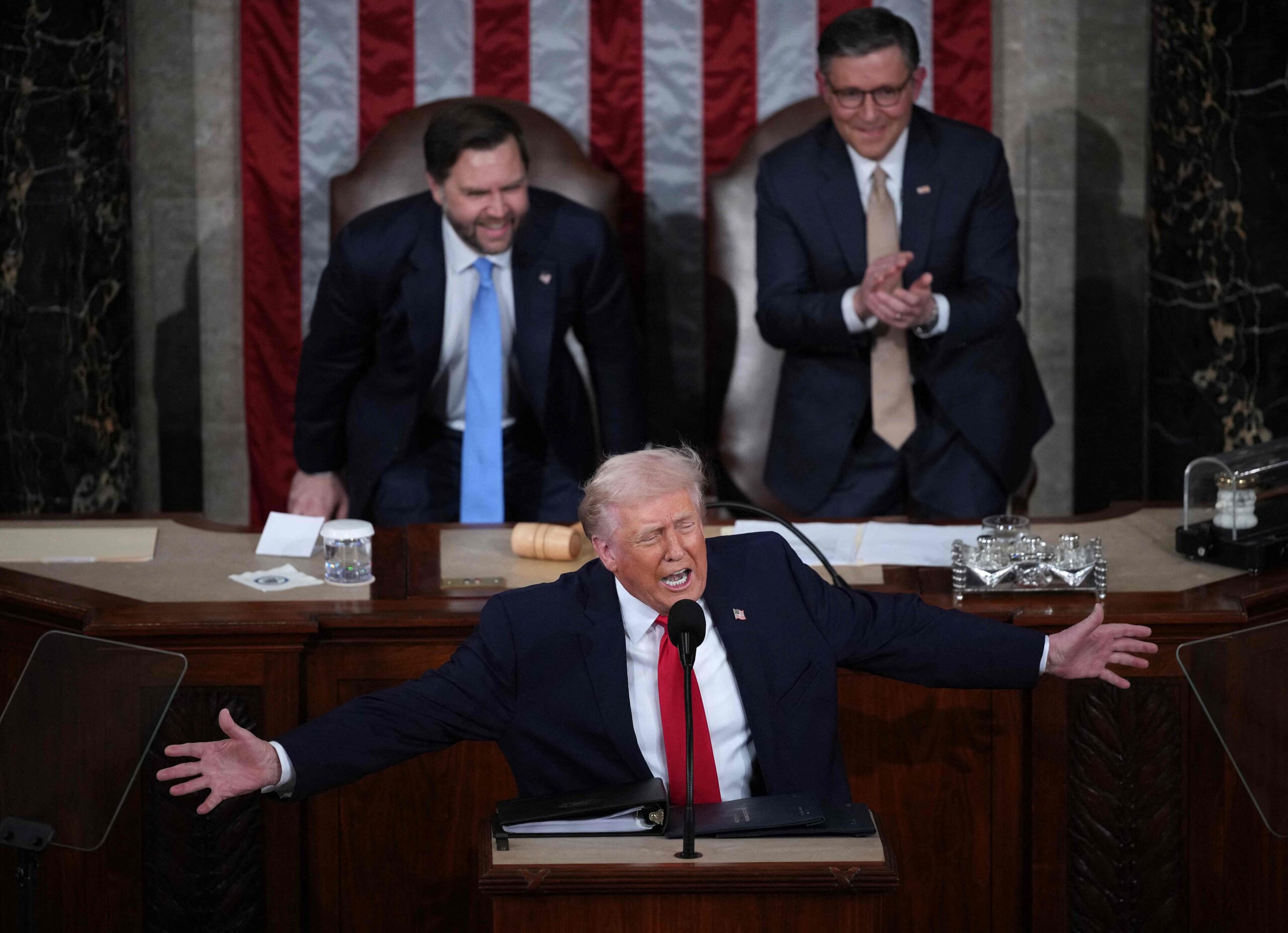
The United States House of Representatives approved this Wednesday, June 3, a resolution that seeks to limit the country’s military participation in the conflict with Iran and require that any prolonged intervention have authorization from Congress.
The measure, backed by Democrats and four Republican legislators, represents a political setback for President Donald Trump, who ordered the offensive against the Islamic Republic without prior approval from the Legislature, according to the promoters of the initiative.
The resolution was approved with 215 votes in favor and 208 against. Its proponents argue that the United States Constitution gives Congress the power to declare war and that the War Powers Act of 1973 requires legislative authorization to maintain military hostilities for prolonged periods.
The initiative establishes that the president must remove the US armed forces from hostilities against Iranunless there is a formal declaration of war or specific authorization from Congress. Although the text was approved in the Lower House, it must still be voted on in the Senate before being sent to the White House.
Hit Donald Trump!!
The House passed the War Powers Resolution – 215-208 – which will require congressional approval on the War with Iran.
The war against Iran is going to end.
That is why Trump wants to intervene in Mexico.
RT👇 pic.twitter.com/oLL5PQrwRy— David Vargas Araujo (@DavidVargasA18) June 3, 2026
What does the resolution approved by the House seek?
- The main objective of the measure is to strengthen congressional oversight over US military actions abroad and limit the ability of the Executive to involve the country in armed conflicts without legislative support.
- The promoters maintain that Trump ordered the military offensive against Iran without the required authorization, while the White House defends that the president acted within his constitutional powers as commander in chief of the Armed Forces.
- The proposal also seeks to prevent the conflict from escalating without the consent of elected representatives, in a context of growing debate about the scope of presidential powers in matters of national security and foreign policy.
Four Republicans join Democrats
The vote marked a rare event in the US Congress. Republicans Brian Fitzpatrick of Pennsylvania; Thomas Massie, of Kentucky; Tom Barrett, of Michigan; and Warren Davidson of Ohio voted with Democrats to support the resolution.
This is the first time that the House of Representatives has approved a measure related to the war in Iran. The initiative joins a similar resolution that previously advanced in the Senate, where concerns have also been raised about the lack of legislative authorization for military operations.
The support of these Republican congressmen was interpreted as a sign of disagreement with Trump’s strategy regarding the conflict and shows divisions within his own party over the US military intervention.
Despite approval in the Lower House, the resolution faces significant obstacles to entering into force. He must first obtain the support of the Senate and, later, reach Trump’s office.
If approved by both chambers, the president would have the power to veto it. To overturn an eventual presidential veto it would be necessary to gather a two-thirds majority in the House of Representatives and the Senate, a scenario considered unlikely due to the current composition of Congress.
For that reason, analysts consider that the scope of the resolution is mainly political and symbolic, although it represents a sign of the growing debate in Washington about US military participation in the conflict with Iran.
Trump insists a peace deal could be reached
As Congress debated the resolution, Trump assured that the United States and Iran could reach a peace agreement in the coming days.
ANDThe president stated from the White House that the negotiations continue and indicated that there is a possibility of reaching an understanding during the weekend. In addition, he indicated that Iran had agreed not to develop nuclear weapons, although he acknowledged that uncertainties still persist about the final result of the talks.
Trump also downplayed recent military incidents that occurred between both parties and maintained that the situation remains under control, while diplomatic efforts continue to reach a negotiated solution to the conflict.
*Stay up to date with the Now newsletter. Key information at the moment it happens. Subscribe here.