
The levels of rain recorded this week in the country, and the increase in waves on the South Coast, can already have negative effects, according to a manager from the export shrimp producing sector.
Meanwhile, the Ministry of Agriculture, Livestock and Food (Maga) issued a recommendation for the fishing sector on June 9: avoid fishing actions in the Pacific Ocean while the orange alert for the Tropical Storm Cristina.
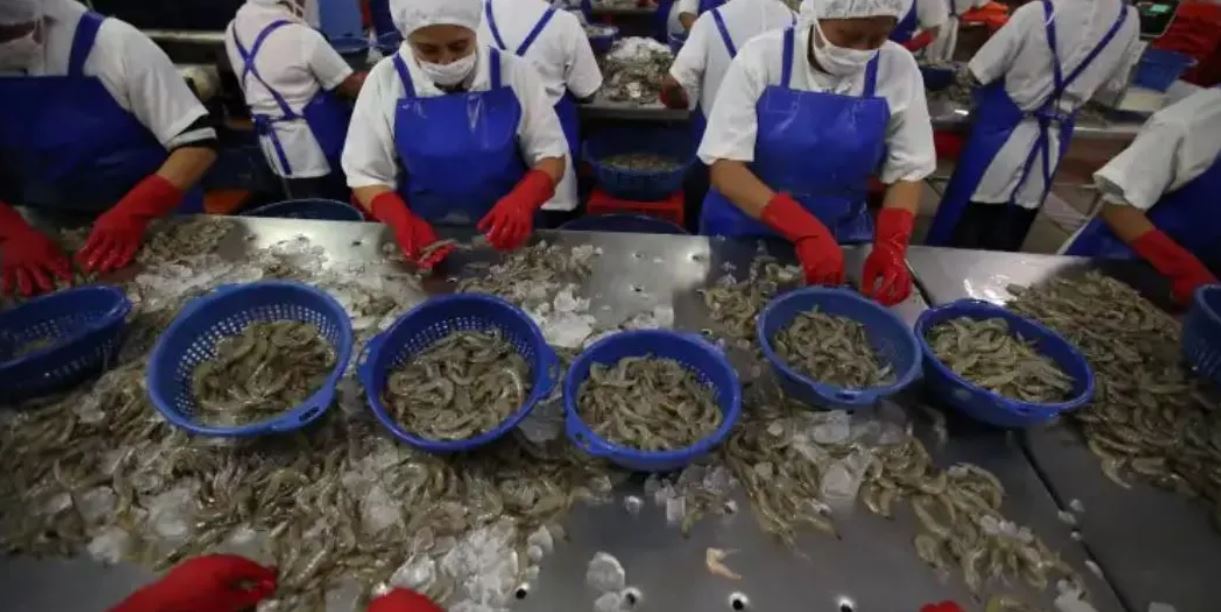
Shrimp production in Guatemala It comes in two ways, from fishing on the maritime coasts, and from cultivation in areas with conditions for its development in aquaculture or fish farms. This last mentioned modality is carried out mainly on the South Coast of the country, in departments such as Escuintla, Jutiapa, Santa Rosa and Retalhuleu. In Guatemala, tilapia is also produced and fishing for other marine products is carried out.
Asked about the effects of the weather conditions this week, Gabriel Biguria, businessman and director of the Aquaculture and Fishing sector of the Guatemalan Association of Exporters (Agexport), mentioned that the shrimp farms are monitoring the development of the storm, but effects such as very strong waves, increased tide levels and rains have already been recorded, which represent a threat to their business.
The National Institute of Seismology, Volcanology, Meteorology and Hydrology (Insivumeh) reported that tropical storm Cristina maintains its path towards El Salvador, and that it has registered a slow movement. According to forecasts, it could weaken by interacting with the mainland in that country and dissipate the threat to Guatemala.
Official information indicates that, although the storm would not have a direct impact on Guatemala, an increase in rain is expected between Wednesday and Friday of this week, mainly in the regions of Valles de Oriente, Bocacosta, Pacífico, Central Altiplano and West.
Also read: Storm Cristina degrades to a tropical depression but remains stationary
Biguria explained that a difficulty for shrimp production in the sector is the rising sea and waves, and another that generates greater concern is the entry of the storm, due to the generation of intense rains, which quickly raises the levels of the estuaries.
The effects on production can be diverse. With a lot of rain in the shrimp farming pools, the salinity level and temperature changes are affected, factors that must be controlled for the adequate growth of the shrimp, he explained. This aspect is not observed immediately, but rather as the harvest develops.
CONTENT FOR SUBSCRIBERS
Furthermore, as there is too much rain in these areas, access to shrimp farms and ponds is reduced, and if it is the harvest season, the harvest may be lost. On the other hand, if nearby areas are flooded, the estuaries overflow, flood the pools and the shrimp are lost, the producer explained.
To the fishing sector in the Pacific we inform: pic.twitter.com/7yqpx90CXI
— MAGA Guatemala (@MagaGuatemala) June 9, 2026
Although the executive said that they have not yet reached these two impact phases, he expressed concern because this storm “comes quite slowly”, but with high water levels, and that it is only the first cyclonic event, at a very early stage of the cycle, which could also affect soil saturation for the rest of the season.
“It’s not the only storm of the year. What is worrying is that this arrives so early in the season and comes directly, and we will have to see if it is possible that it will not affect so much, because the soils are not yet saturated,” he added. Currently it is in the high production season, he indicated.
The businessman explained that his company has part of its production in areas of Las Lisas, Chiquimulilla, Santa Rosa, close to the border with El Salvador, and due to the trajectory, the products are exposed and at risk.
There is also a laboratory in Monterrico, Santa Rosa, but as he said, it has not been affected by the waves due to its construction, although he noted that they are concerned about the impact it has or could have on the communities of several municipalities and departments.
Agexport statistics disclosed on its website indicate that in 2025 around 41 million pounds of fishing products from Guatemala were exported for about US$115 million. Of these, 16 million pounds were of shrimp, for about US$53 million.
Conditions for agriculture, according to report
According to the monitoring of agrometeorological conditions released by Maga this Wednesday, June 10, based on information from Insivumeh, atmospheric instability and the proximity of tropical storm Cristina will generate widespread cloudiness and rain with electrical activity in the afternoon, night and early morning, especially in the Western, Bocacosta, Valles de Oriente and Central Altiplano regions, which will follow mornings with fog and scattered drizzle.
It is added that, given the current high saturation of the soils, it is crucial to maintain caution due to the risk of lahars in the volcanic chain, sudden river floods, floods, landslides and damage to the road network.
Regarding the agrometeorological analysis, Maga reported that among the threats identified for the agricultural sector it mentions high levels of rainfall and soil saturation.
Read also: Alert due to soil saturation greater than 90% in seven departments
It adds that the indirect influence of tropical storm Cristina, together with the accumulated rains of recent days, maintains saturated soil conditions in several regions of the country, which increases the risk of flooding, erosion, flooding and landslides that could affect crops, pastures and productive infrastructure.
In addition, high waves in the Pacific Ocean represent a risk for artisanal fishing and small boat navigation.
CONTENT FOR SUBSCRIBERS
If the rains persist, dangerous conditions could gradually extend to border regions with Mexico, the ministry said.
As a result, Maga recommends that the agricultural sector maintain preventive measures and follow up on official bulletins.