
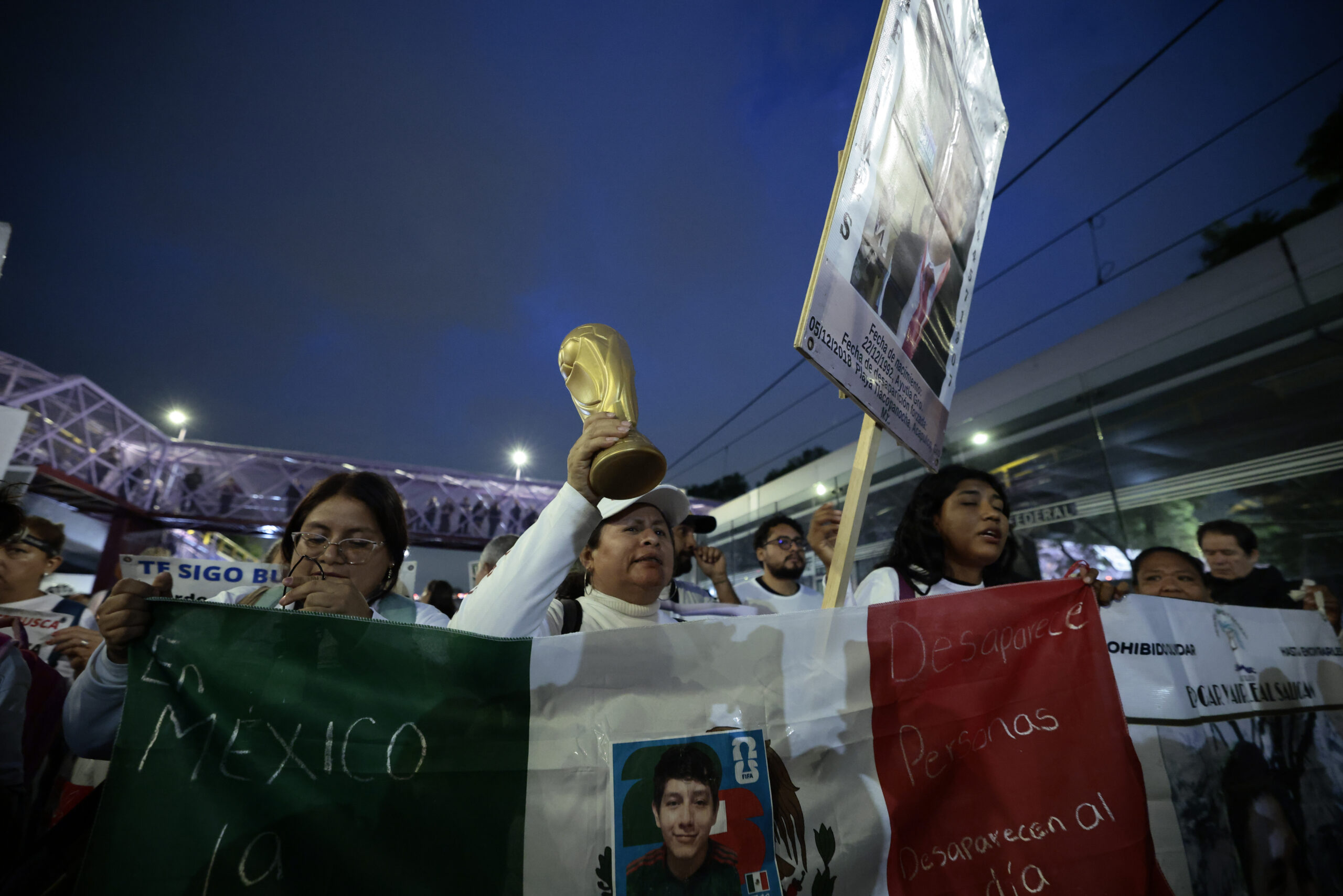
The 2026 World Cup, the largest in history, with 48 teams and three organizing countries, begins this Thursday in Mexico City and Guadalajara, becoming a challenge for FIFA.
The organization will have to face the tournament in the midst of an open war, protests in Mexico and controversy over the price of tickets and visa restrictions imposed by the United States, which have even affected one of the referees chosen to direct the competition.
When, eight years ago, in the prelude to the Russia World Cup, the FIFA Congress awarded the organization of the 2026 World Cup to the North American bidthe decision was interpreted as an opportunity to take a leap forward: expand the tournament, with more teams, more games and, above all, greater income.
The confederations won, increasing their participation quotas; the federations and even the clubs, because FIFA has been generous in distributing dividends. Apparently, the only ones affected were, once again, the players, subjected to greater wear and tear due to the increase in matches, long trips and intense heat.
Eight years ago, nothing predicted the numerous problems facing the tournament. This time, FIFA has not been able to implement its “independent republic”, the one that allowed him to emerge unscathed from the protests for awarding the tournament to Vladimir Putin’s Russia, currently sanctioned, or from the claims of humanitarian organizations about the working conditions of migrants in Qatar.
Now it’s different. The president of FIFA, Gianni Infantino, has had to maintain a complicated balance to achieve the participation of Iran, in conflict with the United States since the end of February, without antagonizing the American president, Donald Trump, to whom he presented an unprecedented Peace Prize during the draw gala.
The transfer of Team Melli’s headquarters from Tucson, Arizona, to Tijuana, on the Mexican border, was an emergency solution that has not alleviated the tension caused by the refusal to grant visas to those who have had a relationship with the Islamic Revolutionary Guard Corps, included by the United States on the list of terrorist organizations.
As indicated last Saturday by the Iranian ambassador to Mexico, Abolfazl Pasandideh, the members of the Persian team have “limited permits that allow them to enter only for the time necessary to play the matches and leave the country that same day”, a situation that, according to the official, places them at a disadvantage compared to their rivals.
Iran will play its first two matches against New Zealand, on June 15, and Belgium, on June 21, in Los Angeles, less than an hour’s flight from Tijuana. The third will be against Egypt, on June 26, in Seattle, more than six hours away.
The seven hours he was detained on Saturday at the airport in Chicago Aymen Hussein, figure of the Iraqi team, when he was on his way to play a friendly against Venezuela, and the expulsion of the Somali Omar Abdulkadir Artanconsidered the best African referee of 2025, have increased the controversy.
Artan was one of the 52 referees selected for the tournament. However, after landing at Miami International Airport from Turkey over the weekend, he was denied entry into the United States due to “issues with his background check.” unspecified, after eleven hours of waiting.
The World Cup in Mexico coexists, a few hours before the inauguration, with the protests of the National Coordinator of Education Workers (CNTE), which since June 1 has maintained a national strike demanding improvements in salaries and the pension system. In addition, it has blocked the main roads of the capital and the access to the Azteca Stadium with demonstrations.
The price of tickets, which has skyrocketed in the United States, where resale is legal, has also generated criticism of FIFA for implementing for the first time in a World Cup the “dynamic pricing” policy, common in the country’s main sporting events. These are adjusted according to demand and thousands of dollars are already being paid for a seat for the July 19 final.
And, despite everything, football finally appears in the background. With Mexico’s eighth attempt to win an opening match, with the Argentine Lionel Messi ready to establish himself as the best in history and with the Spanish Lamine Yamal determined to challenge that legacy.
In search, as Infantino pointed out the day before, of the most iconic trophy in the world. “The most incredible. A trophy that allows people to dream.”