
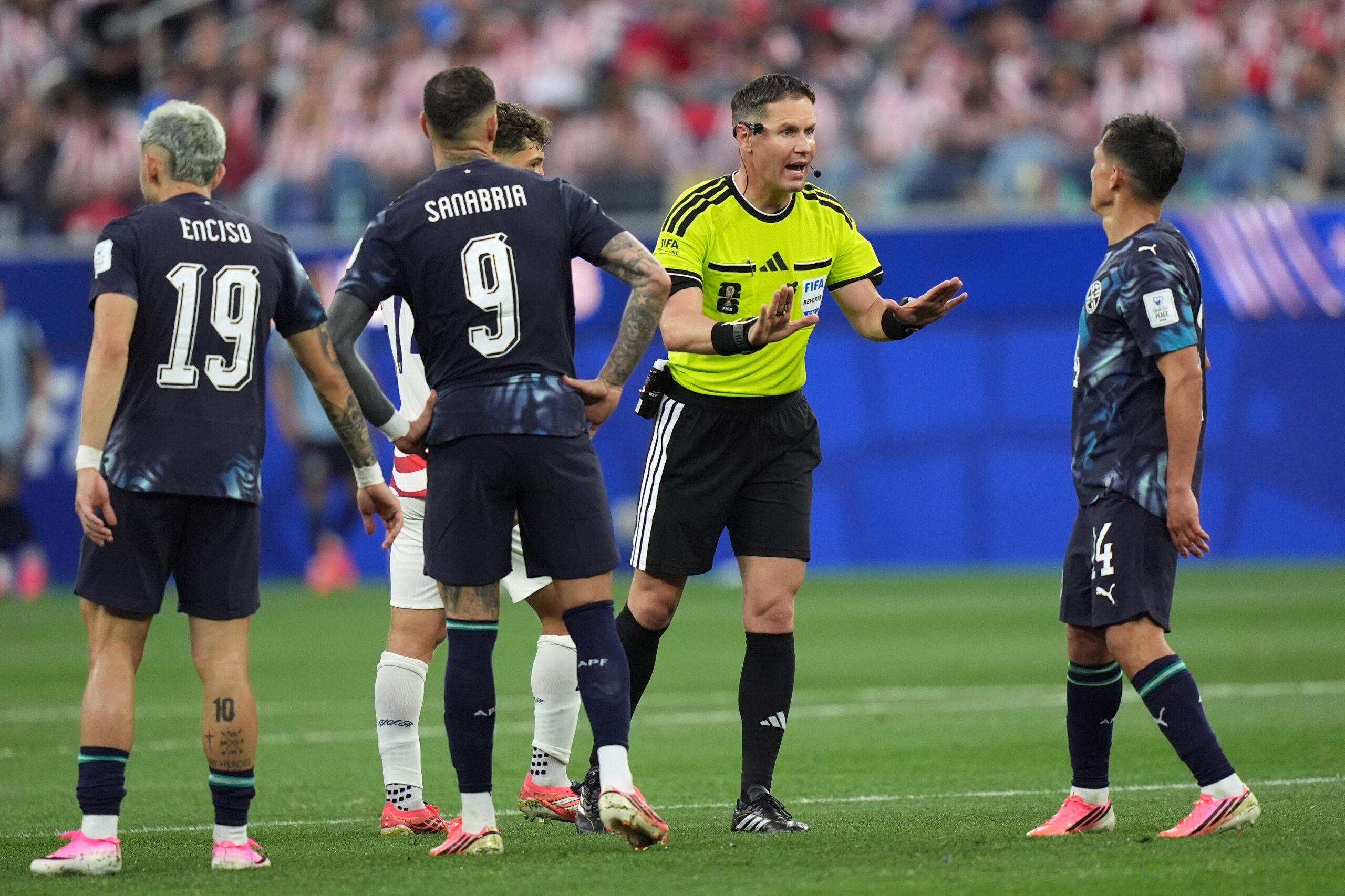
In the 53rd minute of the Group D match between the United States and Paraguay, Dutch referee Danny Makkelie showed a yellow card to American defender Tim Ream for an action on Paraguayan Miguel Almirón.
Minutes later, the decision was modified after a review by the Video Assistant Referee (VAR), led by Spanish Carlos del Cerro Grande.
The intervention was carried out under the protocol of mistaken identity (mistaken identity), contemplated in the Laws of the Game of the International Football Association Board (IFAB).
After reviewing the images on the monitor, Makkelie annulled Ream’s warning and showed Almirón a yellow card for simulation.
The action became one of the first applications of this protocol during the 2026 World Cup.
What does the regulation establish?
Under IFAB Laws of the Game 2026/27, VAR can intervene in cases of mistaken identity when the referee disciplines the wrong player.
The review allows the identity of the footballer involved in the action to be corrected and constitutes one of the exceptions that can be rectified even after the resumption of play.
In the reviewed play, the images showed that Ream did not make contact with Almirón. After analyzing the action, the referee modified his initial decision.
Match context
The match was played at SoFi Stadium in Inglewood, California, and ended with a 4-1 victory for the United States over Paraguay.
The action occurred at the beginning of the second half and resulted only in a disciplinary correction.
The application of this protocol is part of the regulatory modifications promoted by the IFAB to reduce referee errors and improve the precision of decisions during matches.