
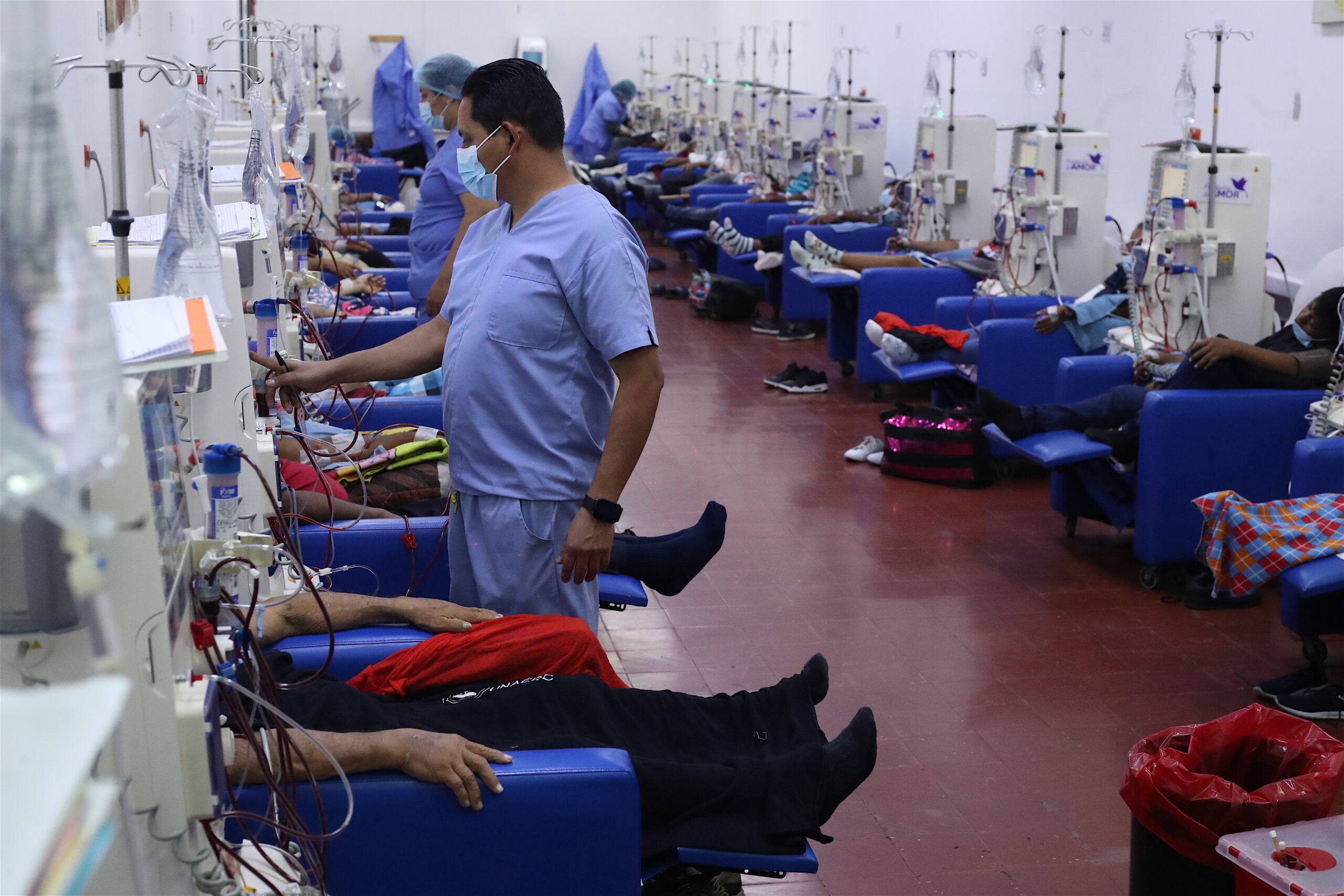
Every day, around 30 Guatemalans are diagnosed with chronic kidney failure in Guatemala.
A silent, costly and, to a large extent, preventable disease that for decades was associated with older people with diabetes or hypertension, today increasingly affects men and women of productive age.
With 9,581 active patients registered until May of this year, the National Unit for Care of Chronic Renal Patients (Unaerc) supports one of the heaviest burdens of the Guatemalan health system.
The national rate is around 64 patients in treatment per 100 thousand inhabitants, but the map of the country is far from uniform: in Santa Rosa the figure rises to 166 per 100 thousand inhabitants, followed by Jutiapa, Retalhuleu, Guatemala and Escuintla.
The data are even more alarming when compared with the historical behavior of the disease. According to Unaerc records, in 2008 the institution served only 1,630 patients; Since then, the figure has increased approximately 585%.
The silence of the disease
Erick Ávila was 30 years old when, on December 28, he began to feel severe pain in his chest and a feeling of suffocation when walking. Ávila says that “out of nowhere” he began to swell and attributed this symptom to an allergic reaction caused by an injection that was given to relieve chest pain.
The swelling began to spread throughout the body. “My clothes even stopped fitting,” he says. The New Year’s celebration was complicated. He did not have a good time due to the symptoms and there came a time when, when he was returning home, he fainted and had to go to a hospital.
At that time, he went to a private clinic where he was diagnosed with chronic kidney failure. “I didn’t know anything about the disease and I didn’t know it was that serious.”
At the private clinic they referred him to the Guatemalan Social Security Institute (Igss), where he was hospitalized for several days. They performed dialysis and placed a catheter to receive subsequent treatments.
According to Ávila, when he was discharged from the hospital it seemed strange that they did not remove the catheter. “I asked the doctor: ‘But how am I going to leave if they haven’t taken this away?’” he remembers. The answer marked him: “You have to live with that for life.”
Chronic kidney disease does not warn. According to the medical care director of Unaerc, Pedro Dávila, this condition “is an established damage to the structure of the kidney that implies a progressive deterioration of its function.”
The central characteristic of the disease, he says, is that it is irreversible. It is measured in a percentage of kidney function that starts at 100% and, when it falls below 15%, the patient may need dialysis.
Symptoms—swelling in the feet and face, uncontrolled blood pressure, foamy or changing urine frequency, unexplained anemia, and itchy skin—usually appear when kidney damage is advanced. For this reason, says Dávila, about 80% of patients arrive at the health system in the most advanced stage of the disease, when they already need dialysis.
This pattern is repeated in the testimonies of those who today live with the disease. None of them suspected what they had until the body imposed it on them.
Complications of the disease
According to Dr. María Cristina Álvarez, kidney disease has five stages:
In stage 1, the kidneys function normally and the damage is minor. The person usually has no symptoms; Sometimes the only clue is the presence of protein in the urine, which can only be detected with a specific test.
In stage 2, the damage is still mild and the kidneys generally still function well. There are usually no obvious signs here either.
Stage 3 marks a turning point: the kidneys no longer purify waste or eliminate excess fluid as efficiently as they should. These wastes begin to accumulate and can lead to high blood pressure or bone disorders. The first symptoms may appear, such as weakness, tiredness or swelling of the feet and hands. With treatment and lifestyle changes, explains Álvarez, many patients in this phase manage to avoid progressing to the following stages.
Stage 4 involves moderate or severe damage. The kidneys can no longer adequately purify the blood, which can lead to high blood pressure, bone disorders or heart failure. Swelling usually appears in the hands and feet, as well as pain in the lower back. It is the last stage before kidney failure and, therefore, follow-up with a nephrologist is key to delay the damage and plan treatment options in time.
Finally, stage 5 is end-stage kidney disease. The kidneys are about to fail or have already failed, and the waste that is no longer eliminated accumulates in the body, which can severely aggravate the patient’s health. At this point, the only treatment options that allow you to stay alive are dialysis and kidney transplant.
Gabriel de Jesús Castro knew that scale, stage by stage, almost without realizing it.
He was 20 years old when he started to feel cold in the heat. Afterwards his skin turned yellowish and his nose bled for no reason. On one occasion, playing soccer, “he couldn’t last even five minutes.”
His brothers took him to the doctor and laboratory tests confirmed what his body had been announcing for months: chronic kidney failure.
That was in 2018. Today, eight years later, he travels three times a week from his village, in San José Pinula, to the capital to connect to hemodialysis, always accompanied by his mother.
The taxi ride—because the bus has limited schedules and does not arrive on time—costs the family about Q600 a week.
Gumersindo González Alonso, a 58-year-old window installer, resident in San Juan Sacatepéquez, arrived at the diagnosis through a different path: nausea.
They started almost without warning, one day, while he was trying to eat breakfast, and they were repeated until he stopped eating almost completely throughout 2023. He weighed 103 pounds, when before he weighed 172, according to what he says.
A doctor, before the definitive diagnosis, told him that his kidneys were fine, because if it were them “he would have lain on the stretcher in pain.” At the end of that year he fainted and his family had to rush him to the hospital. “I think that, if they hadn’t taken me, I wouldn’t have made it through the year,” he says.
There he learned that he had kidney disease. Today he travels alone from his community to the capital. He pays between Q30 and Q40 each way and, after four months of uncertain shifts—he arrived as early as 4:30 a.m. with no guarantee of finding an available machine—he finally got a fixed time for his sessions.
The blow, in all three cases, is not only physical. A single private hemodialysis session can cost between Q1,000 and Q1,500, explains Dr. Álvarez, and most patients need three sessions per week. This means that, without the coverage of the Igss or institutions such as Unaerc —which offer the treatment for free—, sustaining the treatment for a single month could exceed Q12,000, a figure that is unattainable for a good part of the patients. According to Unaerc data, 80% live in conditions of poverty or extreme poverty.
The face of kidney disease in Guatemala is changing: it is no longer exclusively that of the elderly with diabetes or hypertension. More and more men and women of productive age, many from rural areas and linked to physically demanding jobs, face a disease that also drags their families into a silent economic crisis.
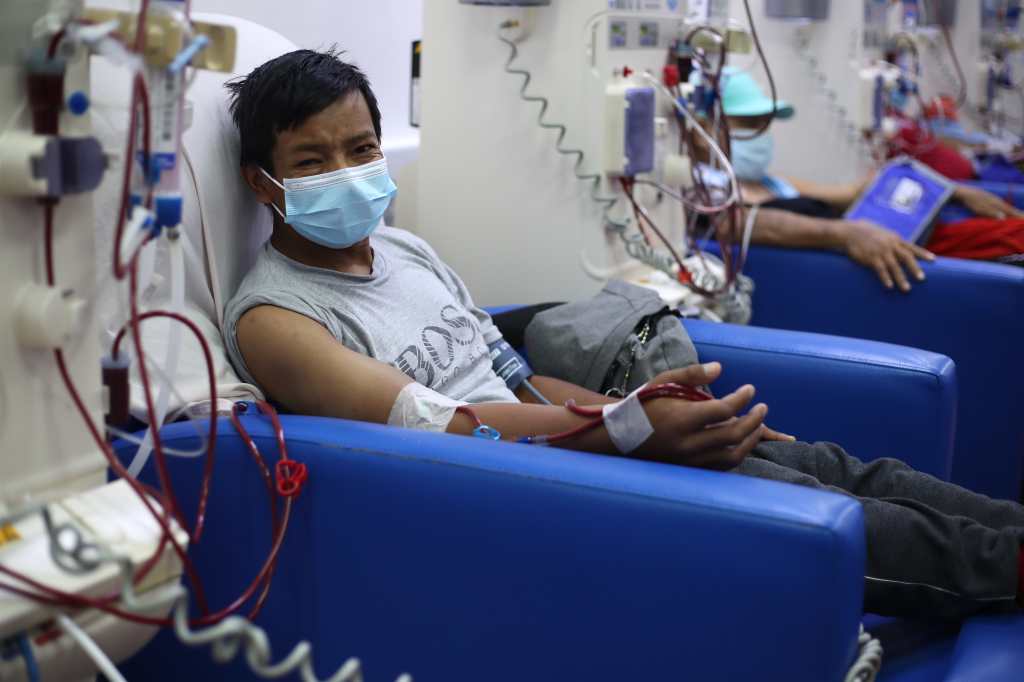
The weight of heat and work in the field
Both Dávila and Álvarez agree that a growing group of patients does not have diabetes or hypertension – the traditional causes – but rather what medicine calls non-traditional chronic kidney disease or Mesoamerican nephropathy.
“These are patients who have been exposed to high temperatures, heat and recurrent dehydration,” describes Álvarez. “They have very long work days in the heat, they don’t have breaks and, obviously, they don’t hydrate well.” Many, he adds, replace water with sugary or carbonated drinks.
The exact cause of this variant of the disease is still unknown. Factors currently being investigated include exposure to heat, pesticides, heavy metals, and hard water; the use of non-steroidal anti-inflammatory drugs or tobacco use; infections such as leptospirosis, hantavirus and malaria; low water intake and genetic predisposition.
Several studies have identified an increase in chronic kidney disease from nontraditional causes among young agricultural workers, especially in warmer regions of the country.
These factors are evidenced in the scientific essay by researcher Alejandro Cerón, from the University of Denver, published in the journal Science, Technology and Health. Cerón maintains that this variant of the disease—Mesoamerican nephropathy—has become a major public health problem in Central America and Asia, especially affecting young agricultural workers. Furthermore, it suggests that understanding its causes requires also analyzing the working and environmental conditions of agricultural communities, not just individual risk factors.
Most studies describe it as the result of repeated exposure to heat and inadequate hydration, factors that act together with toxins or infectious agents to damage the kidneys.
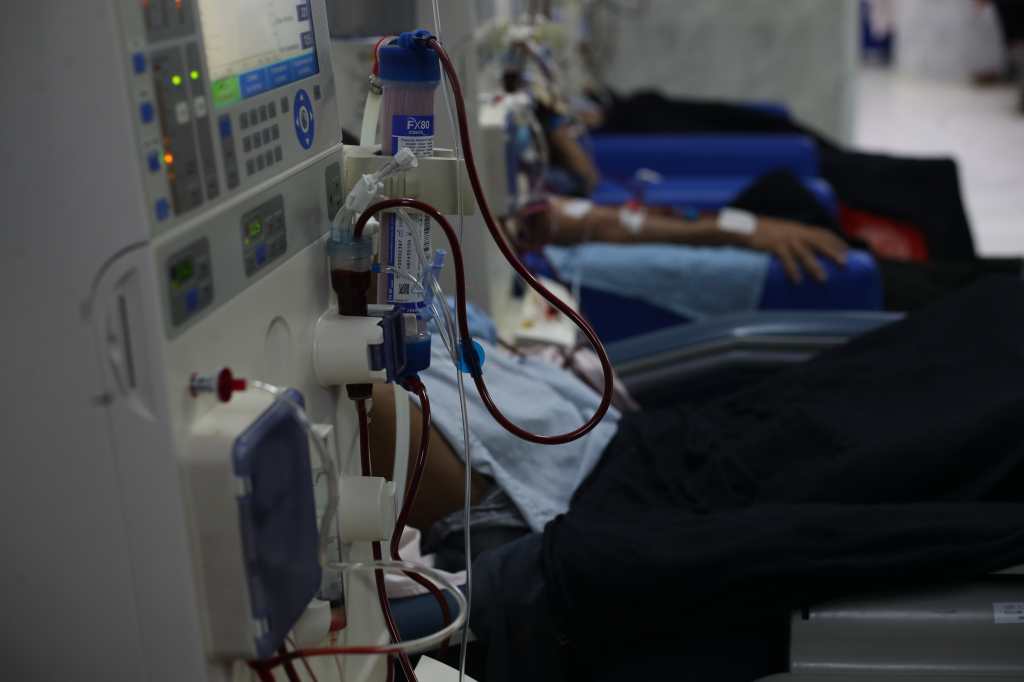
Living with the disease
For those who already suffer from it, the routine changes completely. Gabriel gets up at 3:30 a.m. on the days he is due for dialysis to arrive on time for his shift.
Gumersindo does the same from San Juan Sacatepéquez and, between the trip, the wait and the treatment, the entire day is gone. Erick also learned to adapt his routine to the demands of the disease.
All three mention something in common: the role of the family as support. They also agree on the same obstacle: maintaining a job when they need to be absent three times a week, several hours each time, to receive a hemodialysis session.
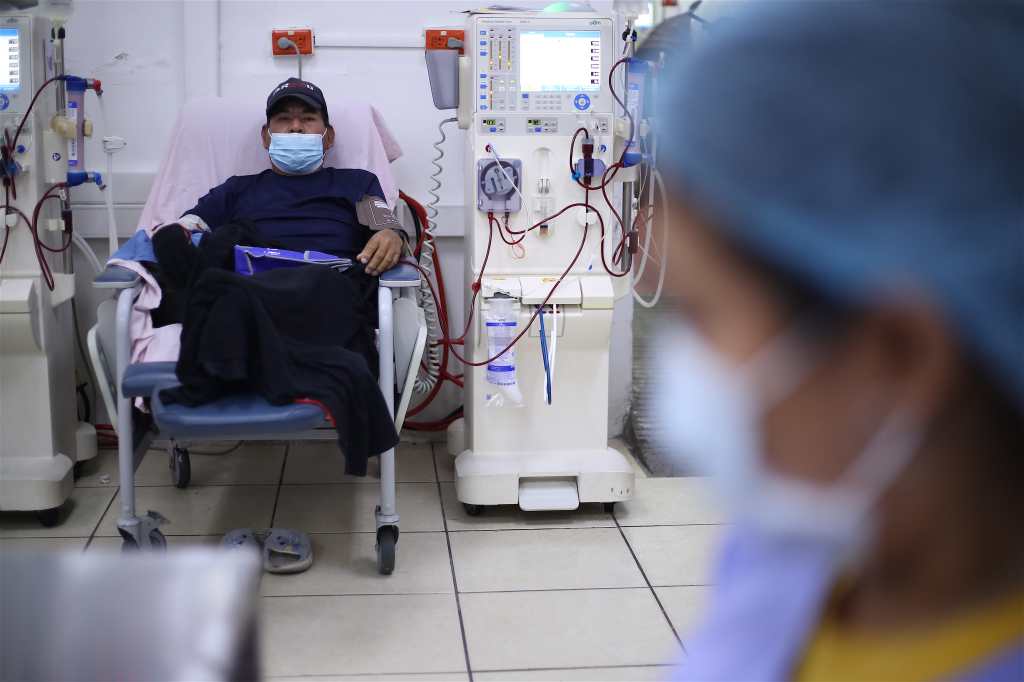
Can it be prevented?
The answer from specialists is the same: yes, to a large extent.
“It is highly preventable,” says Dávila, who recalls that a good part of the cases associated with diabetes and hypertension could be avoided with a healthy diet, exercise and medical control.
Álvarez insists on strengthening primary care, especially in high-risk areas, and ensuring that workers exposed to heat have access to sufficient hydration and scheduled breaks during the workday.
Both doctors recommend an annual checkup — including blood creatinine and urine protein tests — for those with a family history, diabetes, hypertension or obesity.
The message, repeated by both specialists, is simple: the disease does not hurt until it is too late, and the only way to get ahead of it is to detect it before it shows signs.