
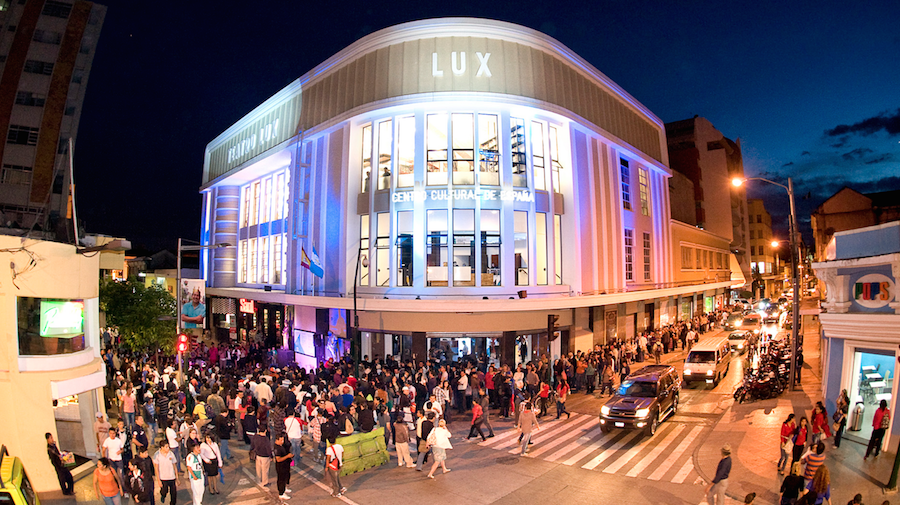
In 2026 there is an important stop to visit in Guatemala, either to admire its physical structure or to experience up close the multiple art and cultural activities scheduled: the Lux Theater.
The building, which stands out on Paseo de la Sexta, on 11th street in zone 1, turns 90 years old in 2026. Patricia Rosenberg, general director of the Teatro Lux, comments that in April the anniversary was officially celebrated with the Daniel Cano concert: a symphony of 30 musicians performed music by Frank Sinatra, from the 1940s, and other activities.
In addition, throughout the year, the billboard includes multiple activities linked to the anniversary, explains Rosenberg. Among the plans are the long-awaited Beatlefest Guatemala in July in which different groups come together to celebrate the music of The Beatles and in August the play, The Last Day of My Life.
History of the building
The construction was carried out by the Engel family. In Guatemala there was not yet the capacity to produce so much cement, so Cementos Novella, which was in charge of the work, had to import a special machine to produce the necessary amount, says Rosenberg, who has researched the history of the place.
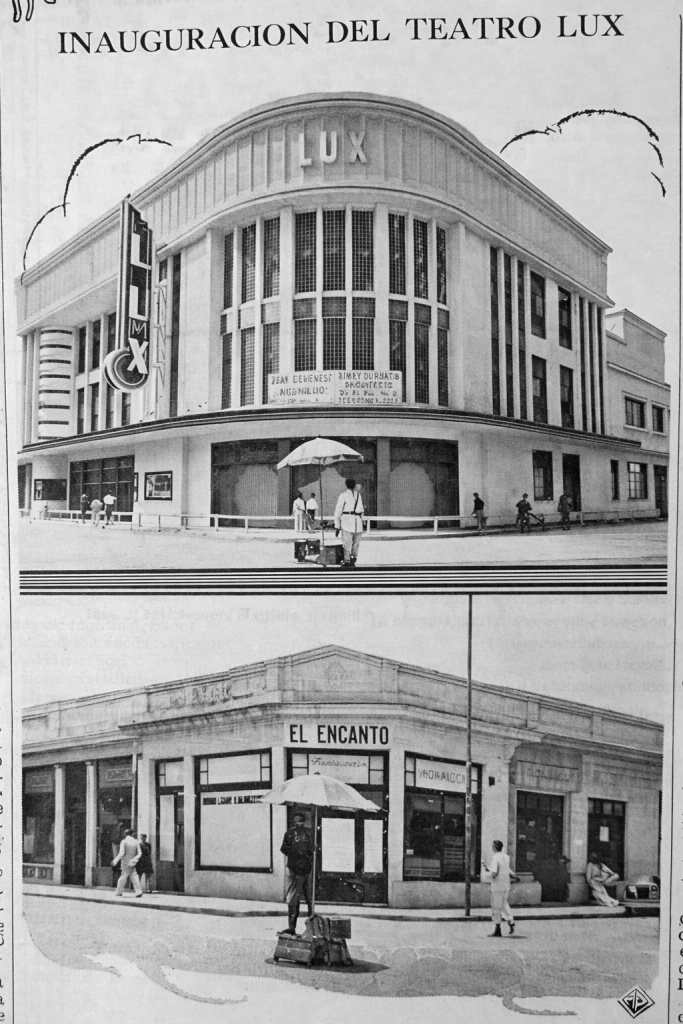
the book Art deco – buildingsan investigation by Arturo Portillo published in 2023, exposes part of the emblematic buildings of Guatemala built in the art deco style, which was also applied to private homes, businesses and other works that are kept visible to passersby. Among these buildings is the imposing Lux Theater, inaugurated in 1936.
In an interview, Portillo describes that this building impressed Guatemalans for its curvature and for having a lobby two or three levels high, in a city where one-level constructions and tile roofs predominated.
“Seeing the Lux was like seeing a flying saucer. It was like seeing something completely brought from the future. It contrasted with any other construction,” he adds.
Another quality that Portillo describes is its granite floors with geometric designs.
“At that time, most houses had floors with carpets full of flowers and lots of colors. So the contrast between the traditional of that time and the latest trends in fashion was a very strong change,” he mentions.
What has marked the history of Lux?
Films, plays, zarzuelas and the presence of famous artists have been part of its history. Among the national artists, Carlos Peña, Fabiola Roudha, the groups Easy Easy, Bohemia Suburbana and Alux Nahual stand out, to mention a few. In the international ones, Jorge Drexler, Los Amigos Invisibles, Daniela Spalla, among others, are remembered.
The Dolores Strike evenings were also held there, so it was an important place for the celebrations of the University of San Carlos of Guatemala.
Before it functioned as a cinema-theater. Then, in the 80s, it became solely a film. At that time the first and second balconies were covered to create five movie theaters.
This is how it worked for a long time, until the Paseo de la Sexta project arrived.
“We had rented the theater for film exhibition and later we returned to the space in 2012 to renovate it within this new urban project and reopen it as a theater,” highlights Rosenberg.
Since then we began to produce musicals together with Saravandah, international productions such as Mamma Mia!, Chicago, Moulin Rouge, grease and many more.
Little by little, the audience that had stopped attending the theater began to return. We had also lost many moviegoers due to the impact of piracy in the 1990s, but now we are seeing people returning to the theater again, which makes us very happy,” adds Rosenberg.
“We are cultural heritage type A, which is the highest category. That means that neither the use nor many aspects of the space can be modified. We will continue to operate as before, but we want to make improvements. Although it is an old building, we continue investing in it,” adds the director.
It has invested in sound and plans to make progress in the air conditioning system, as well as in the conservation of the wood and the maintenance of the original seats.
In addition, Rosenberg assures that they seek alliances with both government entities and the private sector to obtain support for these projects, since they represent significant investments for a cultural space.
“Many times people say that Guatemala is boring or that there is nothing to do, but there is really a lot to do: cultural, gastronomic, entertainment activities and much more. You just have to look for the information and be encouraged to see something different,” says Rosenberg.
He also reflects that theater attendance is increasing. “There is a kind of digital fatigue in several generations and that is causing a resurgence of interest in live experiences,” he concludes.