
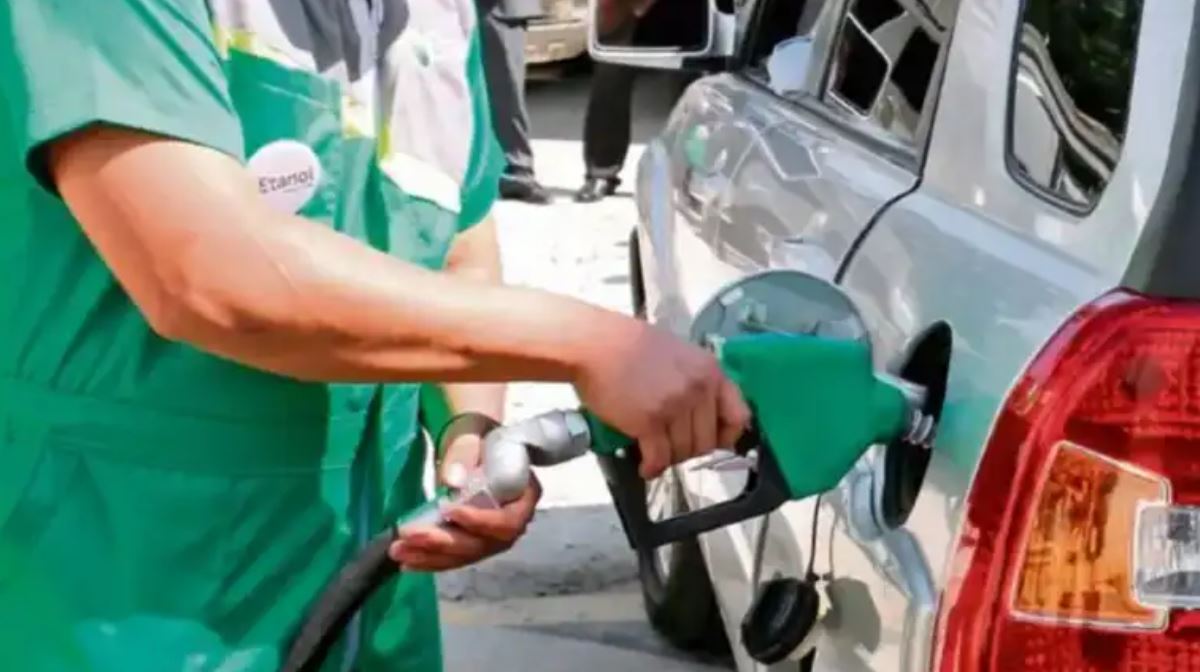
After listening to different positions on the benefits or harmful effects for vehicles due to the use of ethanol in gasoline, expressed by sectors and authorities, a proposal from deputies arose in the Environment and Natural Resources commission of Congress to propose to the Government an extension for the start of validity of the mixture for the final consumer.
Although the policy of mixing 10% ethanol in premium and regular gasoline, known as E10, came into effect on Monday, June 30, it is in a stage of technical and operational conditioning, so for the end user the date was postponed and It will be available starting August 21.
Authorities from the Ministry of Environment and Natural Resources (MARN) and the Ministry of Energy and Mines (MEM) participated in the summons to the legislative chamber, presenting the benefits, as well as managers from sectors who criticize the way the mixture is implemented and point out that it will cause damage to vehicles.
Almost at the end of the meeting, parliamentarian César Augusto Amézquita proposed that the Environment Commission once and for all make a public proposal so that there is a waiting period for implementation and that it is not applied in a tax and mandatory manner, but he added that it will be up to the Commission to make that request to the Government.
“We are not stopping development, we are not stopping trade, we are not stopping industry, but let’s just do it consciously,” he added.
The president of the Commission, Randy Coc, proposed a new meeting of the members of the legislative chamber to reach a consensus on decisions in search of ways and actions that benefit the population.
The start of validity to make the mixture available to users continues to be next August 21 and there is no extension, Vice Minister Luis Mérida responded in subsequent statements as he left the meeting.
“We extended the period; today (July 1) should be the day that gasoline with ethanol should begin to be sold, but to be sure that all the pieces are working as they can, we decided to take this operationalization period so that everything works well and no mistakes are made,” the official added.
CONTENT FOR SUBSCRIBERS
Ethanol shipment arrives and authorities explain verifications
The Vice Minister of Energy indicated that there are already two ships carrying ethanol in Guatemala and that they are waiting for the operationalization period to be able to enter, so they have not yet disembarked. To date, there are registration requests from five importers, according to Mérida, some of which already have authorization, according to the MEM.
Mérida explained that the quality and characteristics of both gasoline and ethanol imports are verified, whether local or imported. “Everything is going to be verified, tests are going to be done on the ethanol, if it meets the quality, just as it has been done with gasoline. If they do not meet the standards that are established, they will not enter.”
Meanwhile, the deputy director of Hydrocarbons, Guillermo Xoy, indicated that gasoline mixed with ethanol can only be marketed when it is verified and passes quality controls, and to date there are none approved.
They request implementation of gradual and non-mandatory mixing
For the Association of Motorcycle Importers (ASIM), the president of the entity, William Portillo, requested that the implementation of gasoline with ethanol not be mandatory. He explained that, although the motorcycles can operate with this type of fuel, continuous use could reduce the useful life of their engines, in addition to the lack of specific tests with the fuel that will be used in the country’s conditions, which could lead to mechanical damage in the short term.
In this regard, the vice minister indicated that the MEM works to guarantee the quality of the ethanol and the mixtures that will be distributed in the country, with specific verifications. For his part, Edwin Castellanos, Vice Minister of the Environment, presented environmental benefits, such as the reduction of polluting gas emissions and the reduction of toxic compounds, as reported in Congress.
The manager of ASIM, César Amézquita, said that the entity is not opposed to the use of ethanol or the search for energy alternatives, but asked for transparency regarding the implications for vehicles, access to technical information, monitoring of results and freedom of choice for consumers. He noted that compatibility with ethanol fuels can vary depending on factors such as engine technology, year of manufacture, fuel system design and individual manufacturer specifications.
Amézquita said that they asked the authorities for technical tables with experts, mechanics and chemical engineers to analyze the processes to follow, and although there were conversations, these tables were not established.
He added that they have warned about the risk of an abrupt implementation and that, of around 3.4 million motorcycles, about 98% are low displacement, of which 80% would be at risk, either due to maintenance, because they are carbureted or because they were not designed for that fuel, among other factors. “There are aspects that can be resolved; some by making adjustments that are momentary so that there is no immediate problem on the motorcycles. But a change of vehicle parkr already with adapted motorcycles,” he said.
For this reason, they asked that the implementation be gradual, since the change in the vehicle fleet takes between three and five years.
The manager assured that these are specifications or guidelines that the State must establish, but that to date there are no regulations that indicate the characteristics of vehicles that can be imported to adapt to these provisions. For example, units that meet certain emissions levels or that are designed for Guatemalan fuels.
He added that such specifications should be established and deadlines granted, since to import motorcycles orders must be made at least 10 months in advance.
Marroquín explained that the mixture of gasoline with ethanol has a loss of energy, because ethanol has 30% less energy content than gasoline, which reduces fuel performance. Additionally, in carbureted vehicles it can increase engine temperature and cause problems in the injection systems, designed for conventional gasoline, he explained.
They also questioned that the octane rating will change and that the tests carried out in the country have been done with current gasoline and not with those that will be used when the mixture comes into effect, which is why they consider that the studies are not comparative nor do they have scientific rigor.
Meanwhile, the Vice Minister of Energy indicated that the Units should not have alterations in engine operation. He added that “if you maintain your car well all the time, nothing will happen; obviously, the older my car gets, the more time I have to dedicate to its maintenance and spare parts.” He added that if filters and normal maintenance are maintained, there should be no problems.
He said that ethanol is used in at least 60 countries, and that many of the motorcycles are imported from countries where it is already used, such as India, so he does not see any difficulties in this regard.
Separately, although ASIM representatives pointed out that two-stroke engines and equipment such as lawnmowers could be damaged, the vice minister stated that they will not be affected either.
Regarding octane, the MEM responded that a base fuel will be imported and mixed with ethanol to reach the required level (superior or regular), and deliver a product with the established qualities. The ministry assured that “Guatemalans will not perceive changes; they will be able to continue choosing between superior and regular with the octane rating established by the payroll.”
In the congressional summons, a motorcyclist invited by ASIM stated that he found a station that dispensed gasoline with ethanol, which damaged the carburetor. In this regard, Mérida declared that, if there are complaints about the sale of gasoline with ethanol or adulterated gasoline, they must be presented to the MEM for verification, since this fuel is not certified by the ministry.