
The Constitutional Court (CC) faces an apparent new division due to legal actions for the re-election of Walter Mazariegos as rector of the University of San Carlos de Guatemala (Usac), This is according to analysts who have evaluated the Court’s work in recent weeks.
The discussion surrounding the re-election of the rector, which for some was carried out through electoral fraud at the university, focuses attention, once again, on a CC that has not completed three months of its installation.
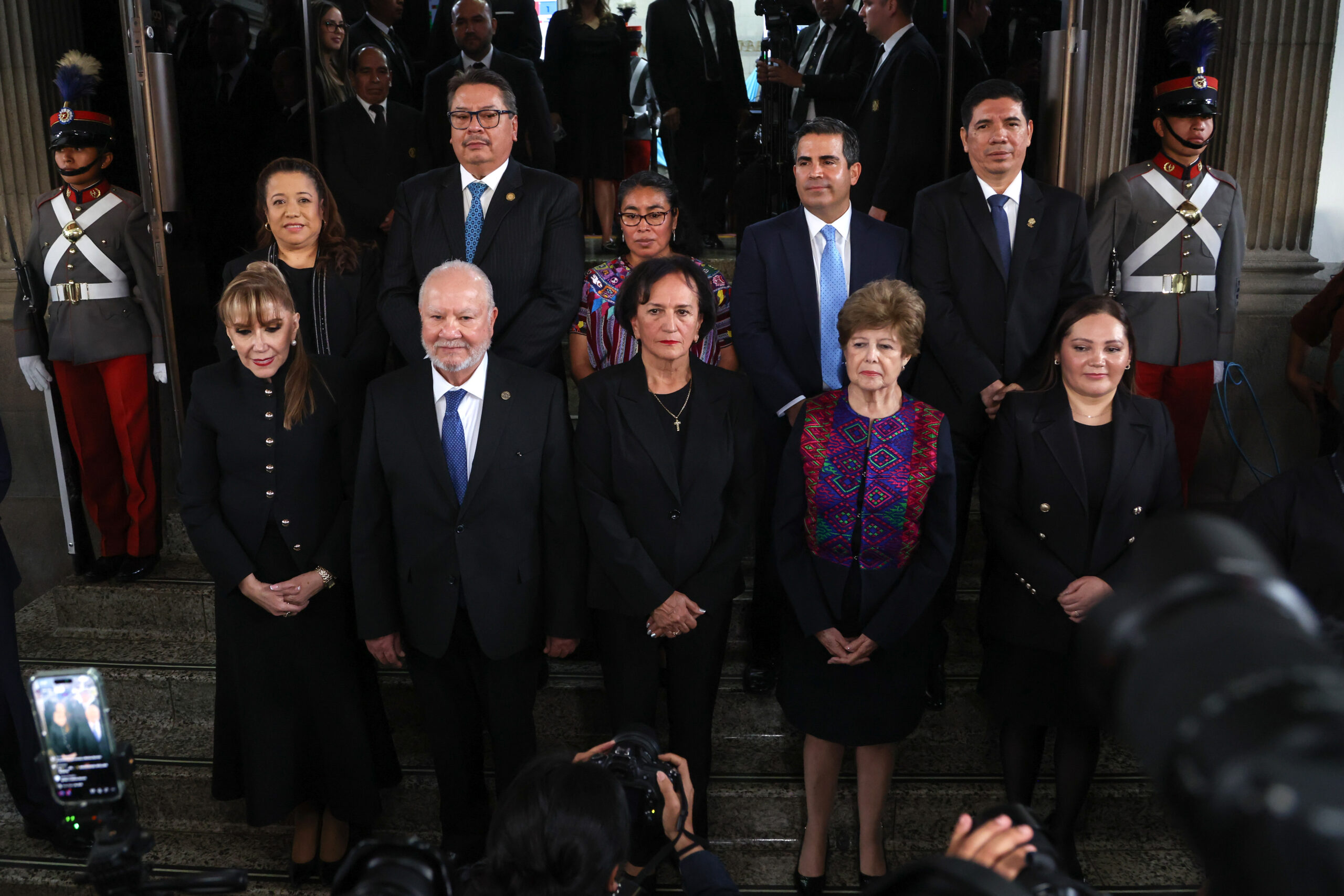
The presidency in this first year of the Court, for the period 2026-2027, is held by Judge Annabella Morfin, as she is the oldest member of the regular judges.
But since the CC began, analysts identified a bloc made up of the titular magistrates Roberto Molina Barreto, Dina Ochoa and Julia Rivera, who were joined by substitutes Luis Rosales, Claudia Paniagua and Luis Aguirre Pumay.
The other block, the minority, is made up of Morfín and Astrid Lemus, as regular magistrates, accompanied by their substitutes María Jocholá and Luis Fernando Bermejo.
Constitutional sources, on condition of anonymity, acknowledged that there are annoyances in how the Court is run, and in recent weeks due to delays in the way the president scheduled cases, especially those related to the election of the rector of the USAC.
Testimonies from people from the close circle of the constitutional plenary session assure that legal actions against Mazariegos were on the agenda, they were discussed and decisions were made; However, at the time of signing, they withdrew from the discussion and the decision was not finalized.
is inhibited
Usac is the only public university in Guatemala, which maintains in public opinion the debate about its rector and the apparent fraud with which, according to some, it achieved its continuity.
Some of the first resolutions in the USAC case were signed by the group of Molina, Ochoa and Rivera, and the votes against were by Morfin and Lemus. However, this did not mean a division, declared Judge Roberto Molina Barreto, who explained in an interview for this medium that the majority of cases are resolved unanimously and few generated divisions.
Through an official letter, Judge Molina Barreto points out anomalies in the direction of the @CC_Guatemala indicating that he knows that it limits his freedom of judgment and judicial independence, which is why he is inhibited from hearing any matter related to the election of the rector of USAC. pic.twitter.com/tszBYA2rn0
—Douglas Cuevas (@dcuevas_pl) June 15, 2026
Molina Barreto, who was publicly accused of lobbying for Mazariegos in the CC, decided to distance himself from cases that have to do with the election of rector and, since June 15, the USAC issues are known to his substitute, Luis Rosales.
No program
On June 30, one day before Mazariegos took office again in the USAC, the president of the CC imposed a short deadline on an Appeals chamber to submit a report.
These required documents were for an appeal presented by the Attorney General’s Office (PGN), which sought to reactivate an amparo to annul the university session where Mazariegos was re-elected.
The PGN lawyers exposed apparent illegalities in that session that was validated by the Higher University Council (CSU), but a Chamber decided to suspend it.
The members of Usac, Dignidad y Resistencia (Usac-DIRE), believed that this appeal could stop the continuity of Mazariegos, they even maintained hope that Morfin would call a full meeting, but at the end of the night of that June 30 it did not happen.
“We are concerned that an issue of national interests, such as what is related to the election of the rector, the CC, to date, has not scheduled to know the actions that could have stopped the inauguration of Walter Mazariegs,” said lawyer Edwin Orozco, a member of Usac-DIRE.
Mazariegos finally took office on July 1.
Vote in favor
On June 30, the CC did schedule an injunction, but this was presented by the USAC legal team, seeking, as a preventive measure, to order the Minister of the Interior, Marco Antonio Villeda, to protect the central campus.
Among the arguments of this protection they pointed out the possible risk that groups with particular interests would reach the university headquarters; In the opinion of the majority of the magistrates, it was appropriate to grant protection.
That vote had the vote against Judge Lemus, who was elected by the College of Lawyers and Notaries of Guatemala (Cang), who explained that there was no reason to support this protection.
“The public demonstrations that motivate the applicant’s concern have taken place peacefully, without evidence of the materialization of the events,” Lemus justifies in his vote against.
But unlike other cases, in that request for protection, Morfin, who was appointed by President Bernardo Arévalo, voted in favor of the protection, along with Dina Ochoa, Julia Rivera and Molina Barreto’s substitute, Luis Rosales.
USAC and its lawyers obtain protection and the @CC_Guatemala orders the Minister of the Interior to protect the USAC central campus against the risk of confrontational actions by groups with particular interests, according to the university’s legal team. CC President voted in favor. pic.twitter.com/LK6GnNyA1X
—Douglas Cuevas (@dcuevas_pl) July 1, 2026
Related to Mazariegos?
Another drawback that the university opposition detects is that the titular magistrate Julia Rivera has not removed herself from the cases, because she was elected as a magistrate by the CSU of Mazariegos.
They classify this relationship as a direct conflict of interest, which they claim has gone unnoticed in the plenary sessions, and they have not been able to take legal action against it because the CC does not have the figure of recusal, to remove a judge if they see a possible lack of objectivity.
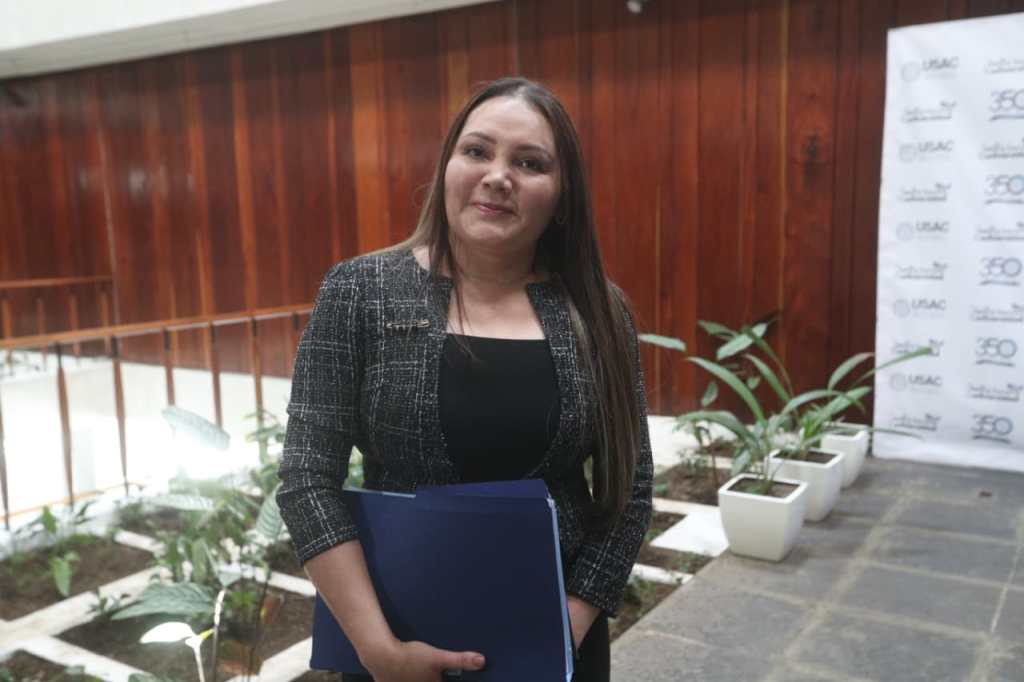
The U lawyers, in addition to Usac-DIRE, assure that at least three cases against Walter Mazariegos were assigned to Judge Rivera, who must propose a future resolution when President Morfin schedules them for discussion before the plenary session. Having been appointed by Usac, and that her ex-husband is part of the university management, could compromise her objectivity, says Usac-DIRE.
They wait for resolutions
For lawyer Orozco, it is necessary for the presidency of the CC to put the cases as a priority, because not doing so can affect the direction of the administration of the USAC.
“Among the obligations of the CC is the ability to convene in plenary session, to meet on any day and at any time; therefore, it is within the functions of the CC to meet until dawn or on weekends,” he indicates.
For her part, Edie Cux, an analyst at Acción Ciudadana, identifies that the rector’s case came to divide the CC even more, from which she would expect the cases to be scheduled as soon as possible.
“With what is happening in the Usac, you can see the different factions within the CC. The Usac is very important for the issue of the nomination commission for Comptroller General of Accounts and for the general elections, where the CC is immersed,” Cux recalled.
Unanswered
Another case where the representation of the Executive Body, in this case the substitute, voted opposite to the representation of the Cang, the apparent minority group, was when the CC resolved in favor of Alejandro Sinibaldi, who was spared a trial for apparent corruption.
Given the analysts’ accusations, consultations were sent to the communication department of the CC, seeking a position from the institution or from the presiding magistrate, but at the closing of this note no response had been obtained.