
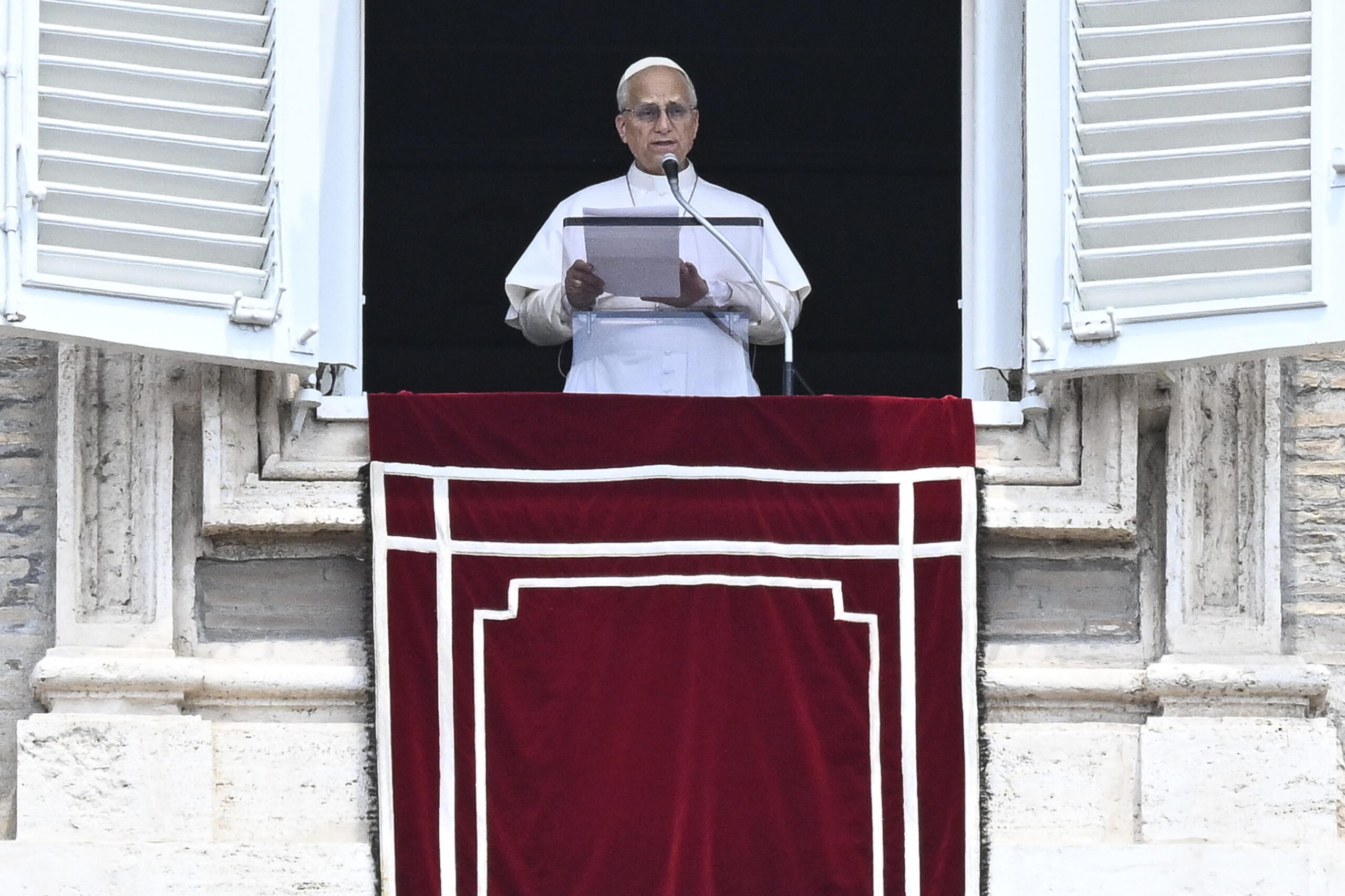
The Vatican yesterday announced the excommunication of senior clerics from an ultra-conservative Catholic sect, as well as any parishioners who remain loyal to the group, which claims to have hundreds of thousands of followers, mainly in the United States and Europe, triggering the most serious schism in decades. within the largest Christian confession in the world. Pope Leo XIV had directly pleaded with the sect, the Society of Saint Pius In an extraordinary act of defiance, the group pressed on Wednesday.
Yesterday morning, the vatican announced the excommunications, which revealed the limits of Leo XIII’s willingness to give in to traditionalists who reject the modern teachings of the Church. The Vatican statement, issued by Cardinal Víctor Manuel Fernández, prefect of the powerful Dicastery of the Doctrine of the Faith, included a stern warning to priests and parishioners linked to society. “As far as the lay faithful are concerned, those who formally join the Priestly Society of Saint Pius
In recent years, conservatives and liberals alike have tested the Vatican by pushing the boundaries of official doctrine, actions that have threatened to create divisions in the church of 1.4 billion Catholics. Founded in Switzerland in 1970 by French Archbishop Marcel Lefebvre, who had opposed the Church’s modernizing reforms a decade earlier, the SSPX claims more than 700 priests and half a million members worldwide. Many will now have to choose between the SSPX and the Catholic Church. On Wednesday, more than 16,000 faithful braved intermittent rain in the mountain town of Écône, Switzerland, where the SSPX was founded, to witness the solemn anointing ceremony of four bishops described by the group as “totally faithful” to the “holy tradition.”
“We do not choose what we should believe or stop believing,” the Rev. Davide Pagliarani, superior general of the SSPX, declared Wednesday. “We cannot modify, reinterpret or reconsider the faith. We simply have to the duty to preserve the faith that the Church has always taught. We must love it, we must live it and we must pass it on.” An annex to the ruling indicated that lay faithful who “formally adhere” to the society would also face excommunication. Marc-André Mabillard, a former spokesperson for the group and a parishioner of the SSPX in Switzerland, said they were “not prepared” for the Vatican edict to include an explicit warning to the parishioners of this sect.
“The decision is very difficult, because… this time they are referring to faithful like me,” he said. “We were not prepared for this. Personally, I will continue to attend the —society— because for me it is the only way to receive a good mass and have priests who give me good sacraments. I have no other option. I have to stay and I will stay. Yes, I am excommunicated,” he said. The SSPX continues to adhere to the traditional Latin Mass and rejects many of the teachings of the Second Vatican Council of the 1960s, which modernized the Church for an increasingly secular world. Those changes included celebrating Mass in local languages, directing the priest to face parishioners, and promoting interfaith dialogue, among other adaptations.
In statements to the newspapersfar away, on Wednesday, Cardinal Pietro Parolin, Vatican Secretary of Statesaid he felt “hurt” by what he described as a “schismatic act.” However, it also left the door open to reconciliation. “I hope that, despite what happened today, dialogue can be resumed and a solution found,” Parolin declared. “The fundamental question, then, is whether or not to accept the Second Vatican Council.” The Vatican excommunicated the two bishops who presided over the ceremony, as well as the four newly appointed members of the SSPX. The same group faced similar sanctions in 1988, when Lefebvre defied Pope John Paul II and also consecrated four bishops, including a British cleric known for denying the Holocaust.
In 2009, the traditionalist Pope Benedict XVI He revoked the excommunications of those four bishops and sought reconciliation with the group and its members. Two of those excommunicated in 1988 were among those excommunicated on Wednesday. “They have a nineteenth-century soul,” said Andrea Grillo, a Catholic theologian based in Rome. “They are anti-modern communities, contrary to any type of dialogue with Jews, Buddhists and Hindus. They are firmly opposed to non-Catholic Christians: Lutherans and Orthodox. For them, salvation is found only in the Roman Catholic confession, in its nineteenth-century version.”
Since its previous bishops were deceased or elderly, the SSPX announced in February that it planned to repeat the 1988 act on July 1. That decision, the group stated in a statement, came after two failed attempts to secure a meeting with Leo This situation “is a clear sign of the internal crisis of the Catholic Church, and there is no doubt that it constitutes a defeat for Leo XIV, since its main objective… was unity within the Church,” declared Roberto de Mattei, president of the Lepanto Foundation, with a conservative Catholic tendency.
“Today he faces a deep wound.” In moving forward with the consecrations, the group quoted Lefebvre’s words: “Only in the Catholic Church, as it has always been and in its immutable Tradition, are we guaranteed to possess the Truth, to be able to preach it and to be able to serve it.” On Tuesday, a day before the consecrations, the Vatican published a papal letter addressed to the leadership of the SSPX containing a plea from Leo XIV: “Please back off!” “With a sorrowful but hopeful heart, I feel that it is my duty, by the authority received from Christ, to ask you to desist from your intention,” the Pope wrote in the letter addressed to Pagliarani, superior general of the SSPX. Excommunication, one of the most severe penalties in the Vatican’s spiritual arsenal, is not the same as dismissal from the priesthood; that is, the loss of the clerical title.
However, it means that clerics cannot officially receive Catholic sacraments, including Communion, ordain priests, or officiate at Mass, raising the possibility that any service or sacrament they continue to celebrate will not be a Catholic rite. For the global SSPX community—whose largest concentrations are in France and the United States—theologians say excommunication represents, in practice, a choice. “Technically, excommunication concerns bishops, but priests and lay people who follow them can also fall into a state of excommunication,” Grillo said. “If you have a relationship with a bishop who is not a bishop, then you too will fall into the dimension of excommunication; in short, you excommunicate yourself.”
The ordination of four new bishops by the SSPX is a grave act of disobedience that carries automatic excommunication and deepens a dangerous schism within the Church.
The SSPX maintains dozens of places of worship in the United States, including the Church of the Immaculate in St. Mary’s, Kansas, considered the largest society in the world. But even some conservative voices within the church expressed alarm at the divisions the SSPX was causing. “The ordination of four new bishops by the SSPX is a grave act of disobedience that carries automatic excommunication and deepens a dangerous schism within the Church,” declared the Rev. Gerald E. Murray, a New York City priest and conservative commentator.
“While they claim to defend the faith traditional of the Catholic Churchthe newly excommunicated bishops blatantly reject what the Catholic Church has always taught its children, namely, that the hierarchical nature of Catholicism includes the doctrine that the Pope is the Supreme Authority to whom all Catholics owe obedience,” Murray continued, adding: “Simply put, the Pope is the successor of Peter, the Vicar of Christ. He rules the Church. “Obedience to his decision about who may or may not receive episcopal ordination is necessary to remain a faithful Catholic.”
The break with the SSPX comes at a time when the Vatican is also facing a rebellion on the German left, where the Holy See has warned liberal Catholics not to allow the ordination of women as deaconesses or the codification of religious ceremonies for same-sex couples.