
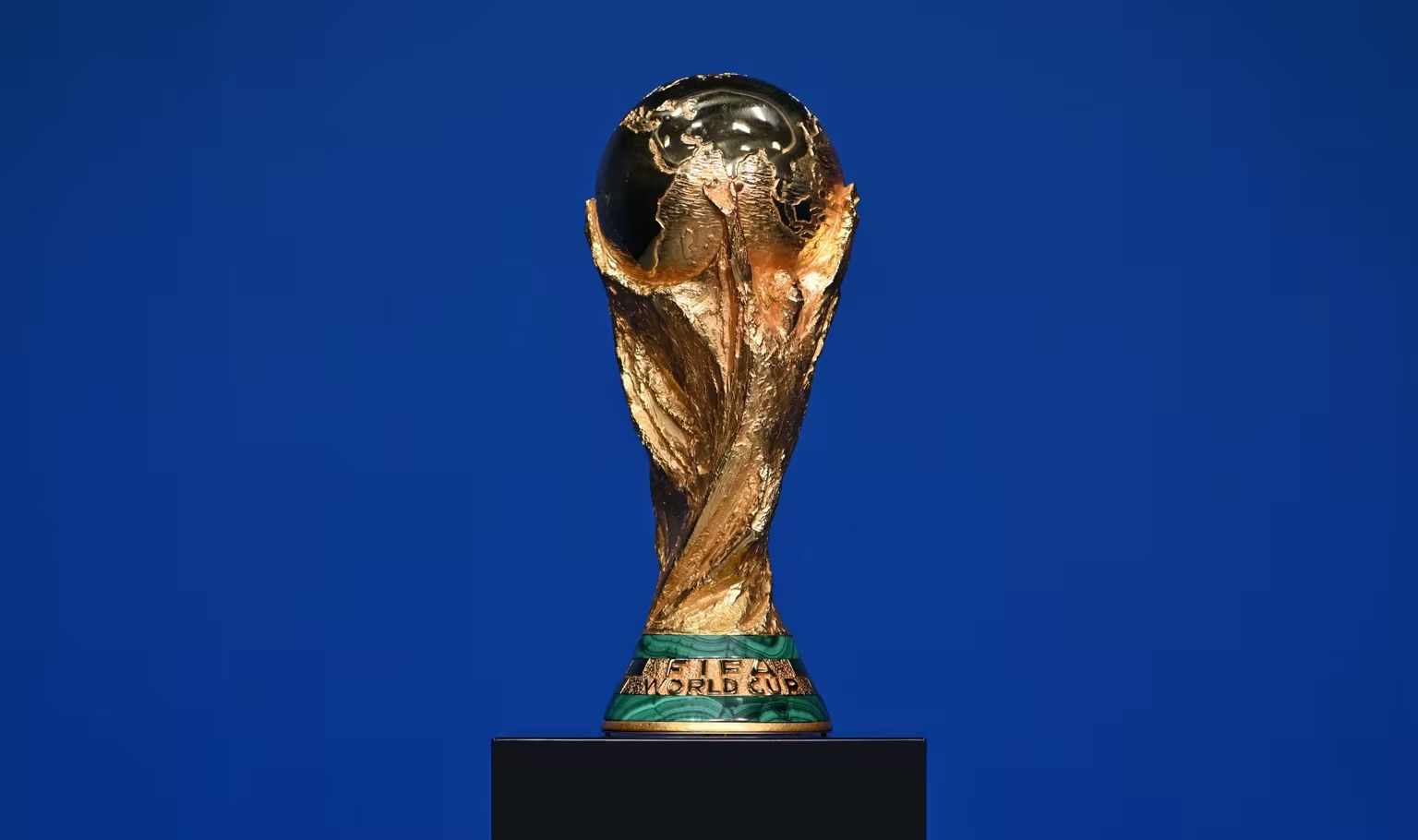
The 2030 World Cup promises to be the most ambitious event in the history of football. The centenary edition of the World Cup will be held in six countries on three continents, an unprecedented format for the tournament.
Spain, Portugal and Morocco will be the main venues and will host most of the group stage, in addition to all the decisive rounds. Among the most emblematic venues, the Santiago Bernabéu, the Camp Nou, the Estadio da Luz and the new Hassan II in Casablanca stand out.
As a tribute to the first World Cup in 1930, Uruguay will host one of the inaugural matches at the Centenario Stadium in Montevideo. Argentina and Paraguay will also host a match before the tournament moves permanently to Europe and Africa.
The distribution of the venues seeks to commemorate the 100 years of the World Cup and turn the 2030 World Cup into a historic edition, with a route that will unite three continents and six host countries.
48 or 64 teams?
As organizing countries, Spain, Portugal, Morocco, Argentina, Uruguay and Paraguay have already secured their qualification for the 2030 World Cup without competing in the qualifiers. The three South American teams obtain the ticket for hosting the opening matches of the centenary.
FIFA maintains, for now, the 48-team format launched in the 2026 World Cup. However, CONMEBOL proposed expanding the tournament to 64 teams for the centenary, an initiative that is still being analyzed.
What happens with CONMEBOL quotas?
With Argentina, Uruguay and Paraguay already classified as hosts, the rest of the South American teams would compete for the confederation’s available spots. According to various information, CONMEBOL would fight to maintain its six direct places and one for the playoffs without counting the hosts, which would leave Brazil, Colombia, Ecuador, Venezuela, Peru, Bolivia and Chile competing for those places with a significant advantage over the playoffs.
The logistical challenge
The distance between the venues is one of the main points of debate. Moving teams between South America, Europe and Africa in the same competition poses unprecedented challenges that FIFA will have to resolve with very detailed planning of the match schedule. Never before has a World Cup been organized by six countries on three different continents.