Spicomellus Aphrthe oldest ankylour in the world and the first discovered in Africa, was first described in 2021 from a rib. Now, new remains of this kind of dinosaur who lived 165 million years ago in the Jurassic have allowed completing their strange appearance.
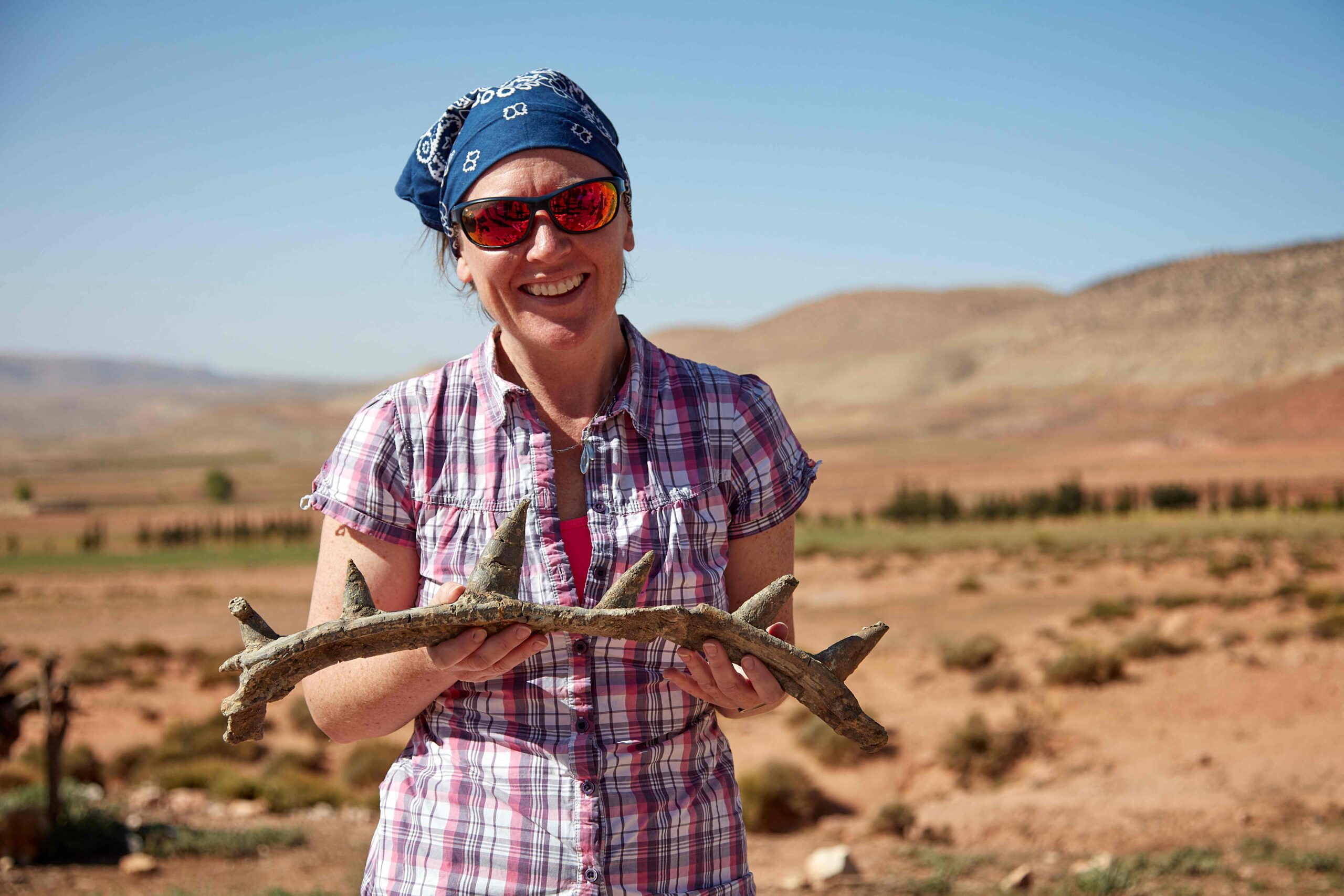
“It’s full of spikes throughout the body, he said to the newspaper The Guardian Professor Richard Butler, from the University of Birmingham and co -director of the project and added: “It has incredibly distinctive spikes around the neck: a huge and totally disproportionate armored necklace with respect to the rest of the body, smaller spikes that protrude from the ribs and at the tip of the tail would have had some type of weapon.”
The study of these remains has revealed that the oldest known ankylouries, those of the Middle Jurassic (175-162 million years), had a unique body armor that included a spine necklace of more than one meter, characteristics never seen in any other vertebrate or in the posterior ankylosauries, those of the Cretaceous (143-66 million years) that lived in North America and Asia.
Describe the evolution of this species from Jurassic to Cretaceous has been difficult due to the low fossil record of this period but the discovery of a partial skeleton of Spicomellus In the mountains of the Atlas of Morocco (in the same place that the rib described in 2021) it has allowed to discover new and unpublished details that have been published in Nature.
Spicomellus It means spine and bracelet or thorny bracelet by the bone fused thorns, notes Infobae. Aphr refers to the place of origin, Africa.
One meter spines
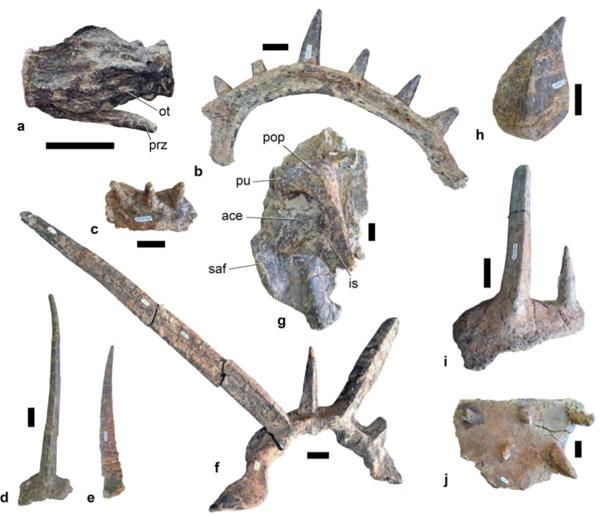
In the place there were six ribs with adhered thorns, a bone necklace with plates and two pairs of thorns (a spine measures 87 cm long), and a pelvic shield with long and short thorns.
The study of these remains, described by an international team of scientists led by Susannah Maidment, of the Natural Museum of London History and researcher at the University of Birmingham (United Kingdom) has confirmed that the new specimen had a very elaborate dermal armor.
“Finding an armor so elaborate in an early ankylourus changes our understanding of how these dinosaurs evolved. It shows how significant the dinosaurs of Africa are and how important it is to improve our understanding of them,” Maidment advances.
According to its description, the animal had merged and projected bone thorns from all its ribs, a characteristic never seen in any other species of vertebrates, either alive or extinct.
In addition, the authors believe that although the spines found that measured 87 centimeters and left the bone necklace around their neck, they would have been even longer during the animal’s life.
“We had never seen something like that in any animal before. It is particularly strange, since this is the oldest known ankylour, so we could expect a later species to have inherited similar characteristics, but they did not,” says Maidment.
A simpler armor
The ankyosaurs were a group of herbivorous dinosaurs recognized by their body low and wide, covered with an armor of bone plates and thorns, notes Infobae.
The authors suggest that the characteristics observed in Spicomellus They could have been so much for exhibition (to attract couples or intimidate the rivals) and for defense.
In his opinion, the increase in the great predatory dinosaurs in the Cretaceous, the large carnivorous mammals, and the crocodiles and the snakes, could be the reason why the armor of the ankylosos of that period became more simple, defensive and practical.
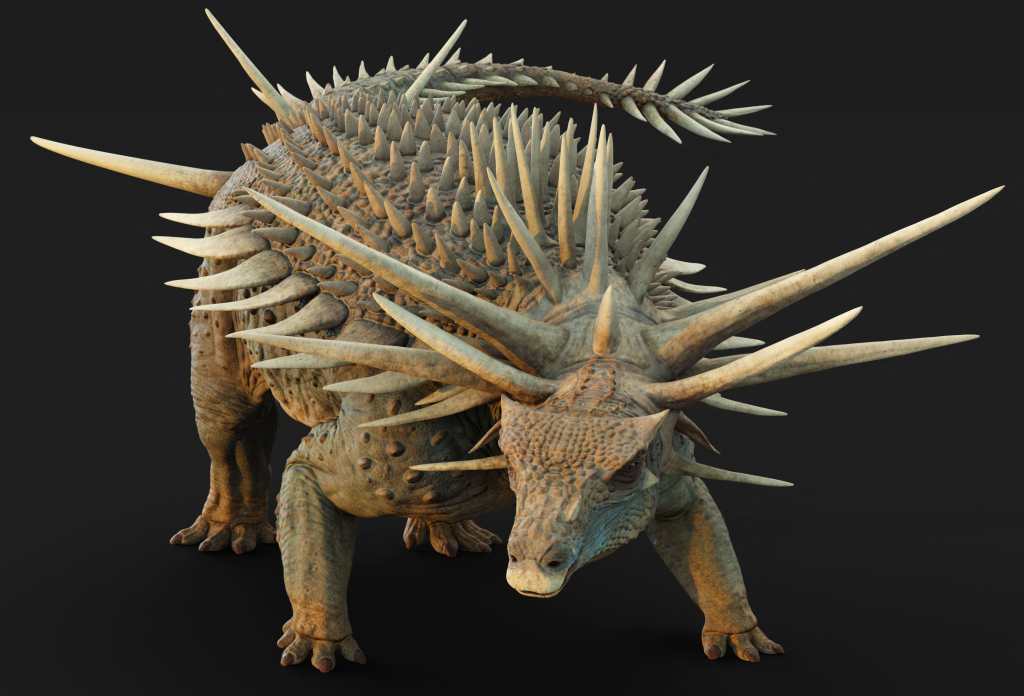
For the team, one of the defensive characteristics that the species did retain during its evolution of the Jurassic to the Cretaceous was the tail, and although that of this specimen has not been found, scientists believe that the bones found suggest that it had a deck or a tail to defend itself.
The combination of a gun in the tail and a armored shield that protected the hips suggests that many of the key adaptations of the ankyosaurs already existed at the time of Spicomellusthe authors conclude.
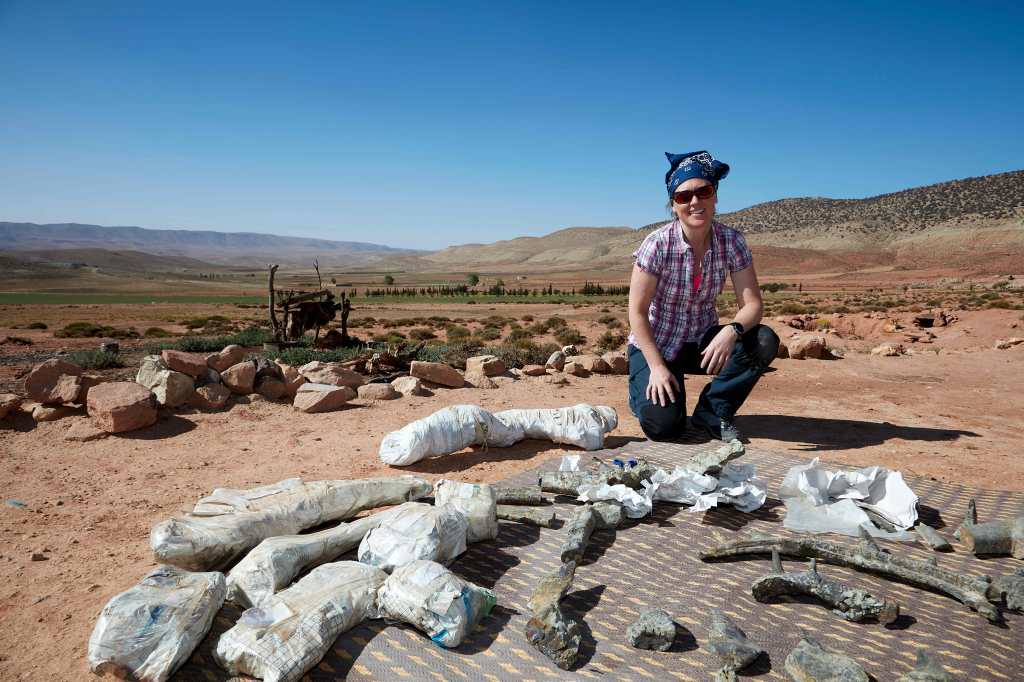
The remains of Spicomellus Aphr From this study they were cleaned and prepared in the Department of Geology of the Faculty of Sciences Dhar el Mahraz in Fez, Morocco, where they have been stored.