

A thousand room hotel with a fairground for large events and business conventions. An airstrip to improve the air connectivity of a destination whose vehicle access has been complicated. The expansion of the Xocomil Aquatic Park and the projection of the Natural and Historical Sanctuary of Takalik Abaj are part of the projects that the Guatemagic Development Node plans to execute within five years, with the aim of attracting more national and international tourism.
In 2024, Retalhuleu positioned itself as the second most visited destination in the country, after Antigua Guatemala, according to records of the Guatemalan Tourism Institute (Inguat), displacing traditionally consolidated destinations, such as Tikal or Panajachel. This department is recognized for its potential as Multidestino, according to the consensus of the sources consulted, due to their theme parks and archaeological sites. In addition, it is part of Guatemagic, a tourist pole that offers nature, Mayan culture, agrotourism, sun and beach. What is the road map that the Executive must follow in conjunction with private investment projects?
World Class Convention Center
Currently, at the Workers’ Recreation Institute (IRTRA) there is a convention center with a capacity for a thousand people. However, Claudia Schwartz, secretary of the Guatemala Convention Bureau, considers that one is needed with greater capabilities and cutting -edge technology.
In addition, Guatemagic “has grown exponentially in recent years, so having a new convention center would create more demand, not only for the area, but also for all businesses that are around,” explains Schwartz.
Rolando Schweikert, president of the Chamber of Tourism of Guatemala, estimates that the economic spill that each tourist leaves in this region ranges between US $ 50 and US $ 80 per day. Promoting this type of tourism with new infrastructure would have the potential to attract visitors from El Salvador, southern Mexico and Honduras.
A convention can generate up to US $ 1 million in a week, according to Schwartz estimates. These types of events promote the development of the tourist pole, since they benefit not only the IRTRA parks, but also to the hotels and restaurants in the area, says Schwartz.
For example, María Mercedes Rabanales, a member of the Guatemagic table, an initiative that promotes Retalhuleu as a tourist destination, estimates that 40 years ago in this region there were only five hotels, while there are currently more than 80.
One of the next projects in the area is a new Convention Center in IRTRA. According to Ricardo Castillo Sinibaldi, president of that entity, this infrastructure would have the capacity to receive 15 thousand people. It will be built on a field of 12 blocks and it is projected that it houses exhibitions, conferences and receptions, in addition to having access for trailers that facilitate the transfer of merchandise for the exhibitions.
According to Claudia Schwartz, to receive great events, this convention center must have cutting -edge technology, that is, integrate trends related to artificial intelligence. “People have so many distractors that, in a convention, they need everything necessary to capture their attention. There is also the issue of experience. We are experienced experiences within the tourism and congresses industry. There we have the responsibility of training staff so that these experiences are unique,” he says.
With a convention center for such capacity, the need to expand the lodging offer arises. Castillo Sinibaldi points out that participants in conventions “usually do not come alone, bring their family, advisors or guests. Then, they require more lodging.”
In that line, Castillo Sinibaldi plans the construction of a hotel with up to a thousand rooms. “That requires other services: more pools, more attractions, bars and restaurants. All this will grow in that proportion,” he adds.
Xocomil expansion
Another type of tourism that has grown in the area is that of amusement parks. The third project on the list, already in execution, is the expansion of the Xocomil Park in an area of 10 apples. Castillo Sinibaldi projects that, with this new area, the capacity of tourists will double and could reach 16 thousand people.
For the increase in visitors to be possible, connectivity plays a key role. Another of the projects in execution is an air track for planes, with the purpose of “transporting people from the city to our park (IRTRA) and that they come directly. They are the indispensable communication routes for an area to develop,” says Castillo Sinibaldi.
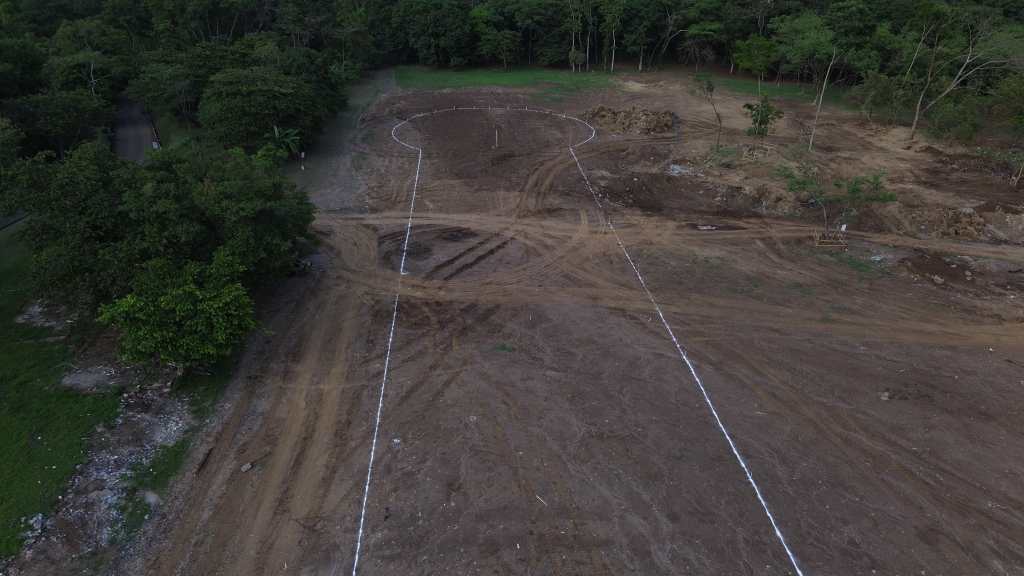
This project is designed for tourists visiting IRTRA. However, Guatemagic requires an international airport, which, according to Castillo Sinibaldi, could be ready within a period not less than five years. To do this, government collaboration is needed to build an airport in this region that allows direct flights from El Salvador, Costa Rica, Panama or any other country to Retalhuleu. “It requires a large amount of land, which we must seek and develop. We are in contact with the Government and with the private initiative to evaluate the possibilities,” adds Castillo Sinibaldi.
Beach tourism: pending subject
Around these parks there are other smaller tourist attractions, some private and other audiences, such as beaches. In Guatemágica, Champerico stands out. However, he has not received the necessary impulse and, currently, “for Salvadoran, Costa Rican or even for the same national visitor of the capital, it is not yet a recognized destination,” Schweikert evaluates.
According to the Guatemagic initiative, after the amusement parks, the beaches are the second tourist attraction most wanted by visitors. Despite its potential, Rabanales points out that “we have not developed in Guatemala any project where the beaches have an important tourist value. There have not been, by the state of Guatemala, an investment that allows to create boardwalks, restaurant areas, parking areas or hotel spaces.”
It emphasizes that fishing and surfing are two activities that could be promoted in the sector. To take advantage of the potential of this type of tourism in the region, a clear vision and “joint work at the state level and private sector with a macro perspective are missing. Otherwise, progress will hardly be achieved,” says Rabanals.
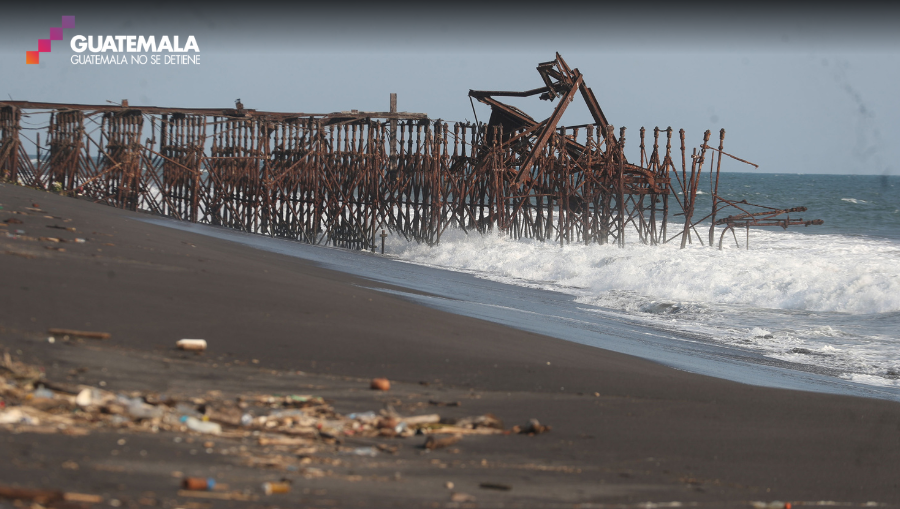
10 years ago, Castillo Sinibaldi presented a plan to develop the beach; However, the authorities of Champeric did not accept it. This project contemplated the construction of a boulevard, a dock, restaurants and hotels. Another of the points of this plan was that “on the side of the dock, boat and yacht service for fishing activities were provided, while on the right side a surf club could be built to attract visitors,” explains Castillo Sinibaldi.
Mayors: more security and infrastructure
William Valiente, mayor of San Felipe, Retalhuleu, coincides with the urgency of improving air connectivity in the area, through an airport, which indicates that Mazatenango is being evaluated as a possible land for his contest.
Regarding road infrastructure, he points out that in San Felipe “we have enough alternate routes that are not in good condition, since they are dirt, and communicate with the municipality of San Francisco”, so it requires that they be paved or paved.
With the private road in Construction Xochi, one of the concerns of brave is that by “venting vehicular chaos from San Antonio, Mazatenango, Cuyenango in the Los Binca Finca, we will have it in the coming months here in the department of Retalhuleu, in the area known as El Zarco”.
While Pablo Villatoro, mayor of Retalhuleu, indicates that promotion is another needs to position Guatemagic on the map of the international tourist. He adds that in this region there are emblematic places such as aquatic parks, archaeological sites and beaches, however, to reach these, the lack of roads, the maintenance and absence of signage of existing ones “are a problem.”
“We need more security, in places like Champerico or Tularate, which are beaches that belong to the Department of Retalhuleu,” says Villatoro.
To boost tourism in the municipality of Retalhuleu, it raises the renovation of the Historic Center, as well as the bus station, known as La Galera, and the stadium of the municipality. “These works will begin in 2025 and will be ready in eight months to one year from the beginning of the renovation, in order to improve the experience of the tourist,” he says.
Connectivity challenges
While projects seek to prepare Guatemagic for international tourism, mobility remains a challenge in this area. According to Rolando Schweikert, president of the Chamber of Tourism of Guatemala, “Normally in Guatemala the distances are not so long, but many times the fate of Retalhuleu is stopped selling by the state of the roads.”
The Guatemalan Chamber of Tourism and the Guatemalan Convention Bureau agree that the priority must be the construction of roads. “We would like the roads to be four lanes. When they are organized groups, they have been adjusted for a very tight time and it cannot be that the trip takes us seven or eight hours a Friday, but that on Sunday, if we left at seven in the morning, we take three and a half or four hours,” says Schweikert.
The transfer time impacts the stay of tourists. Rabanales estimates that “of the three days that should remain at the destination, they basically reduce it to one or one and a half due to the issue of transfers. It is not that they stop coming, but they begin to spend the night, which harms us because it is consumed less in the territory.”
In the case of conventions, the duration of the trip can make the difference between making the event in Guatemagic or looking for another destination. “If it is a three or four days convention, maybe they could make that displacement, but in short conventions the challenge is greater, because spending so much time on the road often demotivates people to organize their congresses, conventions or meetings in those places and opt for closer sites,” says Schwartz.
Currently, it is in development a private road project known as Xochi, Flower Corridor, which seeks to reduce the transfer time in this area 30 minutes for a distance of 31 kilometers, in which tolls must be paid. This road will also guarantee security for those who transit it, a key aspect for tourism in Guatemagic, since it is a “destination designed for families, groups of five, four or eight people who come to spend and share. Then, if traveling with children, security is a fundamental factor,” says Rabanals.
However, Schwartz considers that the government must improve roads to facilitate access to all destinations in the country. “Guatemala is a destination that we have always promoted for congresses and conventions, highlighting that it is small, but very rich in attractions. The problem is that, at this time, the ‘small’ in terms of displacement implies that it takes four hours to reach a destination that is 200 or 250 kilometers from Guatemala City.”
In addition to having roads that reduce the transfer times, Guatemagic requires flights, both internal and international. “Air connectivity is extremely important. Having airlines or low -cost flights would be very beneficial, since it would allow to easily develop this area as a tourist pole,” says Schwartz.
Find more than Guatemala does not stop In our video channels of Free press and Guatevisión, A alliance content focused on journalism of solutions.