
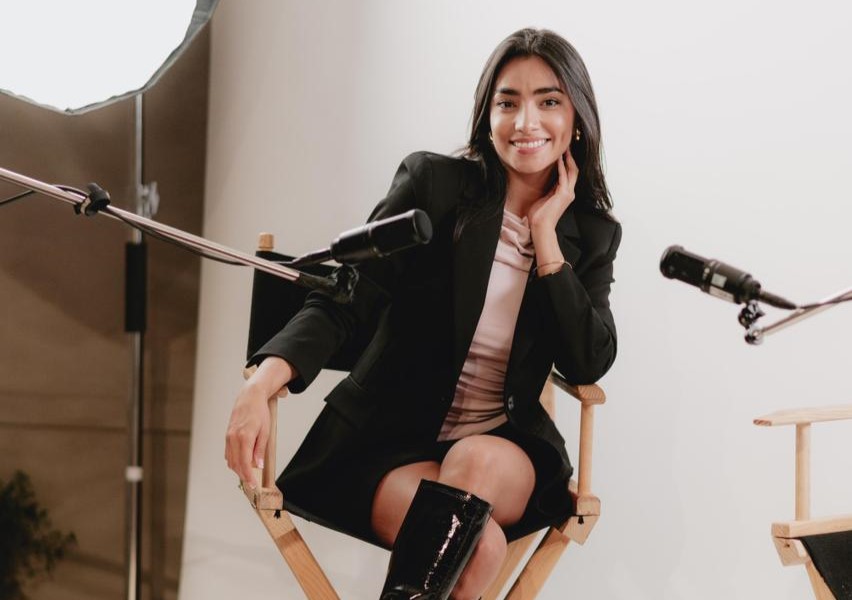
With an expanding career and dreams that accompany her between Guatemala, Mexico and the United States, Jennifer Gabrielle seeks to make her way in the audiovisual industry through acting and narrative creation, with the aim of consolidating herself as an actress and producer.
His artistic passion has become a destiny that, with effort, study and perseverance, he has begun to forge mainly in Mexico and the United States, where he advances in his acting career with participation in projects such as Killer women and production Wolf, die killingfrom Telemundo.
Her determination has led her to venture into platforms such as Netflix, where she participated in The corrupters. In search of his goals, he traveled to Mexico to train, perfect his technique and make his way. Over time he understood that the path is not expected but built.
Her talent has also led her to explore roles behind the cameras, with projects in production and creative direction. As part of this process, it has developed Made in Latama podcast and production house dedicated to promoting Latin American talent, stories and identity.
With her work she seeks to tell authentic, sensitive and powerful stories, from a human and artistic perspective that connects with the public and demonstrates that everyone can tell their own story. As part of his career, he has also ventured into music with the single Italian Boy.
How does the passion for acting come about?
Since I was little I dedicated myself to the arts without being able to measure it. Although I always felt this passion and sought to be involved in activities such as ballet or looking for spaces at school to be on stage, this led me to venture into modeling.
Although there weren’t many acting schools in my childhood, with the help of my mother I was always going to castings for commercials. It wasn’t until I was 15 that I did a casting—I thought it was for modeling—but it ended up being for a co-production in Asia, and that’s where this passion began, where I understood that I was acting.
I auditioned, they gave me the scene and I agreed to play a Mayan princess. When I arrived at the filming set, which was a co-production, it was my first introduction to cinema. When I entered that set I fell in love, it was like an instant crush.
That moment moved everything in me. I felt something very strong inside and I told myself that I wanted to dedicate myself to this, although I still didn’t understand all the terms or what production entailed.
At 18, with little knowledge, I started in a modeling agency to expand my career. Later I got closer to production, as I was in contact with producers to whom I provided talent for commercials.
At 22 or 23 years old I was already very involved in production and that was when I said: “I want to act.” I wanted to be on screen and explore beyond modeling. I thought about going to Mexico to try acting, but it didn’t happen immediately; It was a process that took time and effort.
At that time I began to form an artistic community in Guatemala and participated in a theater company to feed my artistic side, so I acted and danced, and to support myself I worked in commercial production. I never stopped looking for opportunities.
Although there are not as many opportunities in Guatemala, that gave me tools and skills that have allowed me to make my way in Mexico and New York.
How do you develop the desire to produce and in what roles have you participated?
My process in acting has been gradual and has led me to explore both in front of and behind the cameras. Acting and production have been fundamental for me, largely because of my personality: I am restless, creative and curious. Therefore, staying solely in acting generated frustration for me, since it often involves waiting for opportunities.
By migrating to Mexico, I developed in greater depth the creative, strategic and logistical side that production requires, a process that I continue to learn and strengthen.
I have participated in various productions thanks to work and discipline. Mexico has been key to consolidating my acting career and strengthening my interest in producing. Since my arrival, I have looked for spaces in acting and, until now, I have been part of Mujeres assassinas (VIX), in its season 3, episode 8, as well as Los corruptores, a Netflix production that will be released this year.
Guatemalan Jennifer Gabrielle advances her international career with projects on television and streaming platforms. (Photo: courtesy Emanuel Díaz)
One of the characters that marked me the most was Olga, since she arrived at a difficult personal moment, in the middle of a family mourning. Playing him taught me that, even in complex situations, it is possible to carry out a project with love and support.
Another important character was Sue Carrillo, in a Telemundo production. It was an intense four-month recording process, in which I experienced great physical and emotional exhaustion, but also significant growth on a personal and professional level.
Throughout my career I have understood that characters are not chosen, but they choose you. Each of the roles that I have played, from Guatemala to the international arena, has contributed to building a career that continues to evolve and constantly search for new experiences.
What was the process like to produce your own projects?
It all started in Guatemala, because I think I did it very intuitively: I looked for locations, coordinated payments and organized the team. However, it was consolidated in Mexico.
And why? Because in Mexico I first dedicated myself to understanding acting: what type of actress I wanted to be and what I could hold on screen to build a good character.
During the first two years I was very focused. Migrating is also a complex process: it involves adapting culturally, learning legal and administrative issues.
When I felt stronger on an emotional, mental and economic level, my production house, Made in Latam, was born, which arose from understanding that I was born in Guatemala, Mexico saw me grow up and Latin America is part of my identity.
I founded Hecha en Latam to tell stories from our identity and generate our own narrative. As Latinos we have the right to be in any space, to audition, negotiate and say: “This is me.” And, if one door closes, knock on another.
This project seeks to promote industry, community and better conditions for artists. It also promotes understanding that art is a profession, which requires organization, training and economic sustainability.
In addition, Made in Latam is also a podcast where I interview industry professionals. The idea is to share tools and learning for new generations.
Migrating taught me to constantly relearn. If I can share that knowledge with someone who wants to start on this path, whether in Guatemala, Mexico or another country, then it makes sense.
I have produced projects in Guatemala, such as short films, and that has confirmed to me that things can be done when there is structure and clarity.
What has it been like for you to expand your career outside the country?
I’m not going to embellish it: it hasn’t been easy. Along my path I have faced many difficulties, but I understand that they are part of learning. Still, I prefer to focus on the positive. Since I decided to move to Mexico to build a career, I have found valuable people; You don’t need many, sometimes just one can make the difference.
As an artist and as a human being, pain is part of the process. However, with time one learns to move forward. At the beginning, one of the biggest challenges was working on the ego and understanding that it is not just about you, but about the stories you want to tell, about how you should start over.
I have also learned that not all doors will be open, but each closure represents an opportunity to redirect.
I am currently in New York, living a time that has also been enriching, full of learning and new connections. Today I feel calmer and more at peace than when I started in Mexico City, where I faced great challenges that helped me grow and advance in a career that I am building step by step.
In my comings and goings, in the castings in which I have stayed and in which I have not, I have understood that you never stop learning. Each project, each set and each experience has its own dynamic and always leaves a lesson, so leaving my country and risking to explore has helped me grow, knock on doors and try to expand my personal projects.
This process, both in acting and production, has taught me to continue growing, to enjoy the journey and to remain open to constant learning.
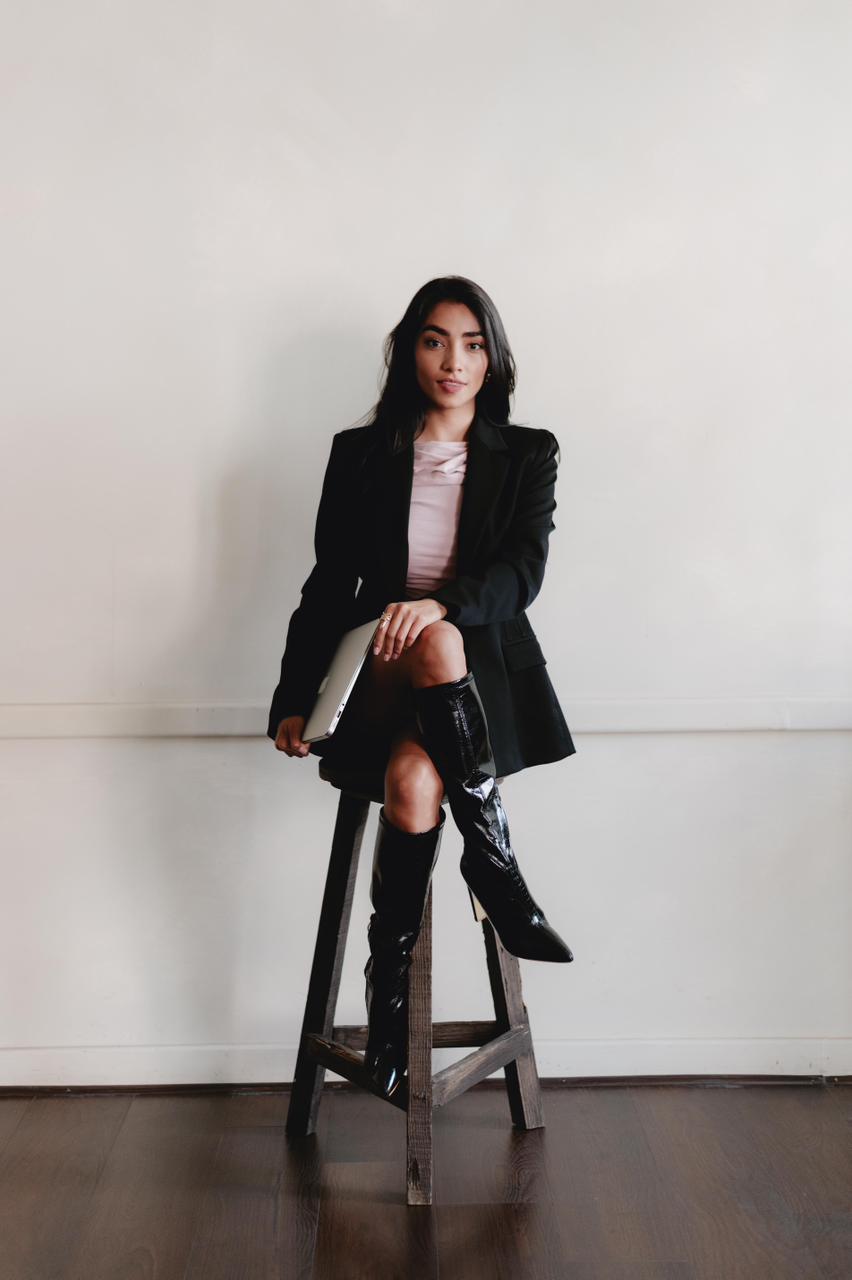
In his career, he combines acting and production within the audiovisual industry. (Photo: courtesy Emanuel Díaz)
What projects are you working on?
Now I’m traveling a lot; I am between Mexico and Guatemala, because projects are being opened and finalized, including films in Guatemala, and that makes me very happy.
I am currently in the United States, in New York. The energy is moving a lot. At the same time, I have my production house and my podcast Made in Latam. “I keep auditioning for projects, and I hope those characters keep coming,” he concluded.
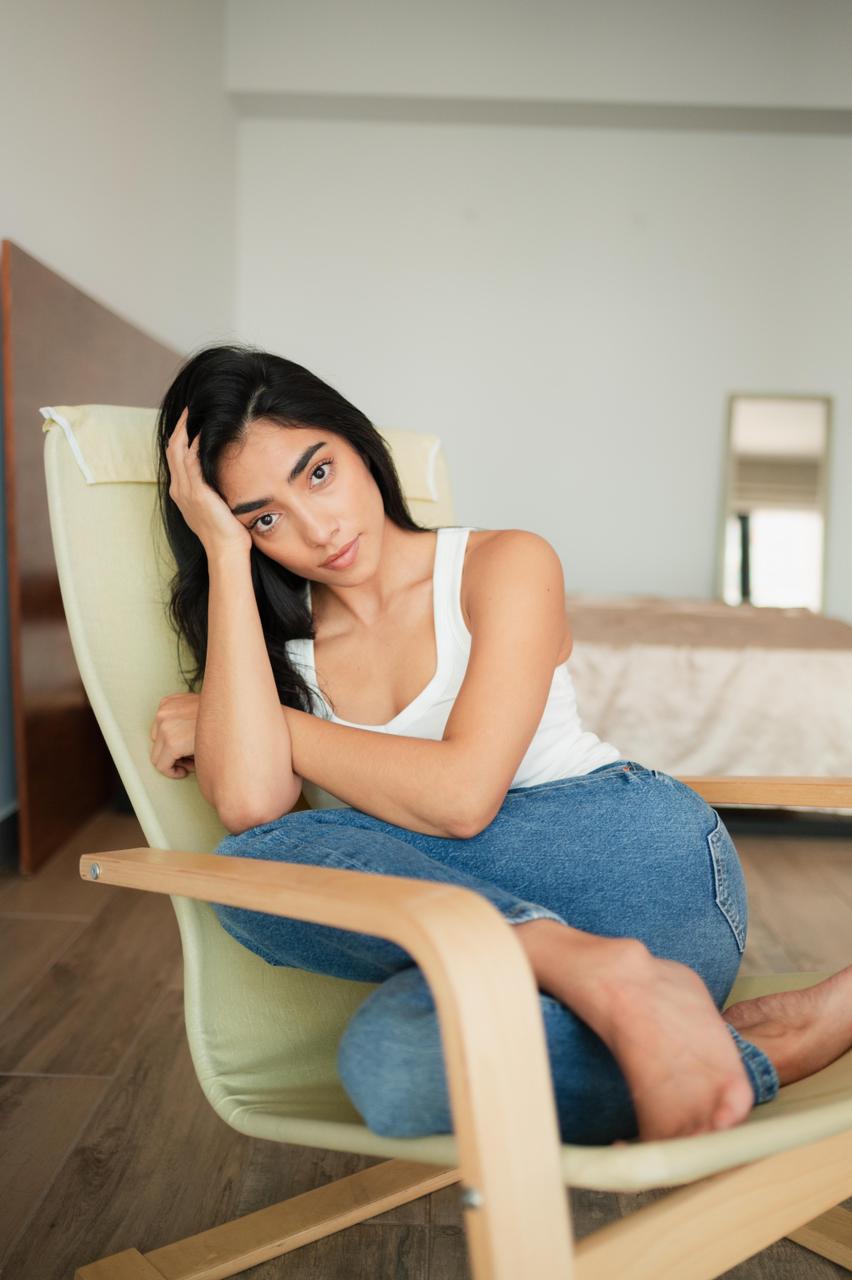
Jennifer Gabrielle develops her own projects while consolidating her acting career. (Photo: courtesy Emanuel Díaz)