
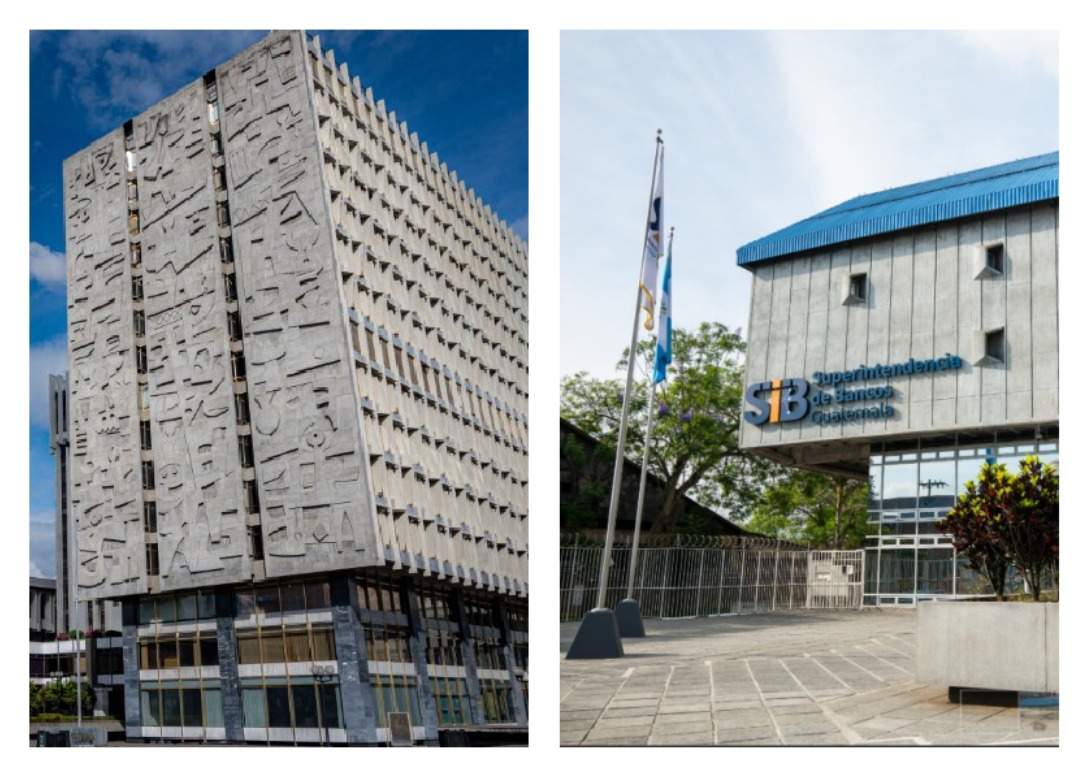
The appointment of the new president and vice president of the Bank of Guatemala (Banguat) and the Monetary Board (JM), as well as the head of the Superintendency of Banks (SIB), constitutes another of the processes of institutional renewal planned for this year, as happened with the magistrates of the Supreme Electoral Tribunal (TSE), the Constitutional Court (CC) and, recently, with the appointment of the attorney general.
The term of the current authorities ends on September 30 and, from October 1, the new heads of central banking and supervision of the financial system will take office.
The officials who are appointed – a responsibility that corresponds to President Bernardo Arévalo – will have to face a complex economic environment, marked by international geopolitical tensions and their possible repercussions on the Guatemalan productive system in the economic scenarios of 2026 and 2027.
Appointments countdown
A panel of analysts consulted by Free press agreed that the people who direct Banguat and the SIB must meet technical criteria, have career experience and a proven track record, in addition to having extensive knowledge in monetary, exchange and credit policy. They also stressed the importance of having control of the national financial system and the Financial Intelligence Unit (UIF), in order to transmit confidence to national and international economic agents.
CONTENT FOR SUBSCRIBERS
The election must be held on October 1 and, in accordance with the law, it is up to the President of the Republic to make the designation.
Meanwhile, Expectations have begun to build around the next appointmentsespecially on whether institutional, career and technical capacity criteria will prevail, or whether they will respond to political interests.
Technical profile will mark election in the SIB
The replacement process in the SIB will begin between July and August, which, unlike the appointment of the presidency of the central bank, there are substantial differences and a program to follow has already been established.
The members of the JM must make a call to professionals, especially in the economic sciences such as Public Accounting and Auditing, so that they can participate as head of the SIB for the next four years. The call reaches all sectors, but there is participation of active personnel from the superintendency, as well as the mayors.
In general, Banguat directors receive between 20 to 25 resumes, the requirements are reviewed one by one, there is a demotion table and a weighting is made based on academic merits and university professors, experience, whether they have worked in the financial sector in addition to the public sector or with international organizations, which in general are among 10 qualities that are graded and given points. This process is done in conjunction with Banguat and a JM commission.
The people who direct the Banguat and the SIB must meet technical criteria, have career experience and a proven track record, in addition to having extensive knowledge in monetary, exchange and credit policy.
The next process is a list of six candidates and the members of JM proceed to a vote for a shortlist of the best qualified. That shortlist is sent to the representative and he is the one who makes the assignment.
In the profile and the ideal, They are those who have worked in the SIB, in the national financial system and in international organizations, they have greater possibilities.
“The ideal is for it to be someone who comes from the SIB because it is a career and who knows the entire institution and who has held high positions such as mayor, who are second in command to the superintendent,” explained Sergio Recinos, former president of Banguat.
Career profile gains weight in Banguat
With the reform of the banking laws of 2002, which included the Organic Law of the Bank of Guatemala (Banguat), At least two exceptions have been recorded in the appointments of those who have headed the central bank, while the rest of the appointments have responded to career profiles.
CONTENT FOR SUBSCRIBERS
According to Sergio Recinos, former president of Banguat, the institution has contributed to maintaining the macroeconomic stability of the country, which is why he considers it necessary to avoid sudden changes in monetary, exchange and credit policy, which he described as “lethal.”
As an example, he mentioned that there are “temptations” to reduce the leading monetary policy interest rate by up to one hundred basis points and, a few months later, increase it by 50 points. In his opinion, These types of decisions generate uncertainty in economic agents.
“That is fatal for expectations and giving those signals of having a very variable monetary policy is not good at all. The best thing is to have a conservative and consistent approach,” said Recinos.
The former official insisted that the presidency of the Bank of Guatemala should fall to a career person with technical experience.
“The ideal is for the president of the Bank of Guatemala to be a career person. Currently there are good technicians and there are also other people outside the institution who have that experience, which is ideal,” Recinos concluded.
See risks in changes without a technical profile
Regarding the risks and consequences of an appointment that does not respond to that technical profile, Sergio Recinos warned that, in the case of the Superintendency of Banks (SIB), appointing a person with a political focus and without knowledge of financial supervision could lead to two scenarios.
The first, he explained, would be for the new authority to respect the institutions and maintain the technical teams, which would allow the work to continue normally. The second scenario, which he considered more delicate, would occur if there are changes in the institution’s technical staff, which could generate instability in the financial supervision tasks.
“The ideal is for the president of the Bank of Guatemala to be a career person. Currently there are good technicians and there are also other people outside the institution who have that experience, which is ideal.”
Sergio Recinos, former president of Banguat
In any case, he reiterated that the financial system remains attentive to the designation process.
Regarding the Bank of Guatemala, Recinos pointed out that, because the institution is in charge of monetary, exchange and credit policy, the arrival of a person with an eminently political profile and who does not respect the technical cadres could cause loss of trust and institutional credibility, and even compromise the macroeconomic stability of the country.
“It is a delicate issue who could lead the central bank. In the worst scenario, if the technical tables are not respected, there could be disastrous consequences at the macroeconomic level,” he insisted.
They ask that the presidency be left in technical hands
Hugo Maul, analyst at the National Economic Research Center (Cien), pointed out that the next president of the Bank of Guatemala must arrive with the ability to correct internal aspects that may not be visible from the outside, but that are relevant to the functioning of the institution, which, he stated, has highly trained professionals.
“If a decision has to be made, the race must prevail. Someone from within would be the right person for the presidency of Banguat. Institutions must be preserved,” he remarked.