
Political and social polarization, increase and advance of organized crime, rapid adoption of artificial intelligence, large-scale migration and a triple planetary crisis in environmental matters are the main pressures facing democracy in Latin America and the Caribbean, according to the report “Democracies under pressure”, prepared by the United Nations Development Program (UNDP).
According to the report, the American continent is the most democratic developing region in the world, since, according to measurements carried out by the UNDP, four out of five people live in democracy, and elections are the main means of access to power. It also indicates that alternation in government has been frequent in Latin America and the Caribbean during the last 30 years.
However, this strength coexists with a gradual weakening that stems from some outstanding debts of democracy, which, after consolidating itself as the predominant form of government, is under pressure as a result of factors fully identified in the region.
Democracy in Latin America under emerging pressures
The report reveals that Currently there are five fully identified pressures for democracy in Latin America, which do not replace structural problems, but, on the contrary, intensify them. These are: political and social polarization; increase and advancement of organized crime; rapid adoption of artificial intelligence (AI); large-scale migration; and triple planetary crisis in environmental matters, according to Almudena Fernández, UNDP economist for Latin America and the Caribbean.
Fernández details that America is the most polarized region in the world and that this phenomenon has grown significantly. In this regard, he points out that polarization “is capable of transforming a democratic disagreement into a political rupture,” which puts stability at risk by not processing it adequately to reach a resolution.
Regarding artificial intelligence and social networks, details that these “reconfigure the sphere of public deliberation”since they have generated a change in “who speaks, how information circulates and how opinions are formed”, which has caused greater fragmentation of information, mixed with disinformation that spreads more quickly.
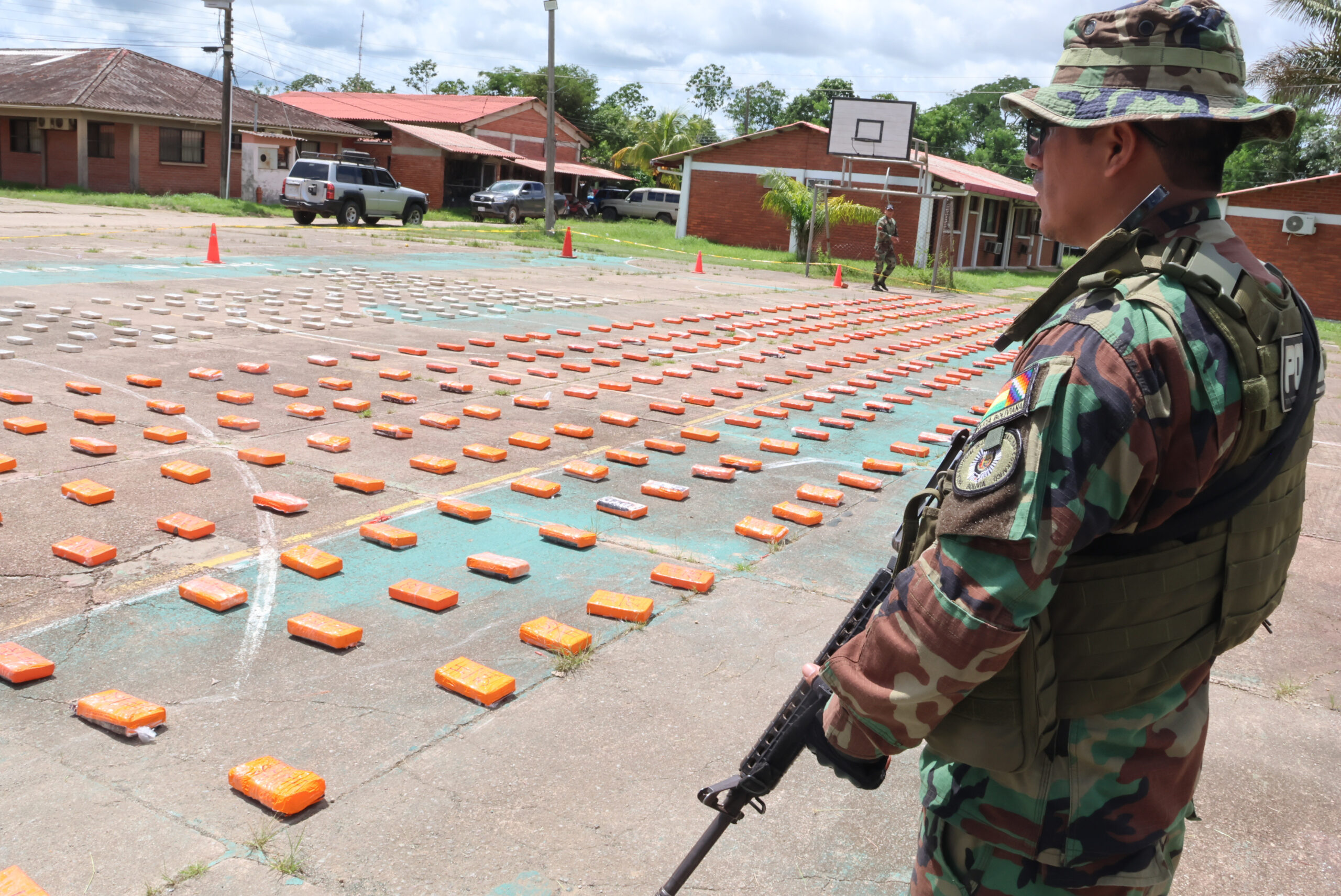
Regarding organized crime, it indicates that it not only represents a threat from a security perspective, but also It distorts political competition, while weakening the democratic State. In this regard, it stands out that illicit organizations use force to influence electoral processes and political decisions. It also highlights that people who feel insecure tend to be less satisfied with democracy.
About migration and human mobility, Fernández indicates that this “reconfigures identities, belongings and dynamics of inclusion and exclusion in the political space.” Regarding this aspect, he also points out that 51.4% of people in the region believe that the arrival of migrants is harmful to their countries.
Finally, it indicates that the planetary crisis caused by climate change, the loss of biodiversity and pollution also generates disputes for democracy, since the governance of natural resources tests the capacity of the democratic model to balance private interests, collective rights and sustainability, as well as the well-being of the inhabitants.
Outstanding debts
In addition to highlighting these “pressures”, The report also emphasizes some “pending debts” of the democratic model in the region, among which economic inequality stands out, which translates into an unequal distribution of resources.
As indicated, 70% of the region’s population supports policies that reduce inequalitysince he considers that it is a problem for society. However, tax systems and public policies fail to reflect substantial improvements in this aspect.
Another aspect that he details is that, although political inclusion has improved, democracy still does not fully reflect the diversity of the region. Here it is noted that, although a significant increase in female participation has been observed in recent decades in political matters, the region has not yet achieved gender parity within these spaces.
It also highlights the constant weakening of institutions of citizen representation, such as political parties. According to the report, only a minimal percentage of the population of the countries in the region “identifies” with a political party.
Finally, it emphasizes corruption, a structural problem in the region. The report indicates that this problem “erodes trust, reduces democratic support and weakens citizen participation.”
The document indicates that the perception of the inhabitants of the different countries in the region in relation to the democratic model in each of their countries is negative. The measurement result indicates that 64% of people feel dissatisfied, while 70% have the perception that within the democratic model only a few benefit.
Support for authoritarian regimes
According to Michelle Muschett, UNDP regional director for Latin America and the Caribbean, “The number of people who are willing to support an authoritarian regime is increasing if it solves their problems.” This derives from problems such as violence generated mainly by organized crime, which is part of the pressures detected and which is increasingly expanding in the region.
Muschett indicates that “the fact that democracy has endured does not guarantee the sustainability of democracy,” since there is still the risk that it may also suffer setbacks.
He also emphasizes that “the alternative is not to replace democracy, but to find mechanisms to protect and renew it, and to make improvements so that democratic systems are more transparent and representative.” Furthermore, it indicates that it is very important to channel the demands of citizens, while providing concrete and tangible results for human development.
This situation represents a “historic challenge” regarding the ability to transform these pressures and achieve the development of the region, as well as generate better opportunities for the inhabitants, says Muschett.
Recommendations
According to the UNDP, This challenge is not limited to “defending the democratic status quo,” but in renewing democracy to confront both historical debts and emerging challenges.
In this sense, it is recommended to renew the links between democracy, human development and the State. Regarding democracy, it establishes that the integrity of political competition must be ensured and the capacity of democracy to represent citizens and process conflict must be reconstructed. Regarding human development, it proposes generating tangible and resilient results that strengthen democratic legitimacy and expand people’s capacity for action. Finally, it proposes the construction of a State for democracy and development, while strengthening its capacity to exercise authority, implement decisions and limit the capture of its institutions throughout the territory.