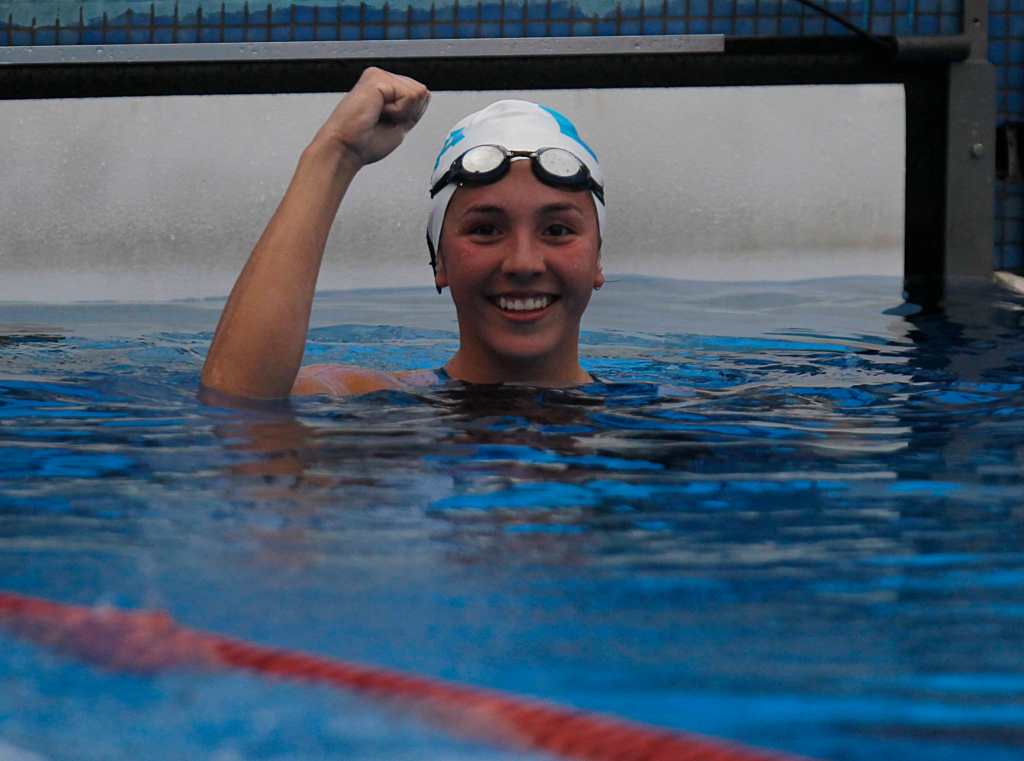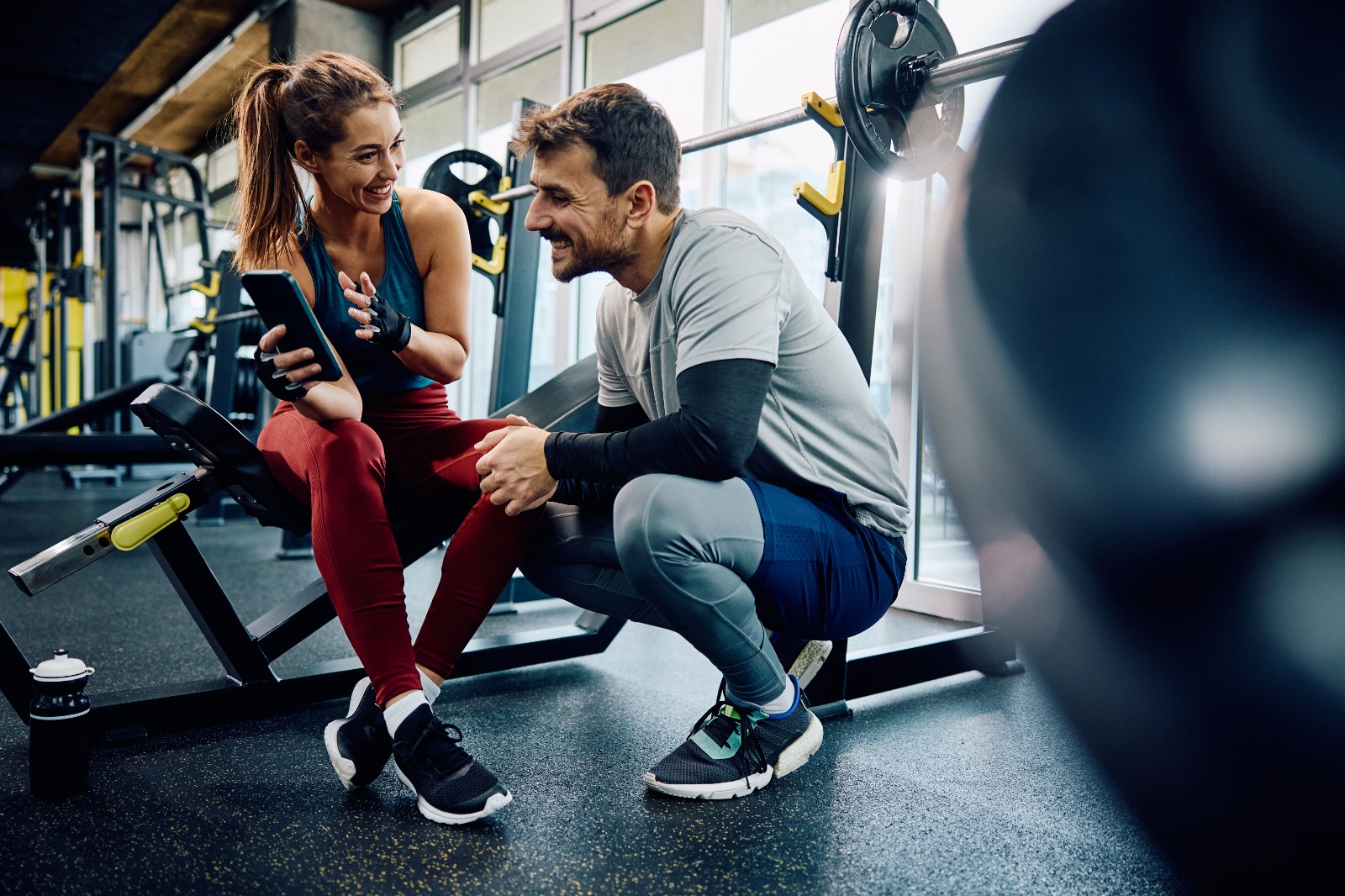
While Millions of people consume fitness content (everything related to the set of exercises and practices aimed at getting or staying in good shape and health) on social networks, Former Guatemalan Olympic swimmer Valerie Gruest warns that these images also shape insecurities, comparisons and harmful behaviors among young people.
From Northwestern University, Illinois, USA, where he currently resides and is pursuing a doctorate, Gruest gave an interview to Prensa Libre, in which he details his findings and explains how this content negatively influences self-esteem, body image and the relationship with food and exercise.
What type of content does your research analyze?
The content is called fitness inspiration content, which in Spanish would be fitness inspiration content. He is quite focused on being in shape and spreads a lot on social networks. It shows images of fitness intertwined with ideals of beauty.
What does the study reveal?
That being exposed to this content, particularly among young adults, leads to more comparisons with the people who appear in the images. It also creates unhealthy motivations around diet and exercise, and has a negative influence on how people think about themselves, their body image, how satisfied they are with their appearance, and how positively they think of themselves.
The research reveals the reality of growing up in a social media environment where these images are consumed daily in very high quantities and how that affects emotional states.
Where does the information analyzed by the study come from?
The data used comes from experimental studies published between 2015 and 2023. In these experiments, people were exposed to this type of content and we carried out a quantitative and statistical study to analyze the general effects of that exposure.
At what point does something seemingly healthy become harmful?
That is precisely why this content is so important to study.
You would think that if people are watching content that supposedly encourages healthy lifestyles, exercising, and eating better, it should be positive. But the thing is that everything is very strict. Exercise is promoted to be ultra-lean and ultra-toned; nutrition focuses on ultra-low fat percentages and calorie deficit.
There we begin to see negative patterns. People can take this to the extreme, developing eating disorders or an ultra-fixation on exercise and ultra-healthy diets, where deviating becomes a psychological problem.
Additionally, this content is not created by medical professionals. It is created by influencers who motivate others to get the body they have, but without a scientific or nutritional basis. That makes it dangerous for young people because the guidelines are very strict and can be taken to the extreme.
Does the study address figures who advise on health without being experts?
Yes, that is the theoretical basis of the study. The study specifically analyzes the effect of viewing images and how that content influences those who consume it.
What does the analysis conclude?
The conclusion is quite strong. All the results present a very discouraging picture: exposure to this content increases social comparisons, generates unhealthy motivations around food and exercise, and negatively influences self-esteem, body image, satisfaction with appearance and mood.
These findings pave the way for future research and offer empirical evidence on how young people use this content and how they internalize it.
What does the study propose as a possible solution?
The foundation is to be aware of what we are consuming on social networks and be attentive to possible emotional effects. Particularly, identifying signs like negative body image, lower-than-normal self-esteem, or lower mood and recognizing what type of content is causing it.
In this specific article we do not address solutions, because it mainly focuses on identifying the problem. But in the next study of my dissertation—doctoral thesis—which will be published soon, we spoke with users and analyzed the trajectory of content internalization. Many describe that it is quite useful to identify the type of content they consume.
What changes does the research seek to promote?
Take control of the use of social networks. For example, tools within the platforms that allow you to decide in advance: “I don’t want to see this type of content.” Also reduce the time you spend on social networks or stop following accounts that promote very restricted eating or extreme messages. It is an active way for the user to make decisions about the content they consume.
What is the purpose?
Understand what people are looking for, what their goals are and their values around food and exercise. The idea is to look for accounts aligned with health perspectives and not beauty ideals. The motivation should be to seek to be healthy beyond physical appearance.
What’s next in your research?
Two more studies from my dissertation are about to be published. One looks at the effects of being exposed to this content beyond just seeing images; It also studies the messages it promotes and how people use it in their daily lives. Analyze how they are within their digital environment consuming this content and how it impacts their well-being and health.
The other study is interviews with users who consume this content to understand what aspects draw their attention, which ones cause negative effects and how the internalization process towards negative socio-emotional states occurs. We also seek to understand how they manage their networks, how they curate content so that it doesn’t affect them as deeply, and how they seek out content that is closer to what they want in terms of motivation with exercise and diet. In addition, we are developing studies in more diverse populations, because most research focuses on white populations from countries such as the United States, England and Australia. We want a more global perspective, considering different ages, genders and ethnicities. An important part of my future research focuses on how Latinas use social media, how they see themselves represented within health and fitness content, and how they use these platforms as a means of inspiration or source of information.
Where was the article published?
This article is part of my doctoral dissertation. I am a doctoral candidate at Northwestern University, in the Media, Technology and Society program. The article was published in Health Communication, from Taylor & Francis, one of the most important academic research publications. It was published earlier this month and generated a lot of news coverage, opening up the conversation about how we understand this type of content and its risks. Research shows that even very limited exposure can lead to negative effects. In the studies, people saw between 10 and 27 images, approximately, what we consume in a minute on social networks. If we think about that on a large scale, the effects are cumulative.
What are you currently studying?
I am earning a PhD in Media, Technology and Society at Northwestern University. The program is within the Department of Communication and studies the intersections between digital media, sociology, psychology, anthropology and technology. It is a program focused on understanding how we interact with media and how that affects our daily experiences beyond the screen.
How did you get into the investigation?
The transition was quite natural. After retiring from the sport, I had around 50 free hours a week that were no longer occupied by training, and the opportunity arose to start collaborating with a research laboratory in
Northwestern. There I built my path in research, finding mentors who guided me towards the doctorate. I applied—applied for admission—to the doctoral program and was accepted. It is a very selective program, with an acceptance rate close to 8%. I have spent the last six years pursuing master’s and doctoral degrees.
What areas does your research connect?
The research unites dialogues between the technological environment, social networks, sports and media psychology with sports psychology. The main focus is to understand how the use patterns of social networks and digital platforms impact our attitudes and actions related to health and well-being.
Did your experience as an athlete influence the research?
Yes, totally. This is where the motivation for my entire line of research arises. Many people think that athletes are the healthiest people, but there are problematic dynamics related to diet, weight and physical appearance.
Currently, I am involved with Panam Sports and am president of the athletes committee. We are educating athletes and coaches on healthy standards related to nutrition.
Impact on self-esteem
A meta-analysis on fitspiration content on social networks concluded that constant exposure to fitness images associated with beauty ideals negatively affects self-perception.
The research, which brought together 26 studies published between 2015 and 2023 with a sample of 6,111 people, determined that this content increases social comparisons and promotes unhealthy motivations related to diet and exercise. In addition, it negatively influences self-esteem, body image, satisfaction with appearance and emotional state. The study warns that fitness content has become an everyday feature on social networks and its effects have still been little studied. Other analyzes cited indicate that 67% of people say that social networks make them feel worse about themselves and their lives.
Valerie and swimming
Before becoming a doctoral researcher at Northwestern University, Valerie Gruest represented Guatemala at the 2016 Rio Olympics and built a swimming career marked by triumphs.
Rio 2016 Olympic Games: first Guatemalan with an A brand.
Five world swimming championships: Istanbul 2012, Barcelona 2013, Doha 2014 and Kazan 2015.
A world Open Water championship: Barcelona 2013.
19-time Central American and Caribbean champion.