
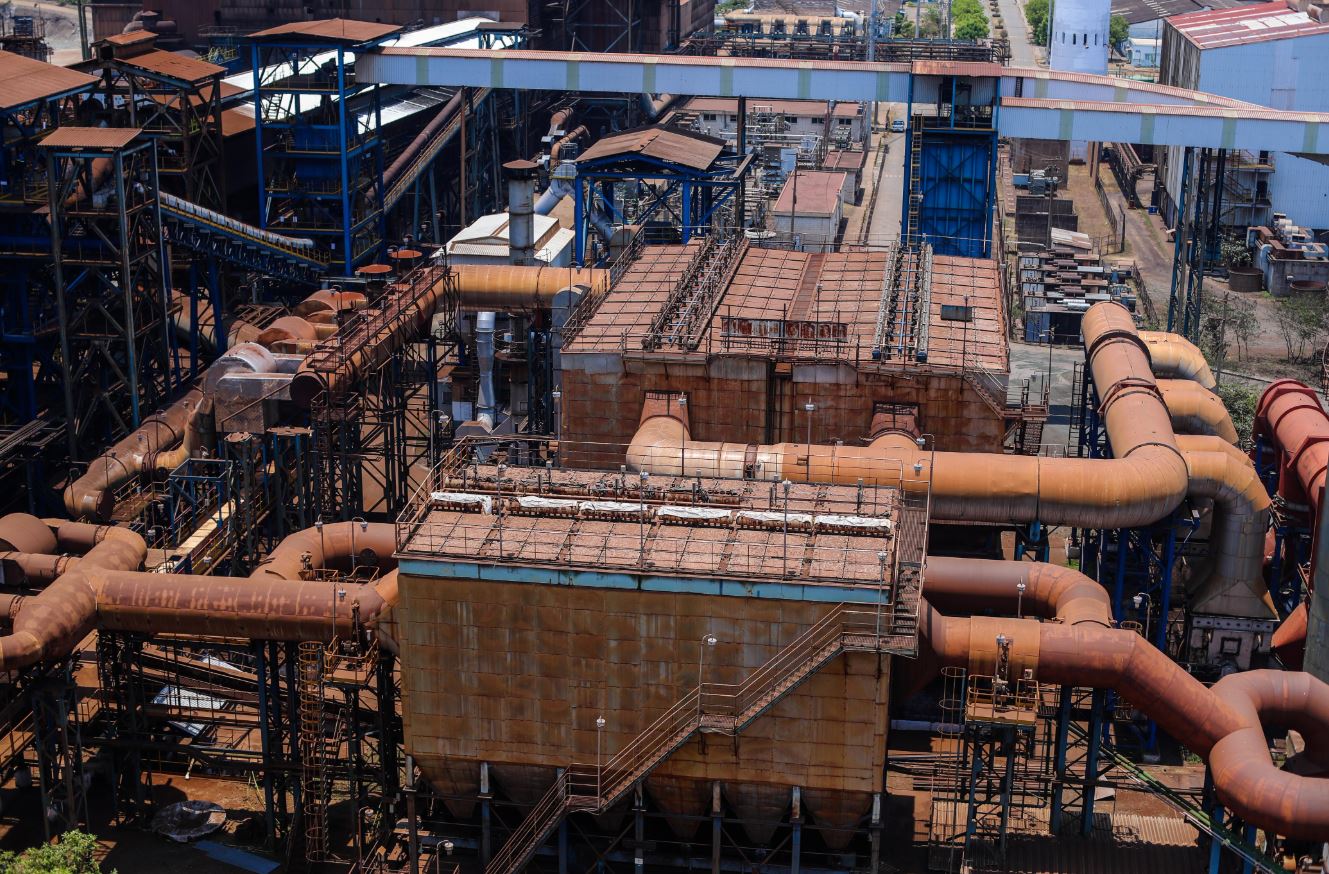
The Guatemalan Nickel Company (CGN) adopted the name Fenix Minerales, S. A.., and is in charge of the license for the Minera Fénix extraction project, in Izabal; Meanwhile, the Izabal Nickel Processing Company (Pronico) became Fenix Metales, SA; Both companies operate under the Fenix Nickel brand.
Its parent company is no longer the Solway Investment GmbH group, based in Switzerland, but Fenix Nickel Company LLC, registered in New York, United States, executives reported.
There is now a new organizational and governance structure, they added.
CGN and Pronico had been sanctioned by the Office of Foreign Assets Control (OFAC), of the United States Department of the Treasury, at the end of 2022. Then, the companies temporarily suspended their operations in March 2023. In 2024, the US sanctions were lifted, while in August of that year the Ministry of Energy and Mines (MEM) approved their export credentials again.
Investment to reactivate
To resume operations, The recent investment, between 2025 and 2026, amounts to around US$85 million in areas such as maintenance, modernization and preparation for operational restart, reported the president of Fenix Nickel and member of the board of directors of the parent company in the United States, Marco Aceituno.
It was explained that among the main investments are the modernization of the plant and industrial systems, maintenance of the furnace to restart it, strengthening environmental controls and monitoring, updating electrical infrastructure, implementing new governance and compliance systems, and operational preparation and industrial safety programs.
Separately, US$70 million were invested by the former headquarters in operation and maintenance (preservation) expenses of the facilities and economic advantages when voluntary retirements of personnel were made.
Operations reactivation process
Upon resuming processing activities, the oven began to be turned on at the end of March 2026 and, taking into account that it takes about 45 days to reach the necessary temperature to carry out tests, production began in May, under the new business, operational and administrative scheme, added the president.
CONTENT FOR SUBSCRIBERS
To date, the maximum temperature point has not yet been reached, because about 120 megawatts (MW) of power are required to achieve optimal production. They currently have 50 MW that they acquire in the spot market—opportunity market without a contract—and they plan to reach 75 soon, and in around two years reach 120 total MW, Aceituno explained.
On this topic, both the president of Fenix Nickel and David Orellana, director of Communication and Corporate Affairs of the company, indicated that as part of the modernization and operational transformation process it was decided to stop self-generating electricity, which is mainly consumed by the furnace for processing, and connect to the national electricity system. For this, a 230 kilowatt electrical substation was built, with an estimated cost of US$24 million.
As a result of this energy transition, an approximate 42% reduction in the operation’s greenhouse gas emissions is projected, going from approximately 67 tons of CO₂ per ton of nickel produced to approximately 39 tons of CO₂ per ton of nickel produced, Orellana added. The previous plant, which operates with coal, will be maintained for emergencies.
Production
The Fenix Metales (formerly Pronico) furnace began to turn on at the end of March, operate in April and process in May, and it is expected that in three months from that date it will reach its full capacity, Aceituno added.
For 2026, the processing of around 1.6 million tons of ore is planned, while the projected production is estimated at 17 thousand tons of nickel (in ferronickel), executives reported.
Starting in 2027, a nominal production of 25 thousand tons of contained nickel per year is estimated.
Exports restart
After reactivating processing operations, the first export was sent on Friday, May 15 of around 1,200 tons of ferronickel destined for Taiwan.
The company explained that this export is part of the progressive restart of the project’s commercial operations and represents one of the first international shipments under the new corporate and operational structure of Fenix Nickel.
Next June, it is planned to restart the mine’s production activities under the same license. of the Minera Fénix extraction project, Aceituno explained.
At the moment, the material that has been stored since 2023, when they temporarily suspended operations, is being processed. In addition, they buy material from Element 28, he added.
Apart from Taiwan, they plan to export to the United States, the European Union and South Korea.

Jobs
They currently have 1,400 direct employeeswhose hiring began to be reactivated around six months ago. They project to reach 1,800 direct jobs when they reach stable operation. According to Aceituno, around 80% are local people, and it is expected to reach 85%.
According to data provided by the company about production in 2022—before it suspended operations—an approximate extraction of 2 million tons of lateritic mineral was recorded. The annual production of ferronickel was between 22 thousand and 25 thousand tons of contained nickel. With which the historical monthly production exceeds 2 thousand tons of nickel in ferronickel.
The main export destinations were Europe and Asia, mainly used for the production of stainless steel.
Regarding the mine, it was reported that there is a reserve of 36.2 million tons, with a concentration of 1.86% of nickel per ton.
Meanwhile, the estimated cumulative investment in the project in Guatemala since 2011 is around US$973.8 million, the company reported.
