
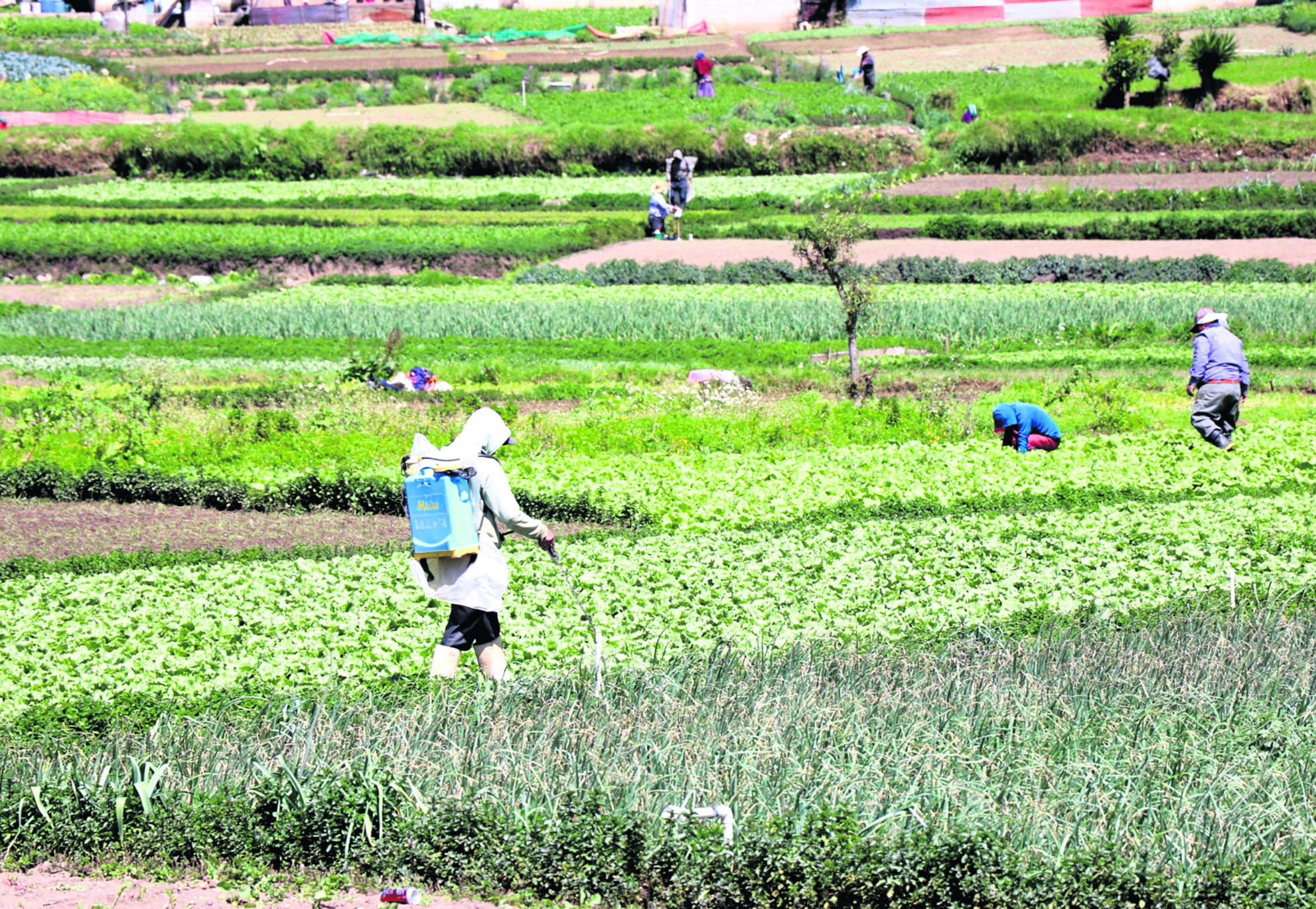
Guatemala and the Food and Agriculture Organization of the United Nations (FAO) recently signed the Country Programming Framework (CPF) 2026-2029, aimed at technical cooperation to strengthen food and nutritional security, reduce poverty and promote more sustainable, inclusive and resilient agri-food systems in the country.
René Orellana Halkyer, FAO regional representative for Latin America and the Caribbean, spoke with Free press about the importance of the agreement, the impact of the El Niño phenomenon and the impact on the increase in inputs and fertilizers due to the conflict in the Middle East. In addition, he spoke about the importance of preventive actions to reduce the impact on populations.
What is the scope of the agreement that FAO signed with the Government of Guatemala?
A country program framework has been signed, which is the name we give to the work agreements, with a period of four years, established by FAO with the governments. It is built with the participation of the authorities, who give us the strategic lines of this country framework.
It includes objectives linked to nutrition, strengthening of productive systems, school feeding programs and strengthening of forest management. As well as issues related to soil and water, which President Bernardo Arévalo has raised with us, and strengthening the resilience capacities of communities, such as in the dry corridor.
What results can we expect by 2029?
We have proposed indicators that respond to several objectives, among them, designing and implementing, in regions defined in Government planning, inclusive financial services that can strengthen the production capacity of small producers.
We have several projects. One of them will be implemented in the coming months in the dry corridor, with a focus on adaptation to climate change. There are US$31 million destined for Guatemala, in Quiché, and it is a project that articulates the private sector. It has no debt obligation to the State. We mobilize resources through commercial banks and microfinance organizations.
We also provide support with technical assistance, strengthening in municipalities, preparation of watershed management plans and support to microfinance entities in the preparation of credit packages.
They have also asked us to update and formulate the Katún 2032 plan. Part of our work is to assist in the design of public policies and plans, as well as develop actions in the field.
What other topics do you prioritize?
They have asked us to accompany the development of the water standard and the strengthening of the production of bioinputs that can be manufactured in the country.
One of the policies promoted by the Government is to strengthen biofactories, and our interest is to identify the network of producers and value chains linked to bioinputs with low environmental impact, which can be affordable for the producers’ economy and which can, in part, replace the import of fertilizers based on fossil fuels.
National and international forecasts indicate a high probability that the El Niño phenomenon will occur in the coming months. How can it affect Guatemala?
El Niño is characterized by an extended period of stormy rains that will undoubtedly affect small producers and producers in general, and can generate impacts from extreme events, with damage to crops, people, communities and infrastructure.
One of the contributions of FAO in recent years, in coordination with the Government, is the zoning of agricultural productive areas vulnerable to the impacts of extreme events. This involves studies and mapping, identification of these points and support with early warning systems, strengthening of productive systems so that they are resilient and development of capacities in municipalities and local governments.
Is a greater impact expected on populations that subsist on agriculture?
The forecasts are of a probable medium to high impact. We are preparing a more rigorous analysis of the areas that could be affected. We are not going to go ahead and say which ones or to what degree; It is not our objective to generate an alarm if it is not supported by evidence.
Recent studies indicate that in Guatemala 44% of the population is food insecure and 18% is in a severe situation. To what extent can this scenario be complicated by the El Niño phenomenon?
It is important to strengthen productive capacity. We have to develop structural capacities and the Government, with its planning, has contributed to developing them.
What do they imply? That’s where we intervene. We are not just an institution that accompanies communities and the Government in emergency situations; We also work to create structural conditions of resilience: develop agri-food systems with the capacity to resist climate impacts through the sustainable management of agroecosystem resources; crops that resist extreme impacts; creation of local governance that strengthens these productive processes; support for incentives for agroforestry and agrosilvopastoral projects; management of water and inputs required by productive systems. These structural conditions are what will make us resist the impacts of this El Niño phenomenon.
The FAO works on this, but also on preventing short-term extreme events. We intervene quickly and manage resources, but our main mission is to create structural conditions of resilience.
What effects does the conflict in the Strait of Hormuz have on the issue of fertilizers?
It is important to create structural and long-term conditions to replace, at least partially, the dependence on fertilizers based on fossil fuels and to strengthen biofactories. They must be identified, mapped and know their value chains. This is a task that the president has asked of us and it is a long-term vision.
It will not respond immediately to the crisis Middle Eastbut it will allow working with a horizon that generates less dependence on imports and reduces the flight of foreign currency from the purchase of fertilizers based on fossil fuels, in addition to avoiding the impact of chemical products that could affect crops.
The current impact of the conflict in the Middle East is undoubted. Almost 30% of fertilizers come from this region and it is a global impact that is also being felt in Guatemala.
Will this situation raise the price of fertilizers?
Yes, it is impacting prices. The issue is not the responsibility of any particular country; It is a global problem.
Prices are rising, fertilizer application doses will decrease and, therefore, in some countries productivity will decrease. The impacts are severe in long-term crops and precisely in growing seasons.
What will happen to the price of food?
The impact on the increase in food prices is general, not only in Central America, but throughout the region, due to the increase in fertilizer prices, their shortage and the increase in hydrocarbon prices.
And how long could this impact last in the region?
There are structural impacts that, even if the war is resolved in the short term, will be difficult to overcome for several years, especially for crops that required fertilizers in an adequate dosage and that were not applied in a timely manner, which can generate low productivity.
The increase in fuel prices may have an impact in the medium term on harvests and crops in the agricultural calendar.
During the Russia-Ukraine conflict, there was also an impact on the issue of fertilizers. Is the situation more critical now?
I think that the conflicts add up and the impacts do too, but particularly in the case of the Middle East the scenario is complex, since 20% of oil fuels come from this region and more than 30% of fertilizers.
So, it is probably much more complex than what we have experienced in other conflicts. The impact, I would say, is longer in some respects.
What other effects could the conflict in the Strait of Hormuz have?
The interruption of trade corridors and the transportation of food and supplies, which are interrupted by the conflict not only in the Strait of Hormuz, but in a region that is part of merchandise transportation corridors and that is in a recurring and very long-term disruptive situation.
How do you evaluate the response capacity of the Guatemalan Government to reduce these impacts?
Guatemala has developed a strong institutional framework in terms of technical capacity, planning and resource management. The country has an institutional framework with potential at the local level to meet and accompany the needs of producing organizations.
Strengthened institutional governance, linked to producers, allows for a structure capable of planning and responding to the impacts of extreme events. This is a valuable capital that Guatemala has.
In addition, it has identified the most sensitive issues and has decided to add institutional forces, including those of FAO, to accompany the solution of long-term problems.