
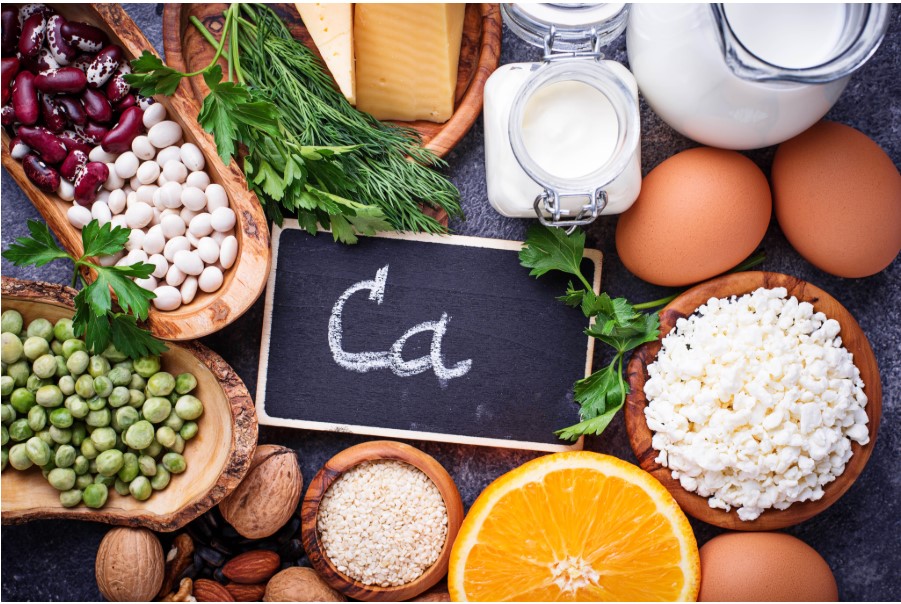
By the time many people seriously consider bone health, age-related bone loss is likely already a fact. The foods and drinks you consume throughout your life have a considerable impact on your future bone health, so it’s never too early to optimize your diet to take care of your skeleton.
Building and maintaining strong bones helps provide structural support to the body and reduces the risk of osteoporosis and fractures as we age, said Heidi Prather, an attending physician and professor of physical medicine and rehabilitation at the Hospital for Special Surgery/Weill Cornell Medicine.
In youth, the body generates new bone faster than it reabsorbs old bone, so bone mass continually increases. Most people reach their maximum bone mass between the ages of 25 and 30. Thereafter, bone resorption exceeds new bone growth, and bone density naturally decreases over time.
Lourdes Castro, a registered dietitian and director of the New York University Food Laboratory, suggests thinking of bones like a retirement account. When you are young, you can increase bone mass with healthy lifestyle habits such as exercise and a nutritious diet. Later, the focus is on maintaining what has been achieved.
“Normally, you can’t build anything beyond 30 years, but you can preserve what already exists and protect it,” Castro said.
Here’s how your diet can help you achieve it.
Important nutrients for bone health
A balanced diet is essential for developing and maintaining strong bones, and it’s not that complicated. For example, recent studies show that a Mediterranean diet, rich in fruits, vegetables, whole grains, legumes, lean proteins and healthy fats such as olive oil, is associated with a lower risk of fractures and possibly a lower risk of osteoporosis.
In addition to eating a balanced diet, some individual nutrients are especially important for bone health.
Calcium
Calcium is the most abundant mineral in the body, and most of it is stored in the bones and teeth. “It helps keep our bones strong and healthy,” Prather said.
Adequate calcium intake is important for developing and maintaining bone mass, but many adults do not consume enough. “If you don’t get enough calcium, your body will use the calcium in your bones for other needs,” such as maintaining a normal heart rate and contracting muscles, Castro explained.
Most adults should consume 1,000 milligrams of calcium per day. Some people need a little more. Women between 51 and 70 years old and all adults over 70 years old should consume 1,200 milligrams per day.
Vitamin D
Vitamin D doesn’t get as much attention as calcium, but it plays a critical role in bone health by helping the body absorb calcium in the intestine. “You could consume all the calcium in the world you want, but unless you accompany it with vitamin D, it won’t do you any good,” Castro said.
Vitamin D also promotes bone growth, strengthening and remodeling, and helps protect against osteoporosis.
Adults under 70 need about 600 international units (IU) of vitamin D per day, and those over 70 need 800 IU. Foods rich in vitamin D such as oily fish, egg yolks, fortified milk and orange juice can help cover part of these needs, as can sun exposure.
Your doctor may also recommend a vitamin D supplement if your levels are low.
Protein
Protein helps build and maintain bones and muscles. It is recommended to consume between 1 and 1.2 grams of protein per kilogram of body weight per day. This is critical for older adults, as insufficient protein intake is associated with muscle weakness and age-related muscle loss, known as sarcopenia, which can increase the risk of falls and bone fractures, according to Joan Salge Blake, a registered dietitian and clinical professor of nutrition at Boston University.
Foods to Eat for Bone Health
Yogurt
Research has linked fermented dairy products, such as yogurt, to a lower risk of fractures. Half a cup of plain nonfat Greek yogurt contains about 173 milligrams of calcium and 16 grams of protein. Some yogurts are also fortified with vitamin D.
“When reviewing the nutritional information, you can see that each serving contains between 10 and 25 percent of the recommended daily value of vitamin D,” explained registered dietitian Kelly Jones. “Other foods are not fortified, in which case the recommended daily value is 0 percent.”
On a food’s Nutrition Facts label, the percent daily value tells you how much each nutrient in one serving contributes to the recommended daily diet for the average adult consuming 2,000 calories a day.
As a quick reference: 5% or less of the daily value of a nutrient per serving is considered low, while 20% or more is considered high.
For an easy breakfast, make a green smoothie with yogurt, pear, and ginger, or a matcha yogurt smoothie. Looking for a nutritious dessert? Make a frozen yogurt crust with peaches and cherries.
Also Read: What is Habit Stacking Technique and How Can It Help You Achieve Wellness?
Salmon
“Salmon is a good source of not only calcium, but also vitamin D and protein,” Blake said. “It’s the perfect combination for bone health.” A 4-ounce (113-gram) serving of wild sockeye salmon contains 10 milligrams of calcium, 500 IU of vitamin D (more than 100% of daily needs), and 24 grams of protein.
As an added benefit, salmon has been linked to better cardiovascular, brain, and eye health. Canned salmon is also a convenient option that doesn’t require much preparation and can be a great source of protein for lunch, according to Blake.
Soy
“Soy products, especially calcium-fortified milk and tofu, are great alternatives or complements to dairy,” Jones said. One cup of fortified soy milk contains 200 to 400 milligrams of calcium, varying amounts of vitamin D, and 7 to 9 grams of protein (depending on the brand).
Soy milk works well in many situations where you would normally use another type of milk. Try it in your coffee, overnight oats, smoothies, cereal, soups, or French toast.
Broccoli
“One cup of cooked broccoli provides about 60 milligrams of calcium,” Blake explained. It also contains vitamin K, which promotes blood clotting, helps strengthen bones and may protect against osteoporosis.
“Frozen broccoli, already cleaned and prepared, is a great way to easily add broccoli to meals and soups,” Blake said.
For a tasty dinner, make fried rice with broccoli and mustard greens.
Kale
“One cup of cooked kale provides 177 milligrams of calcium, which is more than 10 percent of the recommended daily value for this mineral,” Blake said.
Leafy greens like kale are also a good source of vitamin K. Some of them, like spinach and chard, are high in oxalates, a type of plant compound that binds to calcium in the intestine and prevents its absorption, Castro explained. However, other vegetables such as kale and bok choy are low in oxalates, “so you have to take into account which ones are the most recommended,” Castro added.
CONTENT FOR SUBSCRIBERS
Kale pesto is a great option to have on hand and use in everything from grain salads to toast and simple pasta dishes.
Incorporating these foods, and others rich in bone-building nutrients, into your regular diet is one of the best things you can do for your body as you age.
“The interesting thing about our bones is that we constantly build them, break them down, build them again and break them down, and what keeps them going is nutrition,” Castro said.