
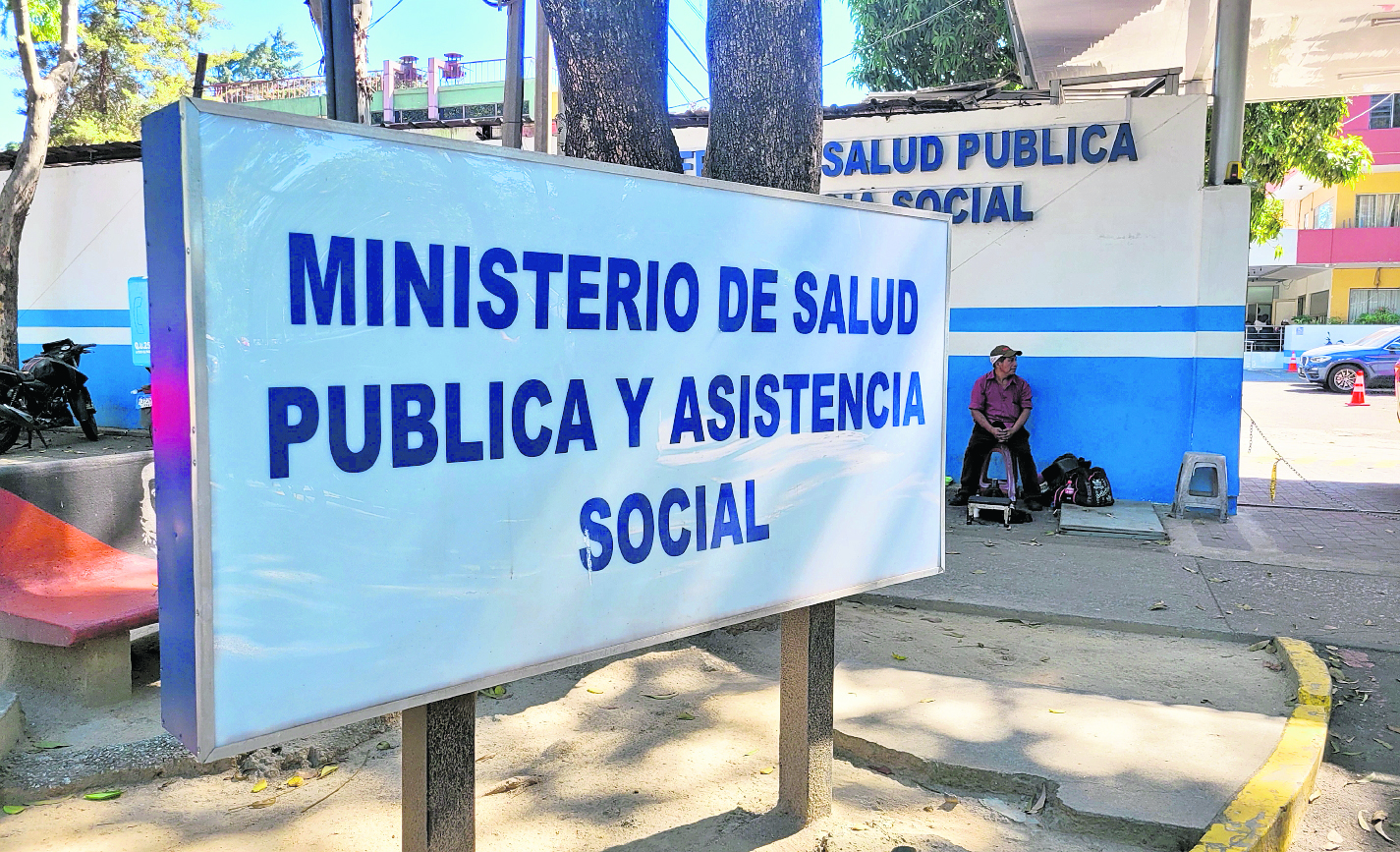
This year, the The Ministry of Health has a current budget of Q16,537 millionwhich came with a resource injection of Q1,337 million, as a result of the expansion that the Executive received in March. At the end of May, portfolio execution is 33.37%, according to the Government Integrated Accounting System (Sicoin) of the Ministry of Finance. For the five months that have passed, this should exceed 40%, according to a basic mathematical calculation.
There are programs whose spending is greater than 30%, such as health promotion and preventive medicine; prevention of maternal and neonatal mortality; health recovery, and prevention of vector and zoonotic diseases.
However, there are two programs with a high impact on the health of the population in which the Ministry of Health has an execution far below the rest: prevention and control of tuberculosis, and prevention and control of sexually transmitted infections (STIs) and HIV/AIDS.
Although the other programs had an increase in funds, the two mentioned suffered a reduction that, between them, amounts to Q842 thousand 770.
The Ministry of Health indicates that the budget execution reported as of May responds to the financial and operational programming established for fiscal year 2026, as well as the time required for the purchasing processes of medicines, diagnostic tests and strategic supplies.
It points out that part of the resources of the tuberculosis program correspond to purchases of medicines and laboratory supplies made through the Strategic Fund of the Pan American Health Organization (PAHO/WHO), and that the expense is reflected as the corresponding shipping, regularization and payment processes progress. Currently, there are several processes underway in different health areas and hospitals.
“The Ministry of Health keeps the service network supplied and continues to guarantee prevention, diagnosis, treatment and monitoring actions for people affected by STIs, HIV, AIDS and tuberculosis,” the ministry states.
He adds that he monitors the financial and physical execution of both programs to meet institutional goals and guarantee attention to the population.
Low budget and little execution
With respect to the tuberculosis prevention and control program, the budget that Health has assigned is Q49.4 millionand The expense as of May is 16.82%.
Johanna Meléndez, infectious disease doctor and coordinator of the Tuberculosis Clinic at Roosevelt Hospital, points out that the incidence of the disease continues to increase worldwide, and Guatemala is no exception.
According to the report Situation of Tuberculosis in Guatemala, from the Ministry of Health, cases have increased since 2021. That year, 18 new patients were diagnosed per 100 thousand inhabitants; By 2025, there was a jump to 26 new cases for the same number of people. When talking about sick Guatemalans, the figure went from 3,000 to 4,777, which represents a 58.9% increase in five years.
In last year’s report, six out of 10 cases were concentrated in the population between 20 and 49 years old. Older adults are also vulnerable to the disease, since in the registry there are two cases out of every 10. There are children affected: they are counted 239 children between 0 and 9 years old diagnosed with tuberculosis.
Escuintla is the department with the most case reports, ahead of Suchitepéquez and Retalhuleu.
The infectious disease doctor Iris Caszali, from the Roosevelt Hospital, explains that tuberculosis is an infectious disease caused by the bacteria Mycobacterium tuberculosis. The main transmission is through the air, when an infected person coughs, sneezes or talks. This mainly attacks the lungsbut a late diagnosis can affect other organs.
Information from the Pan American Health Organization (PAHO) reports that the BCG vaccine prevents tuberculosis. This is applied in the first hours of life or before the person turns one year old.
Despite the low execution of the program to care for and control the disease, Meléndez points out that there is no shortage of supplies, neither diagnostic tests nor medications for treatments.
The increase in tuberculosis cases in the country is due to the fact that more people are diagnosed in time, thanks to the use of methodologies such as rapid molecular testswhich allow an early and more accurate diagnosis.
In addition, Public Health has portable chest x-ray units at the community level and in prisons to evaluate inmates. The x-rays reach a database that provides preliminary readings on the state of the patients’ lungs and allows them to get closer to the diagnosis, according to Meléndez.
HIV on the rise
The other program with low execution is the prevention and control of STIs and HIV/AIDS, which It has a current budget of Q158.6 millionbut whose spending at the end of May reached 18.02%.
With respect to STIs, the diagnosis of cases is increasing, and the rate reflects it: in 2024, 293.4 people were infected per 100 thousand inhabitants, and in 2025 the figure rose to 310.5 for the same number of people. 89% of cases are registered in women, according to official data.
On the other hand, the HIV epidemiological surveillance report in Guatemala shows that In eight years there was an increase of 85.35% in new cases of the diseaseas indicated by the record between 2018 and 2025.
In the first quarter of this year, 541 new infections were reported. 80% of the patients reside in Guatemala, Petén, Alta Verapaz, Escuintla and San Marcos, while the 39% of cases have an advanced diagnosis.
Health information shows that There are 40 cases in the population between 15 and 19 years old diagnosed with HIV, which represents 7% of the total registry. 83.7% of those infected are in the group between 20 and 49 years old.
According to the epidemiological surveillance report, HIV transmission remains current in the country and the high percentage of advanced cases is a symptom of late diagnosis due to lack of screening.
For both cases—STIs and HIV—the recommendations of the Directorate of Epidemiology and Risk Management of the Ministry of Health are to strengthen prevention actions and early diagnosis.