
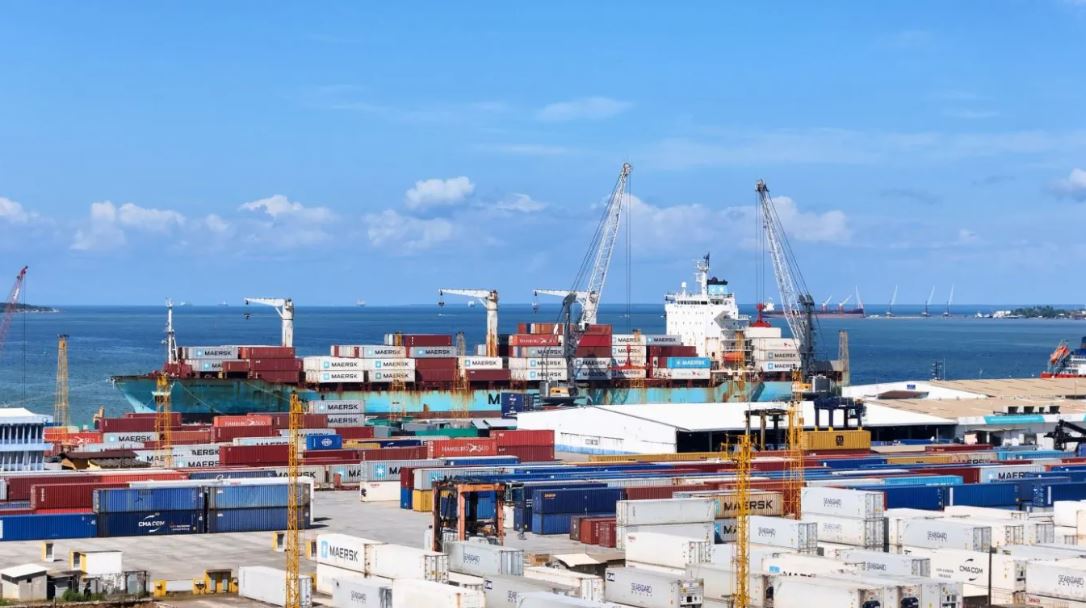
The threat of new tariffs from the United States It once again set off alarms among Guatemalan exporters and producers. Faced with a new investigation promoted by the Office of the United States Trade Representative (USTR), Representatives of the export and agricultural sector consider it urgent that the Government of Guatemala take measures to prevent the country from being included in a trade sanctions scheme. related to the prevention of forced labor in imported products.
The priority actions, according to the businessmen, involve demanding the entry into force of the Reciprocal Trade Agreement signed between Guatemala and the United States in January 2026, as well as presenting evidence and technical arguments that demonstrate that the country is complying with the commitments made to prevent the trade of goods produced through forced labor.
The concern arises after the USTR proposes the application of additional tariffs of between 10% and 12.5% to 60 economies evaluated under Section 301 of the US Trade Act. According to the entity, these economies have not adequately adopted or implemented measures to prevent the entry of products linked to forced labor practices.
A new commercial front
Amador Carballido, general director of the Guatemalan Association of Exporters (Agexport), explained that these measures arise in a context of changes in US trade policy.
According to the executive, the new tariffs constitute an alternative found by the US administration after the Supreme Court of that country annulled the so-called reciprocal tariffs promoted previously and before the upcoming expiration of other liens applied under Section 122 of the Trade Law.
Carballido considers that the new proposal gives President Donald Trump a wide margin of discretion to impose different tariff rates depending on the country or product involved.
“Without a doubt, uncertainty remains because discretion returns,” said the manager, noting that the United States recently threatened Brazil with 25% tariffs for research related to deforestation, a situation that, in his opinion, could be replicated with other countries.
The bilateral agreement, the main bet
For the export sector, the best solution is for the United States to honor the Signed Reciprocal Trade Agreement with Guatemala at the beginning of the year.
CONTENT FOR SUBSCRIBERS
Carballido indicated that this agreement would provide certainty to US exporters and buyers, who currently do not know what the applicable commercial conditions will be in the coming months.
“The first scenario is to demand or try to negotiate with the United States arguing that Guatemala came in good faith to negotiate an agreement and that it be put into effect and not included in section 301,” he said.
The business leader recalled that there is currently uncertainty about whether the agreement is still valid, since it was negotiated under a tariff package that was subsequently suspended.
“What we know is that the agreement is not yet in force, we still do not know when it will come into effect; it is still up in the air,” he said.
In Agexport’s opinion, maintaining this uncertainty affects the negotiation capacity between Guatemalan exporters and their buyers in the United States, the main destination for national exports.
Present evidence to avoid sanctions
If the bilateral agreement is not activated, the second scenario consists of convincing the US authorities that Guatemala is complying with the commitments made in labor and trade matters.
Carballido explained that the country must demonstrate that there are no export chains linked to forced labor, nor deforestation processes associated with exported products, in addition to demonstrate controls on merchandise coming from countries where these practices have been identified.
“We must provide evidence that there is no forced labor here, that there is no deforestation related to export products here, that there are no imports here from countries where that type of thing is done,” he stated.
CONTENT FOR SUBSCRIBERS
The manager also warned that, eventually, Guatemala could be forced to establish stricter control mechanisms on certain products imported from countries designated by the United States, a measure that is currently managed mainly through international certifications.
Fees and exemptions
- The executive explained that the only certainty they have at this moment is that, according to the USTR proposal with section 301, if a sanction is imposed on Guatemala, a 10% tariff would be applied.
- He added that, with the annexes, the country has exempted almost the same tariff items that were exempt in the Bilateral Agreement, which were already compared by Agexport.
- Derived from this, the situation would be similar to that of said agreement, with around 72% of exports to the US exempt and the remaining 28% with a tariff, which is currently also 10%, commented the manager.
Camagro: Guatemala has already assumed commitments
From the agricultural sector there is a more optimistic reading about the process.
Carla Caballeros, executive director of the Chamber of Agriculture (Camagro), highlighted that the USTR review does not constitute a specific investigation against Guatemala, but rather a simultaneous evaluation of 60 economies, equivalent to 87 countries.
As he explained, the report analyzes two aspects: whether countries have measures to prevent the importation of goods produced through forced labor and whether these provisions are being effectively implemented.
Gentlemen highlighted that Guatemala is among the economies that have already made formal commitments to prevent this type of trade.
“What is relevant about the report is that USTR recognizes Guatemala as one of the countries that has already assumed formal commitments to prevent the trade of goods produced with forced labor. The next step is to demonstrate results in its implementation,” he indicated.
Decisive dates for Guatemala
The executive director of Camagro recalled that the USTR opened a new stage of public consultation in which the evaluated countries can present documentation, arguments and evidence on the measures adopted.
The key dates of the process are June 22, deadline to request participation in hearings; July 6, deadline to submit written comments; and on July 7, when public hearings will be held convened by the US entity.
For this reason, the business sector considers it essential that the Government accelerate the issuance of pending regulations and gather sufficient evidence to demonstrate compliance with the commitments made.
The entities designated by the United States
One of the commitments assumed by Guatemala within the Reciprocal Trade Agreement is to recognize the decisions adopted by the United States regarding companies and entities linked to alleged forced labor practices.
CONTENT FOR SUBSCRIBERS
According to information from the United States Customs and Border Protection (CBP), there are currently 55 entities whose products are suspected of having been produced through forced labor, Caballeros explained. The majority of them, 44, are in China; four are located in Mexico and others correspond to fishing vessels.
These designations allow US authorities to issue detention orders for goods and block their entry into the North American market while the origin of the products is investigated, it was added.
In the opinion of the export and agricultural sectors, The immediate challenge for Guatemala is to take advantage of the coming weeks to present evidence of compliance and prevent the country from facing new trade barriers in its main economic partner. Otherwise, uncertainty about the costs of accessing the US market could persist in the coming months and affect investment and export decisions.