
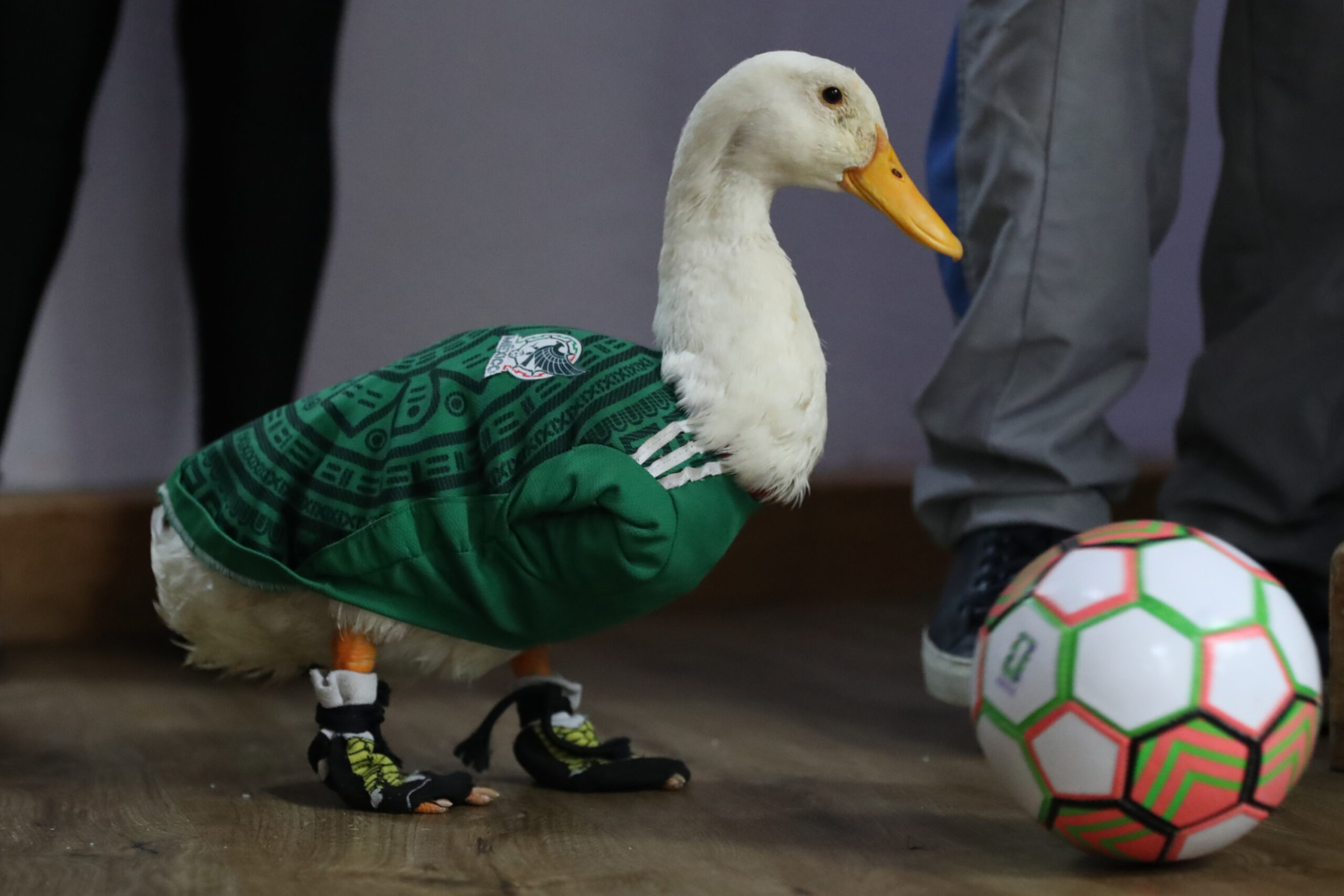
Named unofficial mascot of Mexico for the World Cup 2026, Merlin Duck has become a phenomenon on social networks, which has led various brands to use its image in advertising and merchandise. Given this, Mexican authorities recognized the rights of the World Cup duck brand to the Gómez family.
After the confrontation between the Mexican team and South Africa, in which images of a duck wearing the Tri shirt and small shoes while walking through Mexico City went viral, Merlin Duck has flooded social networks and his image has been used in various businesses.
The little duck, two years old and belonging to the Gómez family, has become one of Mexico’s unofficial mascots for the XXIII edition of the 2026 FIFA World Cup. The naturalness of its presence made it one of the most talked about symbols of the tournament and has motivated the public to visit the water stand of its owner, Karla Gómez.
Its popularity, which has crossed borders, led merchants to profit from the image of Merlin Duck. For this reason, Vidal Llerenas, director of the Mexican Institute of Industrial Property (IMPI), confirmed that the bird brand belongs to the Gómez family.
On June 24, Llerenas recognized that the so-called “World Cup Duck” belongs to the family of Carla Ivette Gómez, a measure that was adopted after Gómez claimed her rights due to the “abuse” of companies that profited from the image of the bird, recognized by FIFA in Mexico as the unofficial mascot of the World Cup.
Through
This fact was supported by the IMPI and the Mexican Ministry of Economy, which recognized that the image of Pato Merlín belongs to the Gómez family.
Merlin the duck arrived as a gift and today he is part of something much bigger. 🦆⚽
Herein #FIFAWorldCupMerlín becomes an official ambassador of our Host City Mexico City, proudly carrying a very Mexican story of love, effort and union.
Because the soul… pic.twitter.com/4ivZm78gEc
— FIFA World Cup 26™️ Mexico City (@MexicoCity26) June 19, 2026
The controversy over the registration of the trademark went viral on June 20, when Carla Ivette Gómez stressed to EFE that she needed to register the trademark after considering that several companies abused the image created by her family.
As he explained, different merchants have used it to market products or carry out propaganda without authorization, which is why he decided to take measures to protect the Merlin Duck brand.
One of the curiosities of the case is that before the IMPI there were four other applications to register the trademark of the World Cup bird, all unrelated to the Gómez family. These sought to register not only the name of Merlin Duck, but also other names with which Mexico’s unofficial mascot for the 2026 FIFA World Cup is identified.
Before the match between Mexico and South Korea, Rebeca Arcos announced that Merlín was named official ambassador of the Host City of Mexico City, making him part of the attractions of one of the venues of the FIFA World Cup. Her rise to popularity led Carla Ivette Gómez to seek to register ownership of the image of Pato Merlín.
I was not prepared for this beautiful visit to the Netflix Mexico office 😭 I love you so much, Merlin 🦆 ❤️ pic.twitter.com/Ds6IO2FiuL
— Netflix Latin America (@NetflixLAT) June 24, 2026