
Guatemala has various tourist attractions, such as beaches, volcanoes, historic centers and a varied gastronomy, which attract thousands of national and international tourists. However, specialists consider that there are various aspects that must be strengthened to consolidate destinations and offer higher quality experiences to visitors.
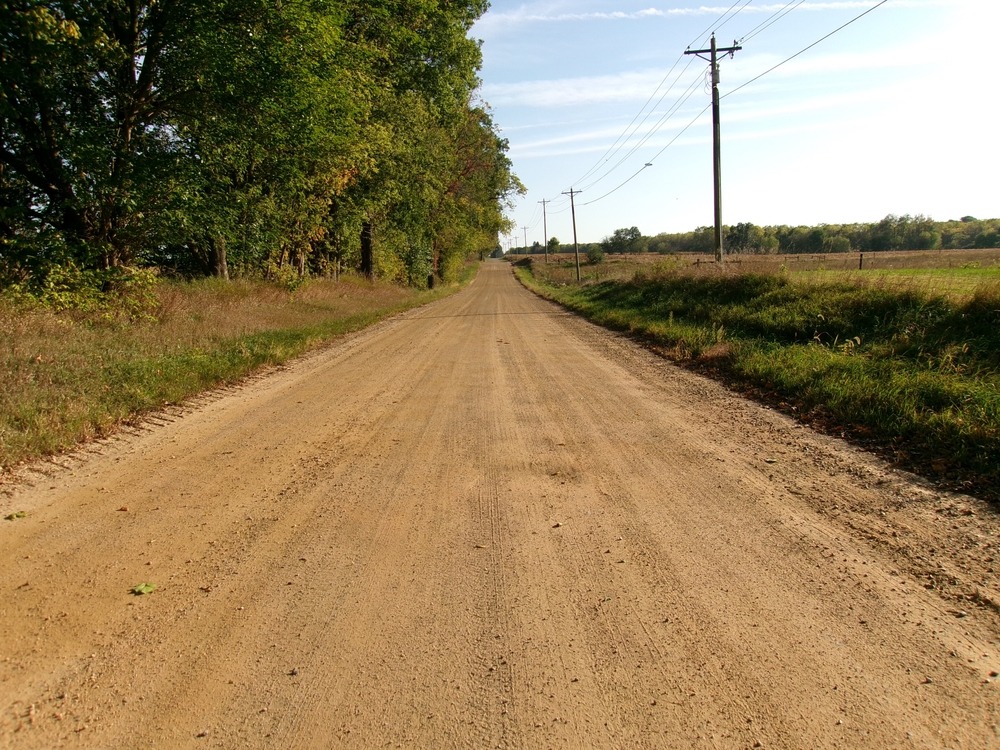
One of the most visible aspects is the state of the roads that connect the different destinations. However, there are also complementary factors that affect the tourist experience and that, sometimes, go unnoticed.
These include safety, signage, connectivity, waste management, the availability of tourist information, accessibility for people with disabilities and the training of those who provide services in the destinations.
These issues were addressed during The Talksegment of Guatemala Doesn’t Stopbroadcast every Monday by Guatevisión, in which Aura Marina Figueroa, president of the National Association of Rural Tourism of Guatemala (Asoturgua), and Pablo Alarcón, expert in sustainable tourism, participated.
According to Alarcón, among the main challenges facing the country are solid waste management, land and air connectivity, as well as the need to facilitate access to different tourist destinations. “It is an issue that we must work on a lot. There are only two main airports and other secondary ones. We must offer adequate connectivity,” he commented.
For his part, Figueroa pointed out that the development of tourism also requires strengthening the capacities of those who receive visitors. “We have to know how to treat tourists, know how to welcome them, provide correct information and maintain our cultural identity without losing quality standards,” he stated.
He added that the professionalization of the sector is decisive in improving the visitor experience. “The training and professionalization part is very important so that this experience truly becomes something memorable, positive and not a bad experience that I am going to repeat later,” he expressed.
Alarcón explained that one of the main challenges is defining the target market of each destination, instead of trying to serve all tourists equally. “We have to be clear about the niche we are serving. I feel that we have lost our way or we have not been clear about it. It is not enough to serve just anyone. It should be very clear who we are going to dedicate ourselves to or what we are going to offer,” he said.
He indicated that understanding who the visitor is allows us to design experiences in line with their expectations and the characteristics of each place, instead of offering generalized services that do not necessarily respond to the needs of those who arrive at the destination.
Traffic changes travel decisions
Alarcón explained that, when the travel time exceeds approximately two hours, travelers usually modify their plans. “If I travel two hours to get somewhere, it’s still worth getting there and back. If it takes me longer, it’s generally not worth it and I look for a place to stay,” he explained.
He indicated that this behavior can be observed in different tourist corridors in the country and that traffic difficulties alter this dynamic. As an example, he mentioned the case of Antigua Guatemala, where travel times can be considerably extended. “If it takes me more than two hours to get there, I no longer feel like going or I look for a place to stay to make the experience worth it,” he said.
Figueroa assured that traffic congestion already has effects in some tourist destinations. According to what he indicated, businessmen in the sector in Tecpán, Antigua Guatemala and nearby municipalities have reported a decrease in the arrival of visitors.
“We have had people tell us that they have had a drop of between 30% and 50% in visitation due to traffic and the funnel that is formed in the San Lucas sector. When traffic is intense, people simply do not arrive and cancel many reservations,” he stated.
He added that they have also received reports of a decrease in visitation to Retalhuleu due to the state of the roads and to Verapaces, where some operators have recorded decreases of between 30% and 40% for the Easter season.
The perception of security is also part of the factors that influence the decision to travel. “Many of our roads have dark sections, unpopulated sections and that affects. If safety is not perceived, people simply do not travel or try to travel only during the day,” he commented.
Coordination between institutions
Alarcón considered that one of the main challenges is to strengthen the governance of the sector. “The main problem is that there is adequate governance, that the different actors can coordinate to work together,” he indicated.
Furthermore, he pointed out that the strengthening of tourism depends on the coordinated participation of the central government, municipalities, communities and the private sector. “Comprehensive management comes from the central government, local and municipal governments, reaching the people who are the protagonists. There is no adequate communication between them,” he stated.
He added that tourism functions as a value chain in which all actors participate in the visitor experience. “We are all links in the same chain, but where it breaks, that’s where the experience is ruined,” he explained.
For his part, Figueroa pointed out that the private sector must also assume an active role in the development of destinations. “We need to become aware and change this mentality of waiting for the Government to give us, but we, as a private sector, must assume the responsibility of organizing, working, conserving, asking for what is needed, but also contributing,” he expressed.
He added that one of the actions that could strengthen local management would be the creation of tourism offices in the municipalities, which would contribute to the development of tourist corridors and diversify the offer in different regions of the country.
Find more Guatemala Doesn’t Stop on our video channels Free press and Guatevision, alliance content focused on solutions journalism.