
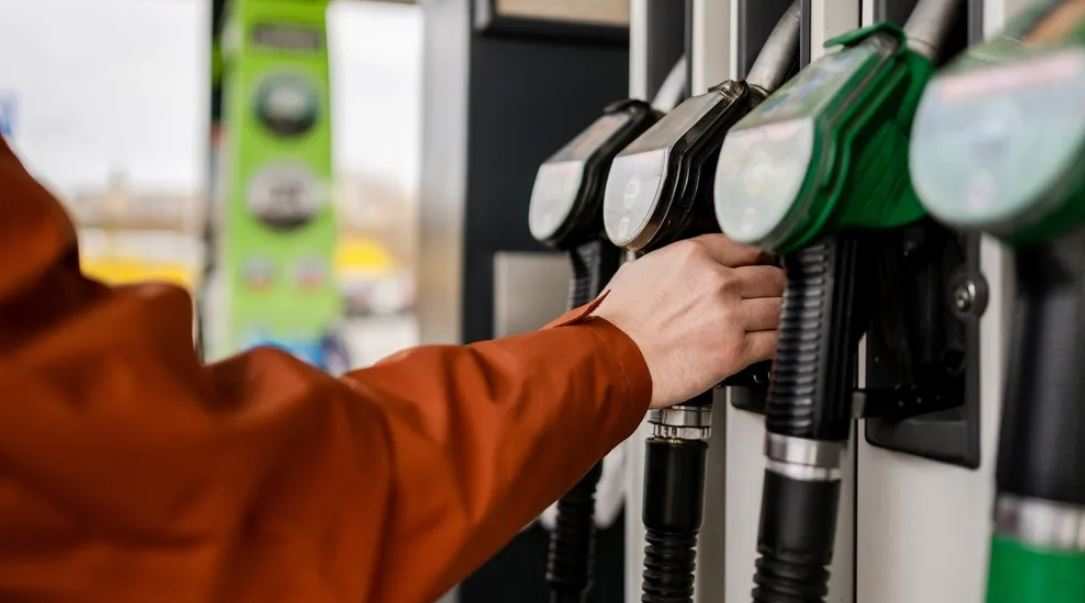
The implementation of ethanol, the closure of the Xan Field and obstacles in electrical projects, mainly in energy transmission, are among the main challenges of the Ministry of Energy and Mines (MEM), now directed by Erwin Rolando Barrios Torres.
Barrios took office on July 2, replacing Víctor Hugo Ventura.
The official states in the extract of this interview with Free presswhich still stands on August 21 for the start of ethanol blending for users, while In the oil area, it is planned to launch the tender for the technical environmental closure of the Xan Field, during this week.
He explains that in electricity he is concerned about the situation of energy transmission and that in mining it is necessary to make administrative processes more efficient.
He enters his administration as minister in a period of many challenges in energy, mining and hydrocarbons. One of these is the implementation of ethanol in gasoline. What difficulties are you facing in implementing it and how will you continue it?
The last difficulties we have had have been due to misinformation. There has been a campaign giving wrong, erroneous or false information about E-10 gasoline; So, we have a communication challenge that we are addressing from the MEM and the team of the Communication Secretariat of the Presidency to publicize truthful information on the benefits of E10 gasoline, which comes to modernize fuels in Guatemala and take advantage of the advantages we have in this hemisphere of having an abundance of fuel alcohol, both from corn and sugar cane.
In the case of technical and logistical challenges, we have covered them. The supply chain has had more than a year of conversations, discussions, approaches and consensus with us, with which we reached June 30 to start the operationalization stage. We are in the process of fine-tuning details of the system, that is, ensuring that the fuel that comes from the ship to the pump (from the outlet) has the payroll quality established by the ministry.
There are sectors that ask for a postponement. Is the start of shipping the mixture of gasoline with ethanol to the consumer maintained until August 21?
Yes. August 21 is opportune; We will be calm that the entire supply chain is duly verified, qualified and cared for, and that the fuel that the consumer will receive will be imperceptible because there is technical equality between today’s fuel with what will be available on August 21, and the vehicle that runs on gasoline today will work the same the next day.
CONTENT FOR SUBSCRIBERS
It was reported that about 500 gas stations were pending completion of their maintenance. Do you think they will be ready in time?
The data was prior to June 30. In terms of compliance, all gas stations had to be ready by that date; We believe that all of them did their maintenance. This operationalization period allows us to go out to verify and validate, because there are many gas stations that have already done it, but have not reported it to the MEM. We have a weekly meeting with the retailers’ union and we are ensuring that the maintenance is completed and the retailers that have not reported it are inspected.
On the topic of oil, how is the process going to hire the company for the technical closure of the Xan Field?
We have a budget of Q148 million for this purpose for 2026 and we are already finishing refining details of the bidding rules. The primers have already been released; The improvements have already been made according to the questions and interactions that were had with interested parties, and next week (this week) the bidding event for the closure, dismantling and technical abandonment of the Xan Field will be launched in Guatecompras.
It consists of the closure and dismantling of 59 wells, an environmental responsibility that remains to be settled.
How long would the bidding and awarding process take?
We are under the time limit, but we believe that at the end of the year, in October and November, we could have the award.
It is considered that it will be done in three years. It is a multi-year projection, but it is subject to the offers that come and we believe that it will be for a lower amount.
Are other tenders or contracts needed for these oil assets?
We divide it into three parts. The Stationary Hydrocarbon Transportation System (SETH) is made up of storage, pumping and pipelines. An emergency tender was made and City Petén is managing it, but we are preparing another tender, based on the Purchasing and Contracting Law, for the longer term. We believe it will also be achieved by the end of this year.
There is also the mini-refinery, where asphalt was previously made, for which another tender must be made.
In the area of electricity, problems have been reported due to the lack of municipal permits for projects. What can be done about it?
The ministry has done its part within its scope of competence.
The regulations give the ministry few possibilities because they end up being agreements between private parties. If someone wins a bid for a transmission line, they assume the responsibility of obtaining all the corresponding licenses, whether environmental, municipal, construction or all permit negotiations to be able to have easement rights.
That has been one of the great barriers that transporters have encountered and is one of the reasons why PET 3 (third tender of the Transmission Network Expansion Plan) was not as successful as we expected.
We are supporting the bill that is being discussed in Congress (Urgent Infrastructure Law initiative for Energy Transportation), where there are some favorable elements to facilitate easement rights and mainly that transporters are not punished with construction licenses.
Víctor Hugo Ventura ended his term as Minister of Energy and Mines this Thursday the 2nd, reported the Government, which did not detail the reasons for his departure.https://t.co/FxWaP9bDF7
— Free Press (@prensa_libre) July 2, 2026
Derived from the tender for the Electricity Generation Expansion Plan (PEG 5), there will be new plants and additional investment. Could these problems affect the development of these projects?
Transmission is critical to connecting generation to demand, but transmission is having problems and may lag behind the PEG. That is one of the great risks and it is one of our great challenges.
The positive thing is that, now knowing the results of the PEG 5 and PET 3 tenders, it has allowed us to have better inputs to produce a PET 4 that is much more robust and accurate in terms of where the lines should pass so that the generation is collected. Joint work is being done with the National Electrical Energy Commission and we estimate that the event could be launched in about nine months.
The ministry also has a relationship with rural electrification through its participation in the INDE Board of Directors, which is the State’s executing agency for this issue.
But depending on the sector, some generation projects also face problems. Could it affect?
I view the completion of the PEG 5 works with optimism, without prejudice to the fact that there are problems, but we are more concerned about the transmission.
In terms of generation, there has been a lot of success lately. Much solar generation has been easy and quick to install and this is an important component (of the award) in PEG 5, while other plants added new renewable elements and, because they are existing, it is not seen that they will have major difficulties.
CONTENT FOR SUBSCRIBERS
How many community consultations are pending in energy and mining and what actions will be taken in their management to expedite them?
I am now reviewing with the units of the VDS (Vice Ministry of Sustainable Development) and the UGSA (Socio-Environmental Management Unit) to organize priorities.
In mining there has been a reactivation of projects from mid-2025 to date, but the sector believes that in practice there is a kind of moratorium. What future do you see for mining in Guatemala?
There is a notable reactivation, which explains that there is no moratorium on the mining issue.
The mission of the ministry is the exploration and exploitation of the mining resource in Guatemala, that is, that is what we have to do. What I observe is that we have had little efficiency in managing the administrative processes related to licenses and part of the goals we have is to make the processes more efficient, including the automation and systematization of mining processes.
How is the MEM going to reinforce actions with the end of the fuel subsidy to avoid unjustified increases now that there will be no reference prices derived from that subsidy?
It is being divided into two parts. There is a portion of fuel that has benefited from temporary support and that is controlled, from when it leaves the importer until it is delivered to the final consumer. If high prices begin to occur very early, we will pay more attention to inspection to determine whether or not the fuel being sold was purchased with temporary support.
The other part is what we are going to see in the near future, let’s say within a week or a little more, is that 100% of the gasoline will reach the normal state (without subsidy) and we will be in the previous conditions. The ministry will always draw reference prices based on international prices and evaluate the behavior of gas station prices as it has done in the last 25 years.
We work with the Sentinel Plan, we go out with DIACO, whether by complaint or ex officio, it is inspected and if there is a gas station with prices that are considered incorrect, the owner is subject to proving that its prices are correct, as well as the inventory information and its purchases; The case goes to the DIACO and may eventually end up in the Public Ministry.