
Of the five crimes observed by the Property Rights Observatory, three show a high incidence and a growth trend during 2026, compared to 2025.
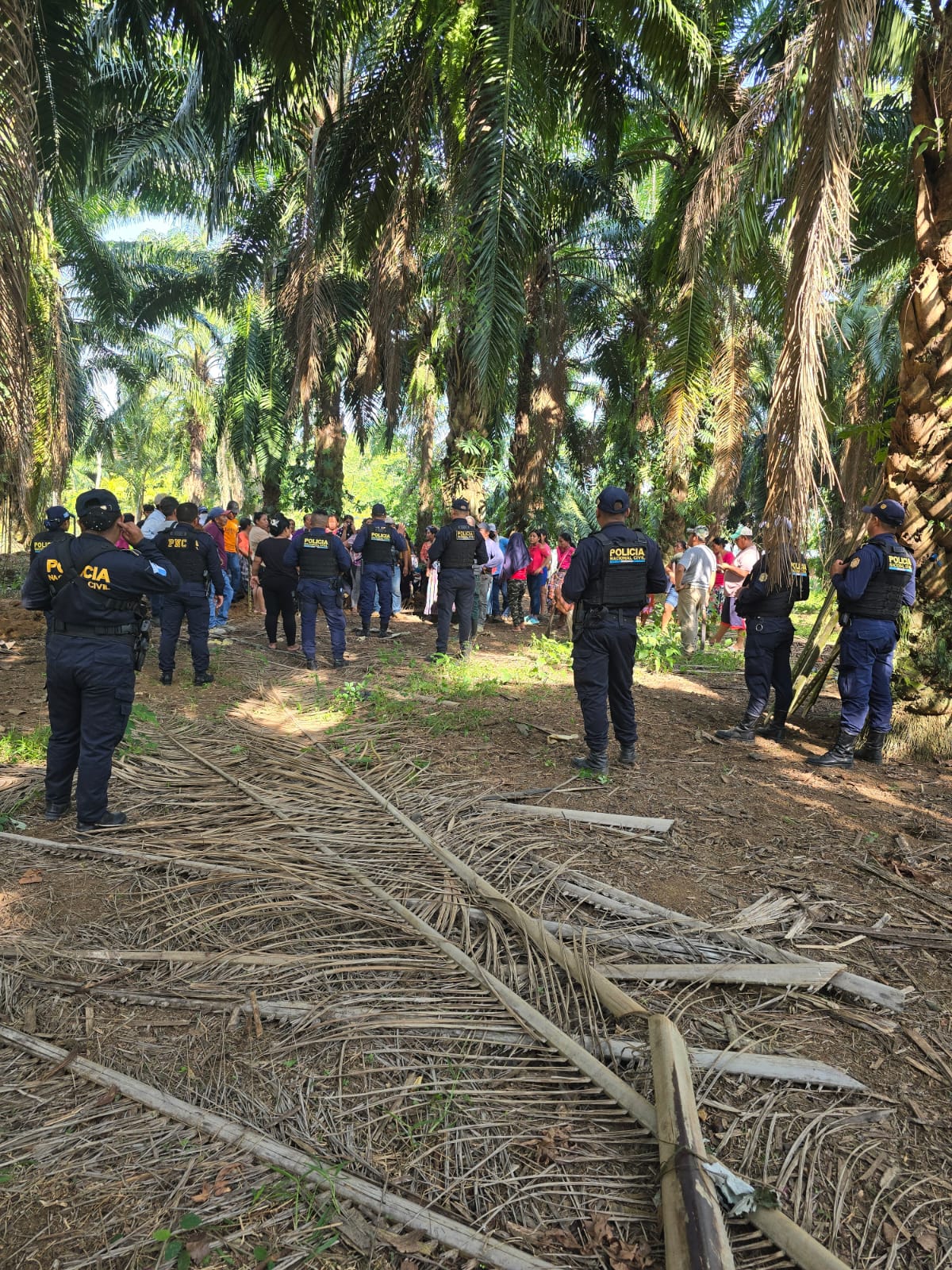
The most recent case of usurpation occurred on the Yalcobé farm, in Fray Bartolomé de las Casas, Alta Verapaz. The case was reported to the Public Ministry (MP) and is in the corresponding court.
The document Property Rights Thermometerprepared by the Property Rights Observatory, presents the statistics of crimes against property between January 1, 2025 and June 26, 2026, as well as eviction proceedings. The report records 8,946 complaints, projects a growth of 11% during 2026 compared to 2025 and reports 52 eviction proceedings requested from the MP.
Falsehood and usurpation lead the complaints
When breaking down the complaints, 5,648 are registered related to falsehood, of which 2,897 correspond to ideological falsehood and 2,751 to material falsehood, a crime that represents the main threat due to fraud related to titles and registrations.
For usurpation, 3,298 complaints are registered, of which those of aggravated usurpation predominate, with 1,904 cases; This is followed by simple usurpation, with 1,197, and usurpation in protected areas, with 197. These invasions occur in an environment of violence or intimidation.
Guatemala concentrates more complaints
The document identifies the 10 departments with the highest incidence of these crimes. Guatemala concentrates 42.5% of the complaints, equivalent to 3,799 cases, that is, about five out of every 10 registered complaints. The remaining 57.5% is distributed in the rest of the country.
They are followed by Petén, with 467 cases; Quetzaltenango, 461; Escuintla, 456; Alta Verapaz, 409; San Marcos, 389, and Huehuetenango, 379.
Documentary falsification facilitates dispossession
Andrea Cáceres, coordinator of the Property Rights Observatory, explained that the statistics reflect that violations of property rights continue to be a structural problem in Guatemala and that, if the trend observed during the first half of 2026 continues, complaints would grow by approximately 11% compared to 2025.
“The relevance of crimes of falsification lies in the fact that they show that many invasions do not consist solely of the physical occupation of a property. They are frequently accompanied by false deeds, fraudulent notarial protocols, alteration of documents or identity theft to pretend rights over the property, hinder the criminal investigation and delay the recovery of the property by its legitimate owner. Document falsification has become one of the main mechanisms to consolidate the dispossession of property,” highlighted Cáceres.
Complaints of usurpation and falsehood continue to rise
The director of the Observatory pointed out three findings derived from the analysis of the statistics:
- The complaints maintain a growing trend and everything indicates that 2026 will close above 2025.
- Document falsification continues to be the crime with the highest incidence and represents approximately 63% of all complaints related to property rights, which confirms that violations are increasingly sophisticated and transcend the simple physical occupation of properties.
- The composition of crimes practically does not change from one year to the next, which shows that there is a structural pattern and not an isolated phenomenon.
Finally, he considered that the decrease in the execution of eviction proceedings is worrying. While in 2025 49% of the requested procedures were carried out, in 2026 that percentage has dropped to 22%, which shows a significant gap between the judicial resolution and the effective restitution of the property right.
Increase in property crimes projected
Cáceres emphasized that, if the behavior observed until June 26 is maintained during the rest of the year, 2026 could close with approximately 6,448 complaints for crimes related to property rights, which would represent an increase of close to 11% compared to 2025.
“The relevance of the crimes of falsification lies in the fact that they show that many invasions do not consist solely of the physical occupation of a property. They are frequently accompanied by false deeds, fraudulent notarial protocols, alteration of documents or identity theft to pretend rights over the property.”
Andrea Cáceres, coordinator of the Property Rights Observatory
“Although this is a statistical projection based on the daily rate of complaints and must be confirmed at the end of the year, it constitutes a warning sign that this type of crime continues to increase and requires timely and coordinated institutional responses,” he clarified.
Usurpations are linked to organized networks
Regarding the departments that concentrate the highest incidence of these crimes, the director of the Observatory explained that The statistics show a marked territorial concentration, which shows that the effects on property rights are present in different regions of the country.
“Beyond the geographical distribution, the pattern we observe is the growing presence of forms of usurpation carried out by organized structures. From the Observatory we have identified that the typologies with the greatest impact in Guatemala are, on the one hand, appropriation for profit, in which organized groups promote invasions to later fraudulently sell or rent the land; and, on the other, appropriation for the purposes of organized crime, where criminal groups occupy strategic properties to develop illicit activities,” he indicated.
Both modalities are usually accompanied by crimes of document falsification to pretend rights over the properties and make it difficult for the property to be recovered by its legitimate owners.
They ask to expedite actions against usurpations
Institutional approaches have been maintained with the authorities of the Public Ministry (MP).
In this regard, the Observatory highlighted that the new authorities of the MP have publicly expressed their commitment to strengthening care for victims, improving the efficiency of criminal investigation and modernizing the institution.
“From the Observatory’s perspective, one of the main priorities must be to guarantee immediate action against crimes that affect property rights. In cases of usurpation, a timely response is essential to prevent the illegal occupation from being consolidated and the damage from becoming greater,” said Cáceres.
“The prompt recovery of the property not only protects the rights of its legitimate owner, but also avoids the paralysis of productive projects, the loss of investments, the suspension of economic activities and the impact of jobs that depend on these properties,” he added.
“When an invasion remains for months or years without an effective response, legal certainty deteriorates and a negative message is sent to those who invest and generate jobs in the country,” he added.
For this reason, he indicated that it will be essential to strengthen the investigation of the crimes of usurpation and falsification of documents, as well as inter-institutional coordination, to guarantee prompt and effective justice that allows the timely recovery of property in accordance with the law.