
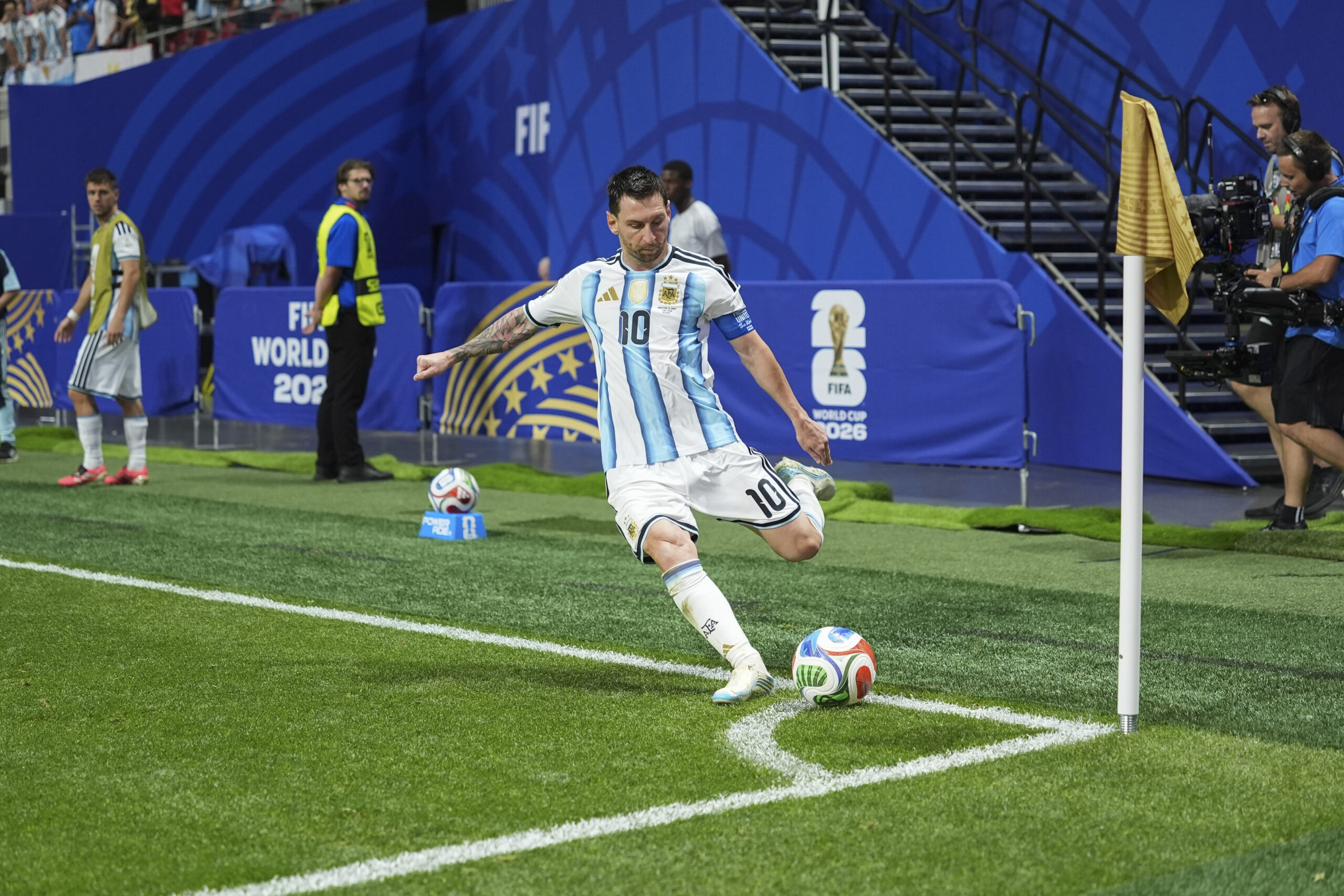
The fanaticism they awaken Lionel Messi and the selection of In each World Cup match, Argentina has an impact that goes beyond the fields: it is even reflected in the South American country’s electrical grid.where energy demand registers unusual behavior.
The phenomenon, already observed during Qatar 2022, was repeated in the 2026 World Cup during the Albiceleste matches, both in the group stage and in the round of 32and was confirmed again in the vibrant 3-2 victory against Egypt that sealed their place in the quarterfinals.
According to a report from the Administration Company of the Wholesale Electricity Market (Cammesa), “during the matches of the Argentine national team in World Cups, a very particular evolution occurs in the electrical demand of the Argentine Interconnection System (SADI).”
Every time Messi and his teammates go into action, the consumption curve draws a “W”, similar to an electrocardiogram that reflects the shocks of millions of fans.
The data shows it. An hour before the game against Egypt, demand reached 22,534 megawatts, slightly below the usual figure for a work day. Fifteen minutes before the start, it had already dropped to 21,702 megawatts.
During the first period, consumption fell abruptly to a minimum of 20,047 megawatts. At halftime, however, a significant rebound was recorded, with a peak of 20,619 megawatts.
The second half once again marked a drop, even more pronounced, to the 18,778 megawatts, a level comparable to that in the early morning hours, when activity is minimal. After the end of the game, demand recovered to 19,815 megawatts an hour later.
“This pattern responds to the simultaneous behavior of millions of people focused on following the game, mainly through television, and becomes accentuated as the team advances in the tournament”Cammesa explained.
The phenomenon is known as “TV pickup” effecta sudden and synchronized increase in electrical consumption that occurs during pauses in mass events.
Halftime or commercial breaks cause millions of people to get up at the same time to turn on the lights, open the refrigerator, heat food or prepare drinks, like the traditional mate in Argentina.
This behavior has been widely studied in countries such as the United Kingdom, where during the breaks of important matches millions of people simultaneously turn on kettles to prepare tea, generating similar peaks in electricity demand.