
The 2026 FIFA World Cup has once again demonstrated that success in international football no longer depends solely on brilliant generations, but on sporting projects capable of being sustained over time.
With the qualification of France, England, Argentina, Spain, Morocco and Belgium to the quarterfinals, the tournament confirms a trend that began in Russia 2018: a small group of teams has turned this event into their usual territory.
More than a change of protagonists, North America 2026 confirms that the world elite has become more stable than ever.
France, the model with the greatest continuity
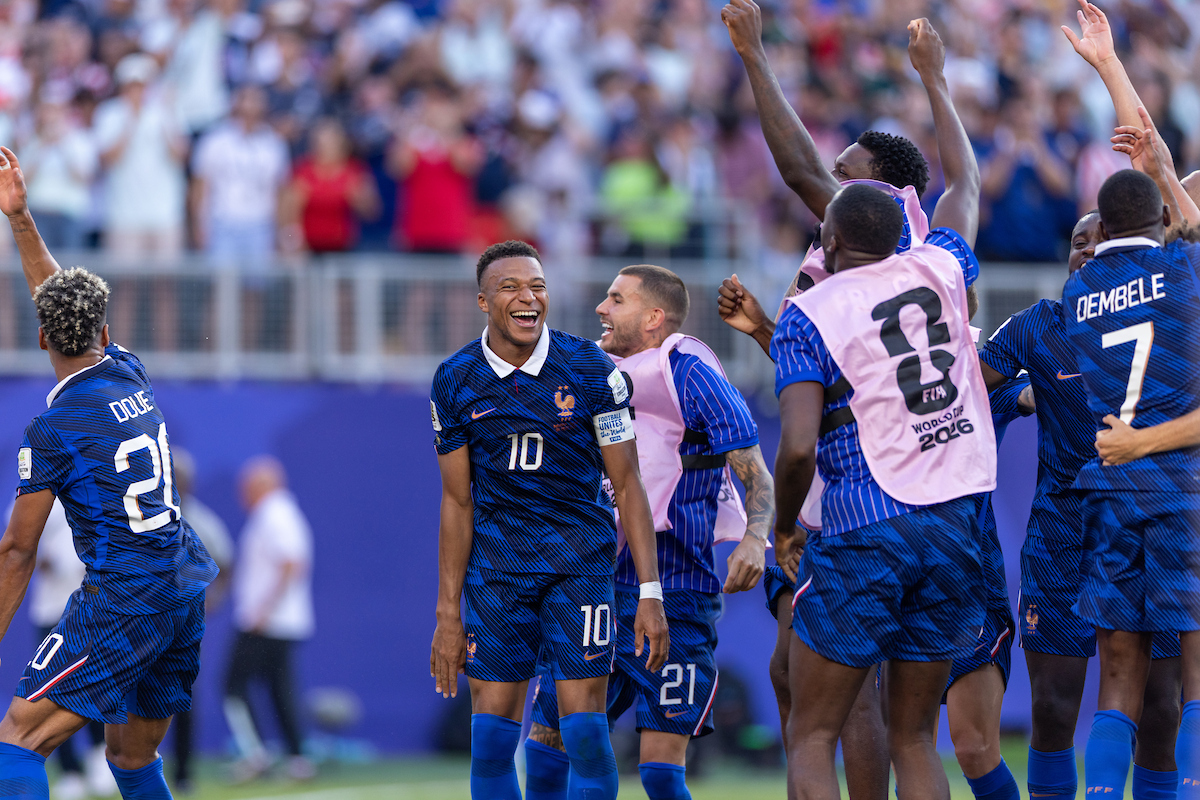
No team has shown consistency comparable to the French team. Les Bleus won the title in Russia 2018, were runners-up in Qatar 2022 and now they are once again among the eight best in the World Cup.
The combination of experience and renewal, headed by Kylian Mbappé, maintains France as the competitive reference of the last decade.
England left irregularity behind
The English team also consolidated a stable project.
Semifinalist in Russia 2018, quarterfinalist in Qatar 2022 and again present among the eight best in 2026, England has found continuity with a generation led by Harry Kane, Jude Bellingham and Bukayo Saka.
The title is still the pending issue, but regularity is already part of its identity.
Argentina extends the Scaloni era
The qualification against Egypt confirmed that the Albiceleste maintains the competitive level achieved in Qatar.
After winning the World Cup in 2022, Argentina returns to play the quarterfinals with a consolidated base and the leadership of Lionel Messi.
The project led by Lionel Scaloni made the South American team a regular presence in the decisive rounds.
Morocco is no longer a surprise
Moroccan growth can no longer be classified as an exception.
After reaching the semifinals in Qatar 2022, the Atlas Lions return to the quarterfinals and become the first African team to reach this stage in two consecutive World Cups.
The project headed by Achraf Hakimi consolidates Morocco as a new competitive power.
Belgium shows that it is still valid
Although a good part of its golden generation is now over thirty, Belgium continues to be the protagonist.
After reaching the quarterfinals in Russia 2018, the Red Devils return to this stage in North America 2026, demonstrating that experience continues to be an important asset.
Spain returns to the elite
The main novelty among the quarterfinalists is Spain.
After falling in the round of 16 in both Russia 2018 and Qatar 2022, La Roja has once again settled among the best eight for the first time since South Africa 2010, when it won the only World Cup in its history.
With Lamine Yamal, Rodri and a new generation, Spain begins a new competitive cycle.
An increasingly stable elite
The quarterfinals of the 2026 World Cup confirm that the generational change did not change the balance of international football.
France, England and Argentina maintain a regularity rarely seen in the modern era; Morocco consolidates African growth; Belgium continues to be competitive and Spain returns to the fore.
Far from completely renewing the map of world football, the 2026 World Cup confirms that sustained success increasingly belongs to teams with consolidated projects and competitive continuity.
| Selection | Russia 2018 | Qatar 2022 | World Cup 2026 |
|---|
| France | Champion | Runner-up | Rooms |
| Argentina | Eighth | Champion | Rooms |
| England | Semifinals | Rooms | Rooms |
| Morocco | Groups | Semifinals | Rooms |
| Spain | Eighth | Eighth | Rooms |
| Belgium | Third place | Groups | Rooms |