
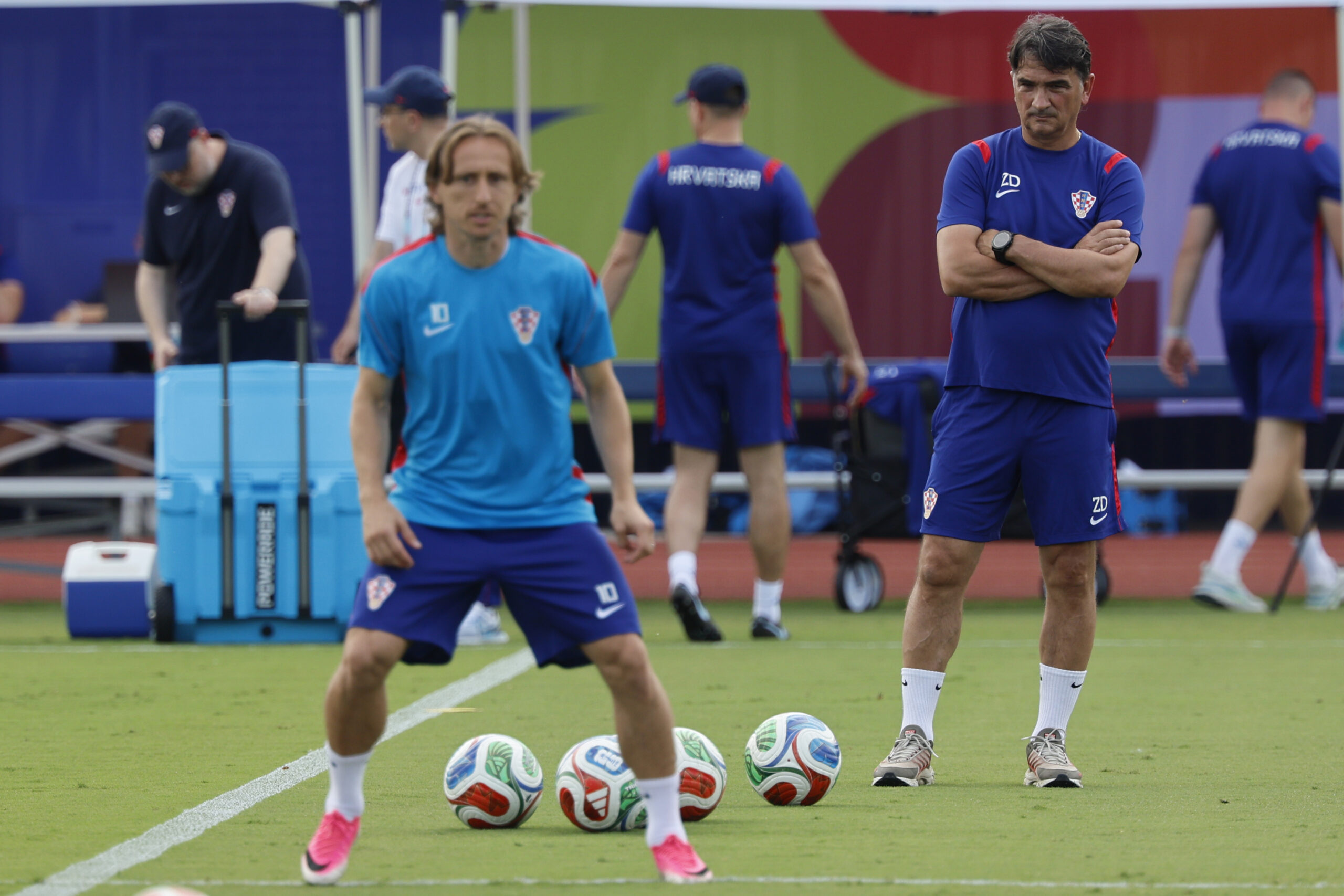
The Croatian Football Federation (HNS) confirmed this July 8 the departure of Zlatko Dalić as national coach, a decision that the coach himself described as “the most complicated” of his career after almost nine years and 111 games in charge of the Balkan team.
However, the news transcends the change on the bench. It’s not just about finding a new coach. It is about rebuilding the football identity that turned a country of just 3.9 million inhabitants into a permanent protagonist in major international competitions.
During the Dalić cycle, Croatia signed the most brilliant period in its history. It was runner-up in the 2018 World Cup in Russia, third place in Qatar 2022 and runner-up in the 2023 UEFA Nations League. With these results, the Balkan team challenged the logic of modern football and established itself among the most competitive powers on the planet.
A generation that marked an era
When Dalić took over in October 2017, he found a squad with enormous talent, but he was able to turn it into a team recognizable for its tactical order, mental strength and ability to compete in decisive moments.
Led by Luka Modric and accompanied by footballers like Ivan Perišić, Marcelo Brozović, Mateo Kovačić, Joško Gvardiol and Dominik Livakovićthe Croats built an identity that allowed them to compete in finals and podiums against teams with a larger population, budget and infrastructure.
The World Cup left a symbolic closure
The cycle ended with an elimination that was as painful as it was symbolic. Croatia fell to Portugal in the round of 32 of the 2026 World Cup after conceding a goal in the 94th minute and seeing the goal that would have sent the match to extra time disallowed.
The action generated debate in the Croatian press, although Dalić avoided using it as an explanation for the defeat.
In his farewell he preferred to watch the entire route. “When I took charge of the national team, I believed both in the quality of the players and in myself, but I did not even dare to dream that we would achieve everything we have achieved,” he said in the statement released by HNS.
A legacy that goes beyond results
For the president of the Croatian Federation, Marijan KustićDalić’s greatest legacy is not summed up in medals. “He gave us faith that a small country can achieve the biggest dreams,” said the leader, who highlighted the culture of unity that the coach consolidated under the concept Obitelj (“Family”).
This stability allowed the competitive performance of a generation that seemed to have reached its ceiling in Russia 2018 to be prolonged, but still achieved another World Cup podium in Qatar and a Nations League final.
The real challenge begins now
Dalić’s departure coincides with the international end of several of the figures who sustained the best period of Croatian football.
Luka Modrić has already confirmed that the 2026 World Cup was his last World Cup, while other historical figures, such as Ivan Perišić and Marcelo Brozović, are also in the final stretch of their careers with the national team.
The next coach will inherit a much greater challenge than replacing a successful coach: he will have to build a new project without the core of footballers who changed the history of the country during the last decade.
Because the resignation of Zlatko Dalić seems to close much more than a cycle on the bench. Everything indicates that Croatia is beginning to say goodbye to the generation that made it a world power and wrote the most brilliant pages of its football history.