

Each health breakdown of Pope Francis It became a concern in the Catholic community, as well as for the rest of the world that recognizes a leader. SU Death on April 21, 2025 has aroused different signs of solidarity with the Catholic people.
But, there is much to say of this leader became the first Pope in Latin America, the first Argentine Pope, the first with his mother tongue in Spanish and also in a character that involves controversies and conspiracy theories.
In January 2025, it was published that he was the public figure that generated the most confidence in Italy, according to a recent survey conducted by Demópolis, The National Institute of Research that analyzes the trends of Italian society.
In that report it also stressed that the Supreme Pontiff, in love with the tango of his homeland, was admired by 4 out of 10 Italians for the prominence that arises to young people and also points out his commitment to a Catholic Church, as well as his ability to “renew himself listening to the signs of time.” In addition, 40% highlight their concern about the climatic crisis.
But, how Francisco was born. Jorge Mario Bergoglio, 88, stressed that on his way preparing, without knowing that he would be the leader of the Catholic Church, he even moved in public means of transport, in the fifteen years of Episcopal Ministry in his homeland.
“My people are poor and I am one of them,” is a phrase that stood out throughout his life.
Where did Francisco were born?
He was born in the Argentine capital on December 17, 1936. He was 88 years old.
His father, Mario, was an accountant, used in a railroad, while his mother, Regina Sivori, took care of the house and education of the five children.
The Vatican page emphasizes that he dipped as a chemical technician, and then chose the path of the priesthood entering the Diocesan Seminary of Villa Devoto.
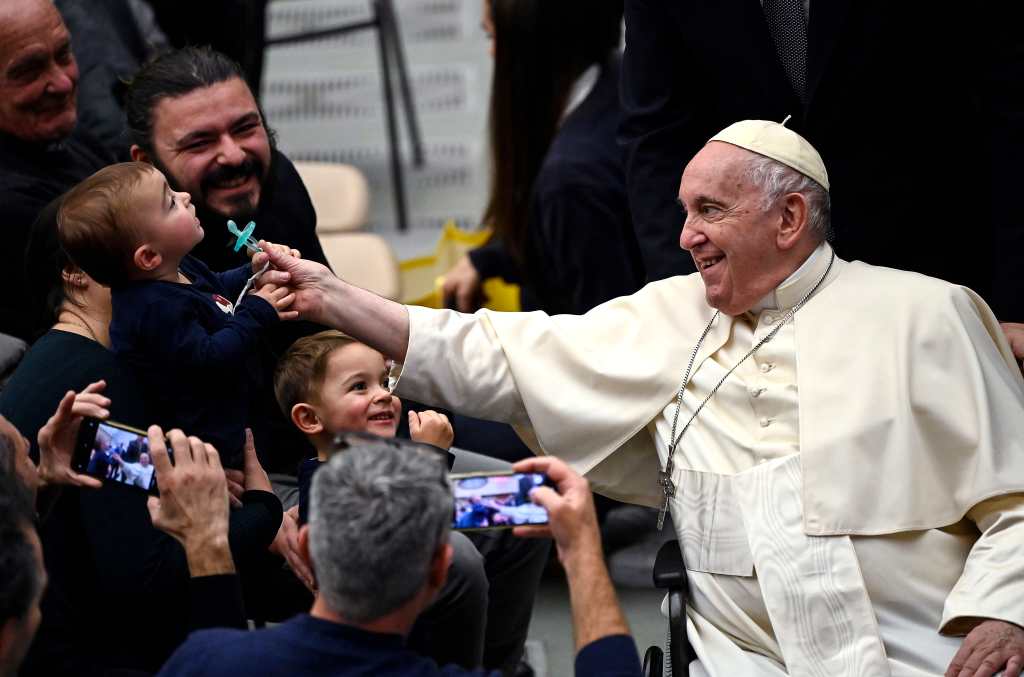
A walk in faith
On March 11, 1958 he went to the novitiate of the Society of Jesus. He completed the studies of Humanities in Chile and in 1963, when he returned to Argentina, he graduated in Philosophy at the San José College, of San Miguel.
Between 1964 and 1965 he was a professor of literature and psychology at the College of the Immaculate of Santa Fe and in 1966 he taught the same subjects at the Savior College in Buenos Aires. From 1967 to 1970 he studied theology at the San José College, and obtained the degree.
On December 13, 1969 he received priestly ordination from Archbishop Ramón José Castellano. He continued the preparation in the company from 1970 to 1971 in Alcalá de Henares (Spain).
Read more: faithful Catholics pray for the recovery of Pope Francis
Again in Argentina, he was a novices teacher at Villa Barilari in San Miguel, professor at the Faculty of Theology, consultant of the province of the Society of Jesus and also rector of the school.
On July 31, 1973, he was elected provincial of the Jesuits of Argentina, a task he held for six years. Then he resumed work in the university field and between 1980 and 1986 he is again rector of the College of San José, in addition to pastor in San Miguel.
Part of his life was taken to the film The two potatoesavailable in Netflix. The film talks about the supposed encounter between Pope Benedict XVI and Cardinal Jorge Bergoglio, before he was chosen in Pedro’s successor. But also puts his life in Argentina.
https://www.youtube.com/watch?v=epf-xmq5q8m
More advances in Argentina
It is Cardinal Antonio Quarracino who calls him as his narrow collaborator in Buenos Aires. Thus, on May 20, 1992, John Paul II appointed him holder of Auca and auxiliary of Buenos Aires.
On June 3, 1997, it was promoted as Archbishop Coadjtor of Buenos Aires. Before nine months, to the death of Cardinal Quarracino, it happens, on February 28, 1998, as Archbishop, primacy of Argentina.
Three years later, in the Consistory of February 21, 2001, John Paul II creates Cardinal, assigning the title of San Roberto Bellarmino. On that occasion, he invites the faithful not to go to Rome to celebrate the purple and to allocate to the poor the amount of the trip.
In October 2001, he was appointed Deputy General Rapporteur for the Tenth Ordinary General Assembly of the Synod of the Bishops, dedicated to the Episcopal Ministry, commission received at the last moment in replacement of Cardinal Edward Michael Egan, Archbishop of New York, of necessary presence in his country because of the terrorist attacks of September 11.
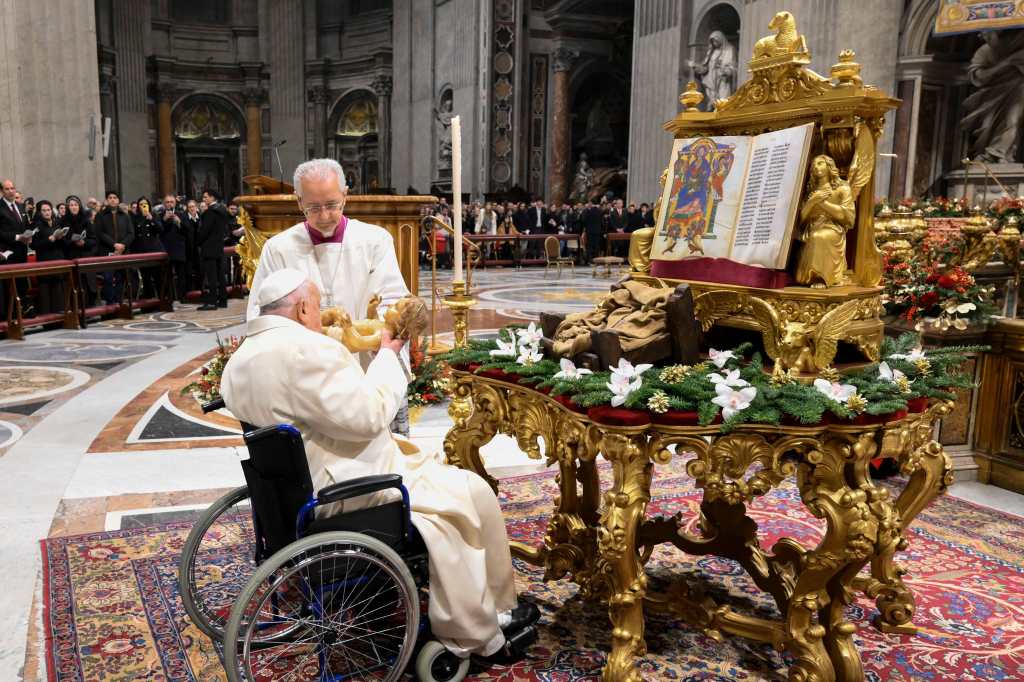
In 2002, the appointment as president of the Argentine Episcopal Conference declines, but three years later he is elected and later reconfirmed by another period in 2008. Meanwhile, in April 2005, he participated in the conclave in which Benedict XVI is elected.
He was elected as the head of the Catholic Church March 13, 2013, at 76. Its central message has been the call to a more humble church, close to the poor and committed to peace and justice, describes in an interview the Argentine Bishop Castrense, Santiago Olivera.
Note updated on April 21, 2025.