

Donald Trump took possession as president of the United States on January 20 and his immigration policy has been the mass deportations of migrants, although the expulsion of migrants already registered from previous administrations.
Many Guatemalans have arrived in a search for better opportunities and some have highlighted for their service to other migrants.
One of these stories is that of the Guatemalan Carla Esquivel.
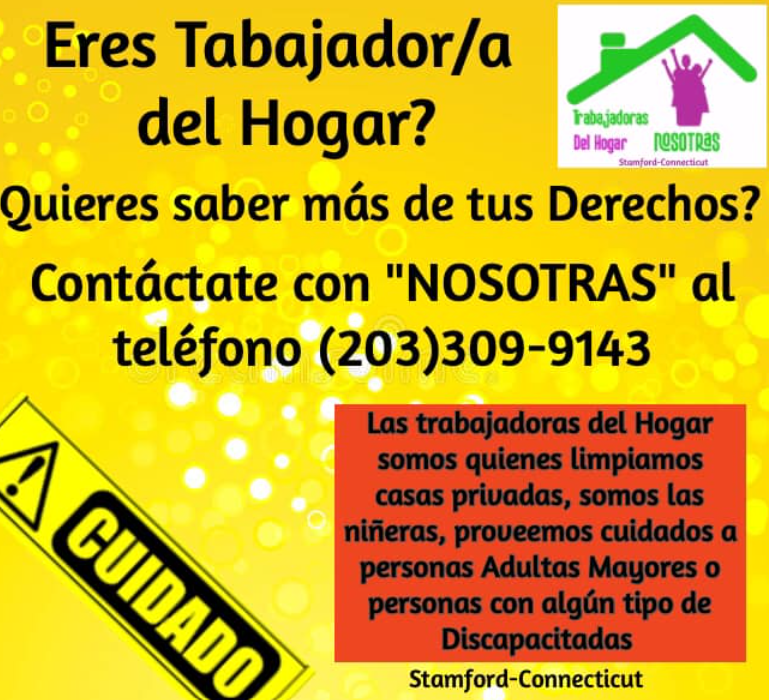
Through the Association, in Connecticut, USA, Esquivel teaches training in rights, self -esteem and development of migrants who work as babysitters, caregivers of older adults, kitchen and cleanliness, so that they are remunerated according to the work they perform, said the site I am Migrante.com.
In August 2024, the Guatemalan received the most recent recognition for their educational work in favor of the women’s migrants from the private house: the live program with Maricarmen, with the support of the Culture Commission of the city of Stamford, Connecticut.
He received the La Paz Prize, whose diploma has a watercolor with his portrait while holding a banner.
“Many times they hire Hispanic migrants to clean up in houses, but we end up taking care of children, cooking and even taking care of older adults,” said Carla.
“We – a organization – educate its affiliates on how to negotiate their contracts and demand fair conditions. There are also cases of undocumented migrants to which they threaten to denounce them to migration to not pay them … but even that has ways to approach, there are laws that protect undocumented women, ”he explained from his vehicle, where he responded to this interview while he is on his way to another work.
In Stamford, Connecticut, an empowerment and justice movement has been growing silently, but with unwavering force.
At the head of this movement is Esquivel, a Guatemalan who arrived in the United States 28 years ago and, for four, leads the organization.
Empower workers
Its mission: to train, protect and empower home workers, a vital sector that is often invisible and exploited.
Carla knows firsthand the difficulties of this work. Her mother was also a home worker, dedicated to the care of children, and since he was 17, she began in this area, when she arrived in the United States to work with a family that needed a babysitter.
“I started very young in this work and I saw closely the differences in the treatment that the workers received depending on the family for which they worked,” said Carla, who lived up to 17 years in Villa Canales, a municipality in the department of Guatemala.
In his career he has worked together with several Workers’ organizations of Stamford, Connecticut, but for four leads the aforementioned organization.
“We are born from the need to defend the labor rights of household workers. During the pandemic there were many complaints of abuse, even violations, work without paying, ”said Carla.
Recognize the value of work
“We give workshops, we inform people and train them to recognize the value of their work. We are not chachas or servants; We are home workers, and that is a decent work degree, ”he said.
Work in private houses covers much more than cleaning. “Many times they hire us to clean, which already implies a good effort; However, sometimes we end up taking care of children, cooking and even taking care of older adults, ”he added.
In that sense, the Association of us educates its affiliates on how to negotiate their contracts and demand fair conditions, including remuneration according to the work carried out.
“If you are prepared, you can ask for a right salary from the beginning. But if you do not train, it is more difficult to demand a decent payment, ”he warned.
To generate better opportunities, we also provide first aid courses (CPR), child care and even identification of autism, deafness or other disabilities, so that children and caregivers are better prepared.
They work with employers
The organization also works with employers to raise awareness about the rights of their employees. “Now in Connecticut we managed to approve a law of days of paid disease. It is a huge step because before the workers had no legal protection, ”said the Guatemalan.
Risks and threats
Despite the importance of their work, home workers face difficult conditions, especially undocumented.
“Many times they are victims of wage theft: they work and not pay them. Or worse, they are threatened to be reported to immigration if they claim their money, ”said Carla.
“We are to tell them that they are not alone. Connecticut allows employers to not pay and could even get a work permit if they denounce these abuses, ”he added.
The Covid-19 pandemic was a turning point. “When everyone was at home, who cleaned hospitals and houses? Who took care of children and the elderly? Us. Without home workers, society simply does not work, ”he said firmly.
We have grown rapidly, reaching a thousand women in just four years. “We receive five calls a week from workers who need help,” Carla said.
Most are Guatemalan, representing 50 % of the organization, followed by Ecuadorians with 30 %. There is also a percentage of workers from the Dominican Republic, Honduras, Panama and Mexico. The need for support is immense, and the organization continues to grow to cover it.
Community preparation and union
For Carla, the key is in the community preparation and union. “If you are in this country, try the community. Know your rights, document your work and show that you are a working and valuable person, ”he advised.
He also recommended that workers seek support in churches and community groups, participate in volunteers and keep detailed records of their employment, such as recommendation letters and tax payments.
“All this helps to demonstrate that we are here to contribute and that we deserve to be treated with dignity,” he emphasized. “If you are in this country, try the community. Know your rights, document your work and show that you are a working and valuable person, ”he advised.
With us, Carla Esquivel not only changes individual lives, but transforms an entire industry, dignifying the work of those who, with their hands and effort, hold homes and families in the United States.