
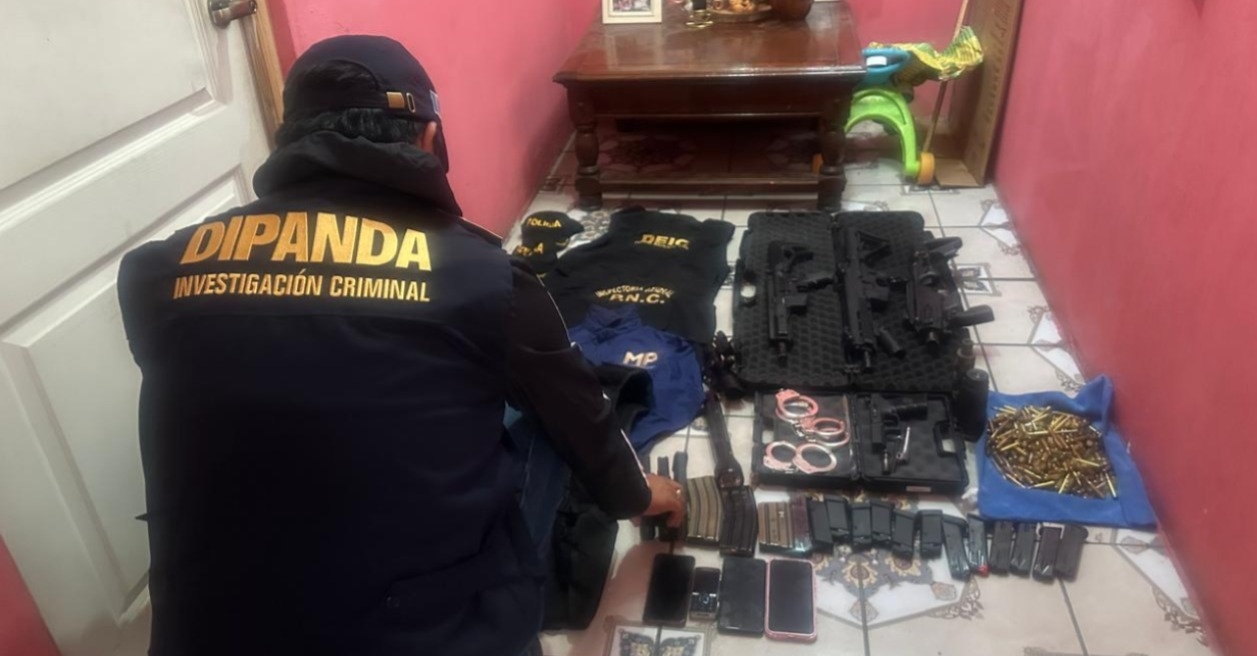
The gangs have diversified their activities and now control a large part of the drug trade with the use of minors in schools and deadly territorial disputes, mainly in the departments of Guatemala, Escuintla, Petén and Chimaltenango, according to the National Civil Police (PNC).
The general director of the PNC, David Boteo, warned this Wednesday, April 22, that criminal structures use children and adolescents to sell drugs around schools and colleges, as part of the expansion of drug dealing in urban areas. The gangs have identified flags and recruiters within the campuses, it was said.
Boteo explained that marijuana and cocaine are the illicit substances that are most sold under this modality, in which minors are used as distributors to avoid direct police actions.
The police chief indicated that the gangs have evolved and are no longer dedicated solely to extortion or territorial control, but now operate as structures linked to small-scale drug trafficking and strengthen their financing through drug sales.
Boteo pointed out that the departments with the greatest territorial dispute over drug dealing are Guatemala, Escuintla, Petén and Chimaltenango, where violence associated with the control of distribution points has increased.
Regarding the recent findings of deceased people wrapped in sheets, the PNC director explained that they could correspond to victims of “internal cleanups” between criminal groups, mainly in sectors of zones 3 and 6 of the capital.
In addition, he confirmed the existence of drug sales points in areas such as La Reformita, zone 12, and reported that teachers have been threatened to avoid complaints about the criminal environment around educational centers.
Given this situation, the PNC maintains a fixed presence in 38 schools considered high risk, located in areas such as 12 of Villa Nueva, Amatitlán, El Porvenir, Villa Canales and zones 21, 18 and 6 of the capital, with the aim of preventing the recruitment of students and guaranteeing school safety.
Boteo pointed out that the most complex part is the justice sector, since it does not act. In addition, he indicated that the law on acceptance of charges should be analyzed, which benefits gang members arrested during operations or in flagrante delicto.
“Yes, it is precisely worrying. I can tell you that over the weekend we directed approximately 32 teams, including the Guatemalan Army, to the Amatitlán area, and the district chief informed me that they were unfortunate situations in which they were taking minors from places where they consumed alcoholic beverages, even with their parents,” he said.
“We have seen a repetitive pattern in the issue of adolescents. We even have two minors who tried to bring drugs into educational centers, both in San Marcos and in Guatemala City. They are people who sell drugs; that is, children who are entering educational centers to sell drugs,” said Boteo.
He reiterated that this means that they also distribute drugs in schools and colleges. For this reason, the PNC Crime Prevention Unit, in coordination with the Ministry of Education, in critical points where there are educational centers, has implemented the prevention modality with a backpack search, because it had been detected – according to complaints from some teachers – that the same children and adolescents who enter the educational centers, both primary and basic, were carrying drugs to sell within the establishments.
Regarding whether minors consume drugs, the police chief said yes: marijuana and cocaine. In addition, he explained that another substance that is frequently consumed is crack, mainly by people with few economic resources and in an advanced state of addiction.
“Before, the gang member did not have that reach of reaching a criminal drug trafficking organization; while today we could say that the gang member is already a drug trafficker,” said Boteo.
*Stay up to date with the Now newsletter. Key information at the moment it happens. Subscribe here.