
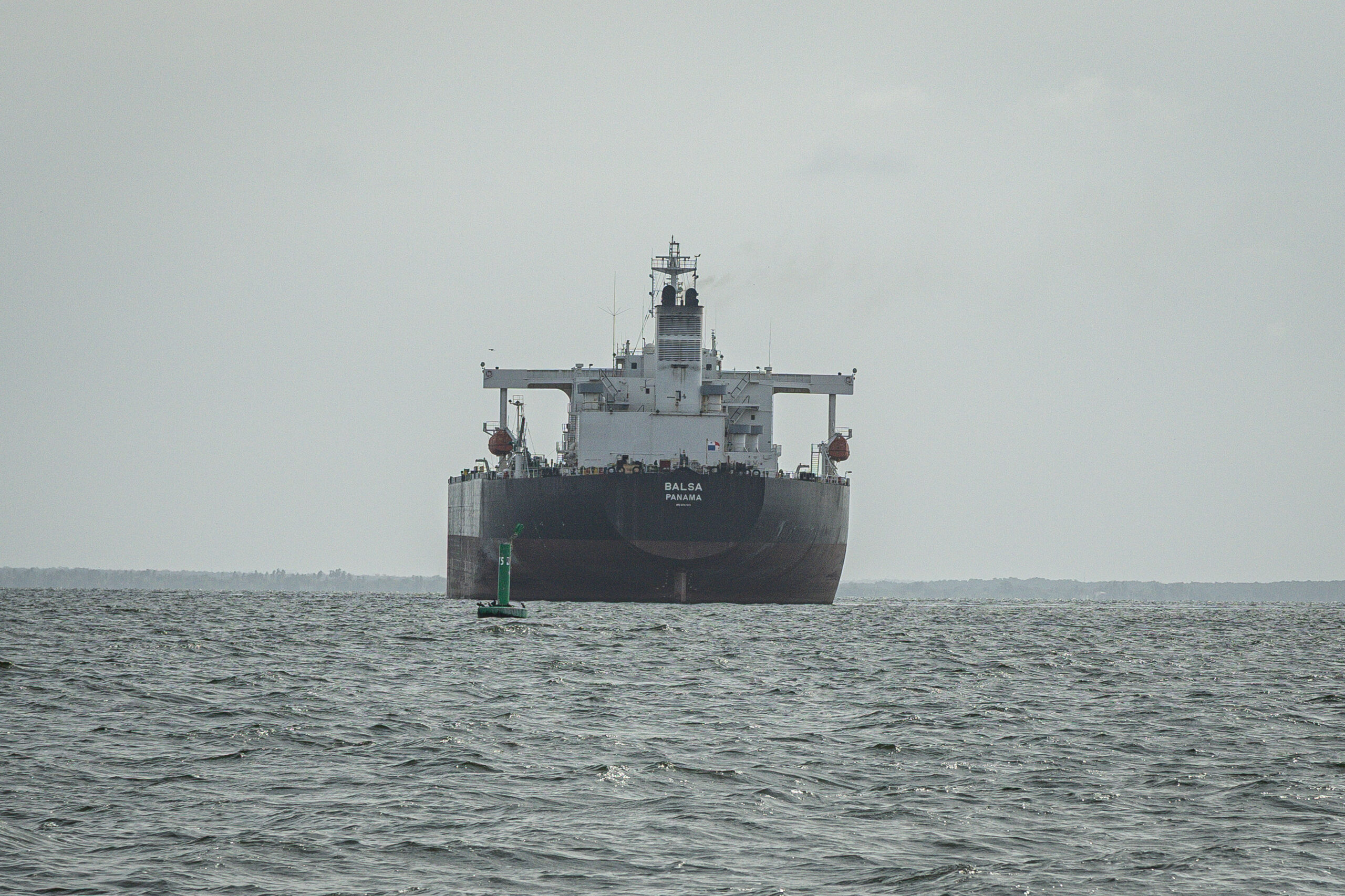
Deputy Julio Héctor Estrada Domínguez, president of the Finance Commission of the Congress of the Republic, explained that there are several scenarios related to the evolution of the international price of a barrel of oil, which has once again reached the shadow of US$100.
He assured that the variable and the price range indicators are monitored, in order to establish reactive actions. In any case, the expectation is that international prices will begin to decrease, which is one of the expected scenarios.
From the Finance Commission, how is the current oil situation viewed?
There was no deal last weekend between the US and Iran, but the market had already priced it in. However, what was not available was the United States’ position on make a blockade in the Strait of Hormuzand that was what again caused the prices of oil, gasoline and diesel to rise between 7% and 8%.
International prices are still moving in the ranges of the last three weeks.
In the Commission’s analyses, what is perceived?
That the market is doubtful of the proposals and the viability of the promises. It can be anticipated that this will be a rocky and very volatile process, with agreements and disagreements.
We see that it will not be a quick solution, but I consider that politically it is costing President Donald Trump.
By blocking the Strait of Hormuz, China and India are affected; So, the way is for the crisis to become internationalized.
What does it mean that the crisis can be internationalized with these actors?
There is currently a partial blockade, and the Iranians have been selling 2 million barrels a day to China for many years. Although the Strait of Hormuz is being blocked, they continue to extract their oil. In addition, gas is also being exported from Qatar.
So the United States says that is extracting oil that affects the global market; Therefore, if it is not mine, it is nobody’s, even though this puts pressure on international prices.
There was no deal last weekend between the US and Iran, but the market had already priced it in. However, what was not available was the United States’ position to block the Strait of Hormuz, and that was what once again caused oil, gasoline and diesel prices to rise between 7% and 8%.
Of the 17 million barrels that were leaving, roughly 5 million are being diverted through pipelines in Saudi Arabia, which go out to the Red Sea, and others through Iraq.
The world oil deficit is about 6 or 7 million barrels, and not 20 million as is usually the case, which is positive, because otherwise it would put more pressure on prices.
China, which is not a party to the conflict, is now being affected, because much of the energy flow goes to that country, and gas plants supply power generation for Japan and other nations.
In some way, other actors are getting involved in the conflict.
Why is it risky?
If these were concrete policy measures, markets would have already reacted more aggressively. For now, they are discounting reality, but we must be attentive.
The conflict is going to decrease with some shocks, because the pressure and availability of the US will be reduced and that is what is being discounted in the markets and for that reason we are around US$100.