
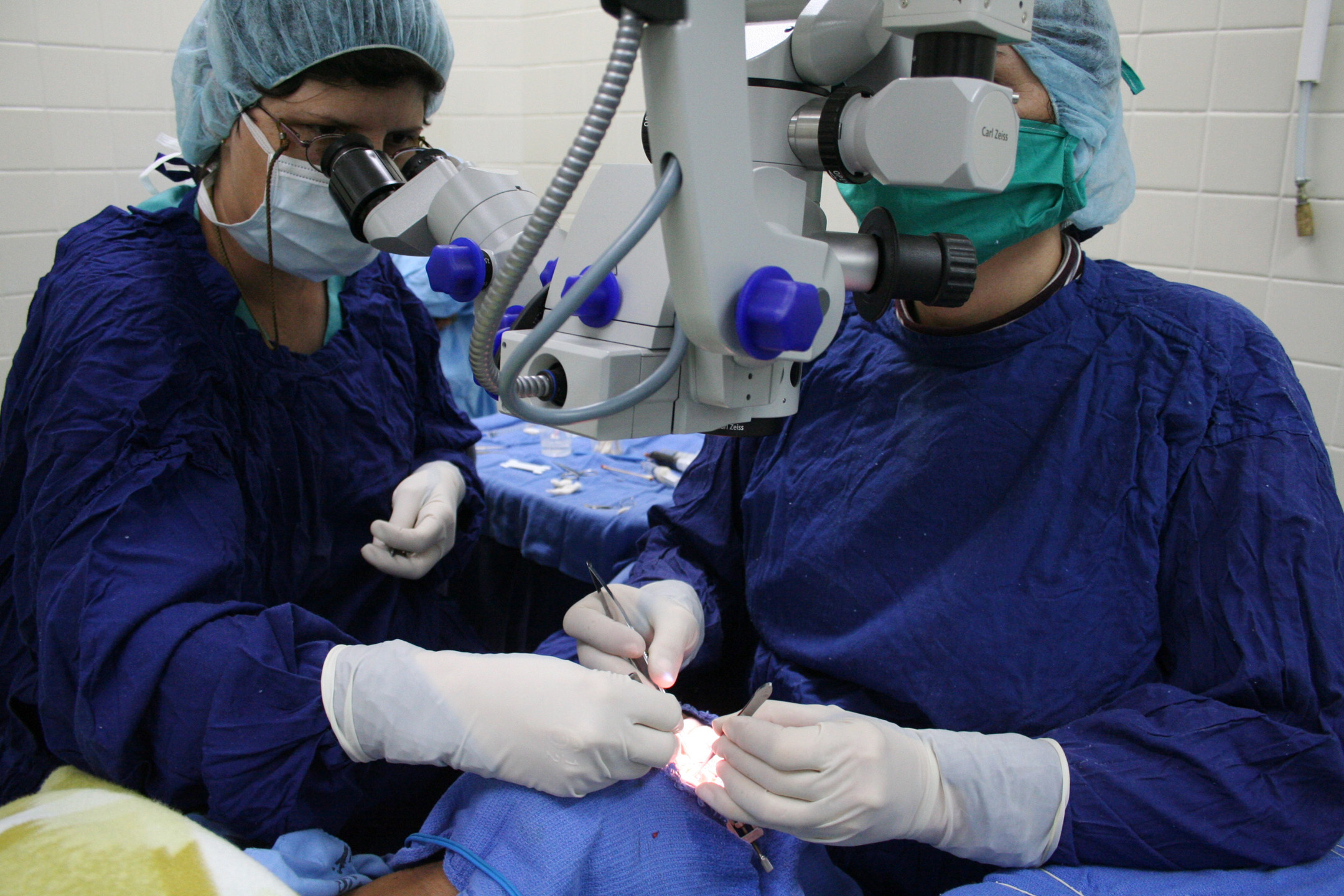
The collaboration of the Cuban Medical Brigade in the country was to end in 2027, according to the agreement signed between the Health authorities of Guatemala and Cuba. However, the document indicates, in article 9, that any of the parties could decide to withdraw the personnel before the established time; Guatemala chose to do so starting this year.
Last February, the Minister of Health, Joaquín Barnoya, indicated that the process of retirement of the brigade began in 2025 and that the departure of the brigade members would be progressiveas they concluded their mission time in the services.
Letters between those in charge of the Department of Administration and the Directorate of Integrated Health Services Networks, to which Free press had access, show that on January 5 of this year the procedures for the purchase of air tickets for 403 Cuban professionals on the Guatemala-Havana route, no return. The acquisition of 11 more tickets was also requested for personnel who completed their mission during 2024.
According to the collaboration agreement, part of the responsibility of the Ministry of Health is to cover the transportation or air ticket of each brigade member at the end of the mission in Guatemala. However, 93 Cuban doctors who finished their mission in the country will leave in April, and the ministry reported that the Cuban Embassy made “an agreement” with businessmen Guatemalans to purchase tickets.
It was indicated that another group will leave in August, leaving Guatemala gradually.
Authorities have said that each executing unit must take charge of hiring Guatemalan personnel to fill the positions left by brigade members. In some services, the process has already begun.
Under way
Marina Floridalma Méndez Saravia, director of the Joyabaj Hospital, Quiché, indicated that four members of the Cuban brigade are assigned to the institution, including an anesthesiologist who will leave the country at the end of Apriland the other three – an internist, a surgeon and a laboratory technician – will conclude their service in December.
He added that they already have a replacement for the doctor who will leave in the coming weeks and that the call process has already begun to hire the professionals who will fill the other positions.
For approximately 15 years, the Joyabaj Hospital has had the support of Cuban doctors from different specialties to care for the population. At the beginning there were more than 30 and, as they left the country at the end of their mission, they were replaced by Guatemalan personnel.
At first it was not easy to fill these spaces due to the remoteness and difficulty of access to the communities, as well as the low salaries, which were not attractive for national doctors.
Méndez Saravia pointed out that the hiring of personnel who will fill the Cuban vacancies is carried out in line 182, and salaries range from Q11 thousand to Q17 thousanddepending on the specialty.
“Each executing unit has to process its budget, issue its calls and carry out the corresponding management processes to be able to replace them,” said the director of the Joyabaj Hospital.
According to the agreement, brigade members receive a monthly stipend of Q7 thousandto which is added the payment of housing and other services.
Benjamín Contreras, interim director of the Directorate of Integrated Health Services Networks (DDRISS) of Playa Grande, Ixcán, Quiché, indicated that in the area there are 13 doctors from the Cuban brigade, including general medicine, obstetrics and pediatrics, and that they will leave the country in groups; This weekend four will leave.
“We already have a database of medical personnel to whom we have sent the calls to see if they will resume these positions, but we still do not have a direct proposal from the professionals,” said Contreras. For the moment, the positions will remain vacant while Guatemalan doctors are hired.
But the challenge becomes greater, not only because of salaries that are not attractive, but because candidates prefer to work in municipal seats, where there are better conditions, than to go to rural areas. Added to this is the lack of specialist doctors in the country, as they choose to open their own office.
In Ixcán, the Comprehensive Maternal and Child Care Center (Caimi) functions as a district hospital with 66 beds and operates 24 hours a day, but it does not have an adequate building, so in a military zone bungalows were set up for outpatient consultation, bed rest and a laboratory area to serve the population.
According to information from the Ministry of Health, In 2025 there were 74 Cuban doctors assigned to services in Quichéa department that concentrated the largest number of brigade members, distributed in Ixcán, Joyabaj, Nebaj and Uspantán.
In the health services of Totonicapán there are assigned 10 family doctors and one anesthesiologist of the Cuban brigade. Luis Alfonzo
Xalix Say agrees that the main challenge is to find national doctors willing to move to rural areas, where Cuban doctors were located and where the limitations are many.
Impact
Deputy José Chic indicates that, although the brigade members are already leaving the country, the ministry still does not have clarity on how it will supply all the brigade members in hospitals, centers and health posts.
There are services in which 90% of the professionals are Cuban, which is why he assures that their departure from the country will affect the care of the most vulnerable population and that the impact will be noticeable in the coming weeks.
On the other hand, the Health authorities have also stated that the Medical practitioners will provide support to fill the vacancies left by Cuban doctors. This year there are 1,400 students who will develop supervised professional practice (EPS) in public services.