
The conflict in the Middle East is impacting different activities; among these, according to Agexport, exports Therefore, the entity has analyzed three scenarios, with effects ranging from mild to severe.
According to the study by the Guatemalan Association of Exporters (Agexport), they analyzed the general impact on total exports, but they detected that the segment of legumes, vegetables and other non-traditional products face a contraction scenario if the conflict in the Middle East It continues, in a context of higher logistics costs and rising prices of key inputs such as fuels and fertilizers, and added to the fact that several products from that and other segments are subject to a 10% tariff to enter the United States.
For 2026, Agexport forecast a growth in total exports of 3% compared to 2025, according to original estimates from the beginning of the year. However, after the conflict in the Middle East intensified since the end of February, they analyzed three scenarios that project possible contractions in this activity, depending on the length of time the conflict could last, which would affect the initially estimated rate downwards.
Bismark Pineda, Agexport Competitiveness Manager, explained that the impact represents a high risk for exports.
- In the first, short-term scenario, the conflict is expected to last two months (March and April); the impact would be considered slight. In that case, export growth would register a possible contraction of -0.5% compared to the 3% expected before the conflict. That is, growth at the end of the year would be 2.5%.
- The second scenario is medium-term, with a duration of the conflict of four months (until the end of June). In this case, the estimated contraction would be -2%, as a moderate impact. Therefore, based on the initial growth projection, at the end of the year it would grow only 1%.
- The third scenario contemplates a long-term conflict, which lasts until December. The impact would be severe, with a contraction of -7.1%. In this case, with respect to the initial projection, the behavior of exports at the end of the year would be negative and would reflect a drop of -4.1%.
In the analysis carried out, they observe that the oil shock is simultaneously hitting the entire export cost structure, through four channels.
Furthermore, they evaluated that the rise in oil prices does not impact in isolation, but rather “simultaneously and transversally to the entire export structure.” derived from the importance of oil in three key aspects: energy, which makes production processes more expensive; inputs, which directly impact production costs, such as fertilizers, industrial raw materials and fuels; and transportation, which increases international logistics costs.
Based on this, Pineda explained that the Agexport model estimates the three impact scenarios on export growth mentioned, based on the effect on four channels: production costs, international transportation costs, external demand—among these, the growth behavior of the economy of the trading partners and the imports they make—and financial restrictions.
These combined effects amplify the total impact on exports.
CONTENT FOR SUBSCRIBERS
The executive added that “the technical analysis is conclusive and stated that the greatest risk is not the initial impact, but the prolongation of the shock, due to non-linear effects on the economy.”
Among other points, he mentioned that “this is not a sectoral crisis, but rather a transversal shock that affects the entire export chain.”
Non-traditional products
The entity analysis includes scenarios for non-traditional products.
In this case, according to Pineda, it was initially expected that this segment would grow 4%. However, derived from the conflict in the Middle East, it is estimated that, in the short term, this projection would contract by -0.5%, with a slight impact; In the medium term, the contraction would be -2.1%, with a moderate impact; and, in the long term, the impact would be severe, with a contraction of -7.8% compared to the 4% estimated at the beginning of the year.
In the case of the agricultural sector, it is mentioned that the effects of the conflict are not only reflected in oil prices, but also in the impact on inputs such as fertilizer and their availability. This is because around a third of the world’s fertilizers pass through the Strait of Hormuz. These have gone from US$460 per ton to US$713 in this period.
The Competitiveness Manager of Agexport said that, if Added to this is that several agricultural products were left out of the Reciprocal Trade Agreement signed between Guatemala and the United States.“effects like war are amplified even more.”
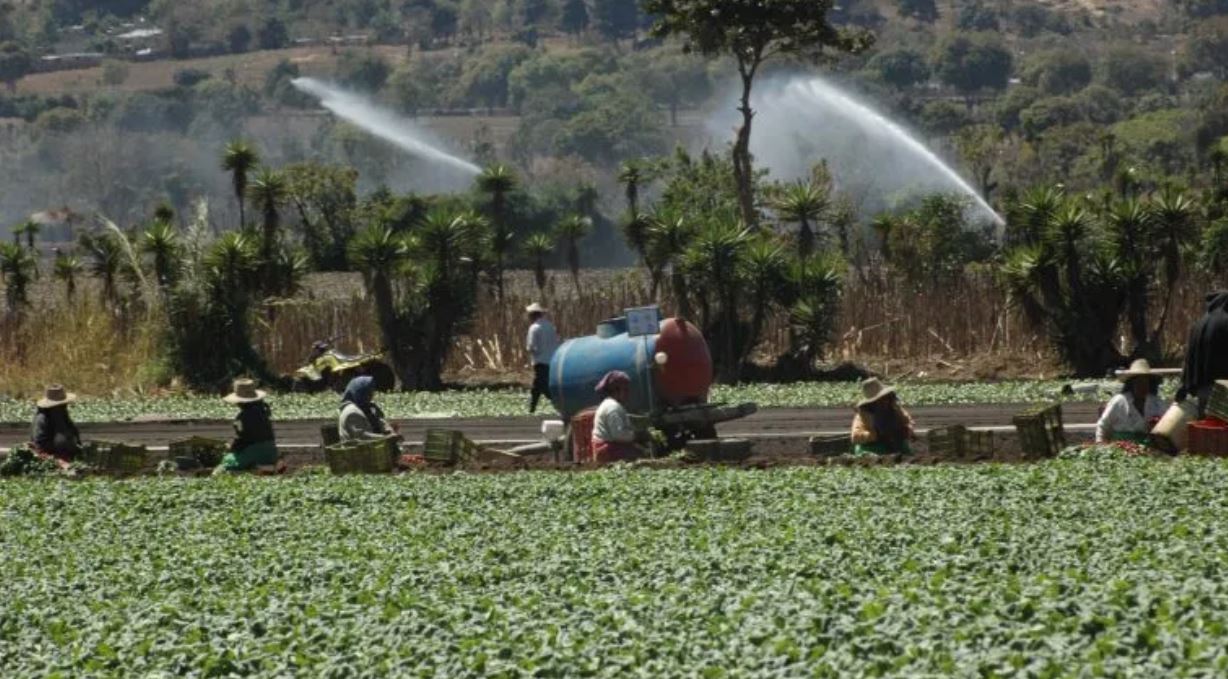
Within this segment, it is observed that the legumes and vegetables sector reports exports of US$41 million in the first two months of 2026, a drop of 26.2% compared to the previous year, according to Banguat data.
This sector is one of the most affected, because many of its products, such as vegetables, continue to pay a 10% tariff to enter the United States, since they have no exemption and were left out of the trade agreement signed with that country.
To this behavior we must add the effects that may now be generated by the conflict in the Middle East, which would lead to an even greater decrease scenario.
In the case of aquaculture and fishing, the effects are similar to those of agriculture due to the use of fertilizers. They are also not exempt from the United States tariff nor are they part of the agreement, and their exports as of February 2026 decreased 10%, it was added.
In the case of traditional products, stable behavior was initially estimated for 2026, without growth, but they estimate that when applying the analyzed scenarios they could report falls of -0.41% in the short term, -1.70% in the medium term, and -5% in the long-term scenario with a severe impact.
Effect and situation of exporters
Meanwhile, At the “micro level”, exporters report widespread increases in logistics costs, operational delays, cancellations, higher prices of inputs and changes in their availability, the report refers.
It is feared that the initial impact of the conflict and oil, as well as its prolongation, could deepen the effects on the operation and sustainability of the sector, especially in those with high dependence on containerized transportation and lower cost absorption capacity.
Agexport carried out a survey with exporters, who reported that the responses “confirm that the impact is widespread and operational,” and mentioned the following items:
Logistics costs
- Increases in maritime transport between 10% and up to 70%
- Specific cases of increases of up to US$3 thousand per container (for example, China-Guatemala routes)
- Land transportation with increases between 10% and 25%
- Logistics surcharges (“war risk” or war, fuel and security risks) with increases of up to 73%
Logistics operation
- 53.3% of companies report delays in delivery times
- Cancellations and reconfiguration of routes due to congestion and logistical detours
input costs
- 66% of exporters report an increase in input prices
- Among the main affected are fuels, fertilizers, industrial raw materials, agricultural inputs, packaging materials and paper.
The report explains that these impacts, together, are generating operational disorder in real time and affecting aspects such as profitability margins, contract compliance, delivery times and stability of supply chains.
These factors reduce their ability to compete in international markets.
Other information
Initial conservative projections regarding 2025
The Competitiveness manager explained that the initial growth projection for 2026, of 3%, was a conservative estimate, because Export growth in 2025 was driven by the strong recovery of traditional products such as coffee and sugar, whose increases are explained by better international prices and production conditions after previous weak years.
However, explained that this dynamism may be transitory; That is, they are not due to structural changes, but to the correction of previous falls, which explains why growth moderates again in 2026. Additionally, the projections were made before the tariff agreement with the United States existed.
Joint work necessary
Claudia De Del Águila, Director of Advocacy of the Export Environment at Agexport, commented that in addition to the current international shocks, there is a series of structural barriers that the country has been facing for several years and that increasingly affect the competitiveness and survival of the export sector. Among these, he mentioned poor road infrastructure, port inefficiency, high energy costs and matters related to procedures and bureaucracy.
“Facing and seeking solutions to mitigate the risks of these international shocks, as well as improving the country’s competitiveness, requires active coordination between public and private allies to promote strategic and non-reactive policies,” said the executive, pointing out the need to eliminate barriers to competitiveness and, thereby, generate development opportunities throughout the country through exports.