
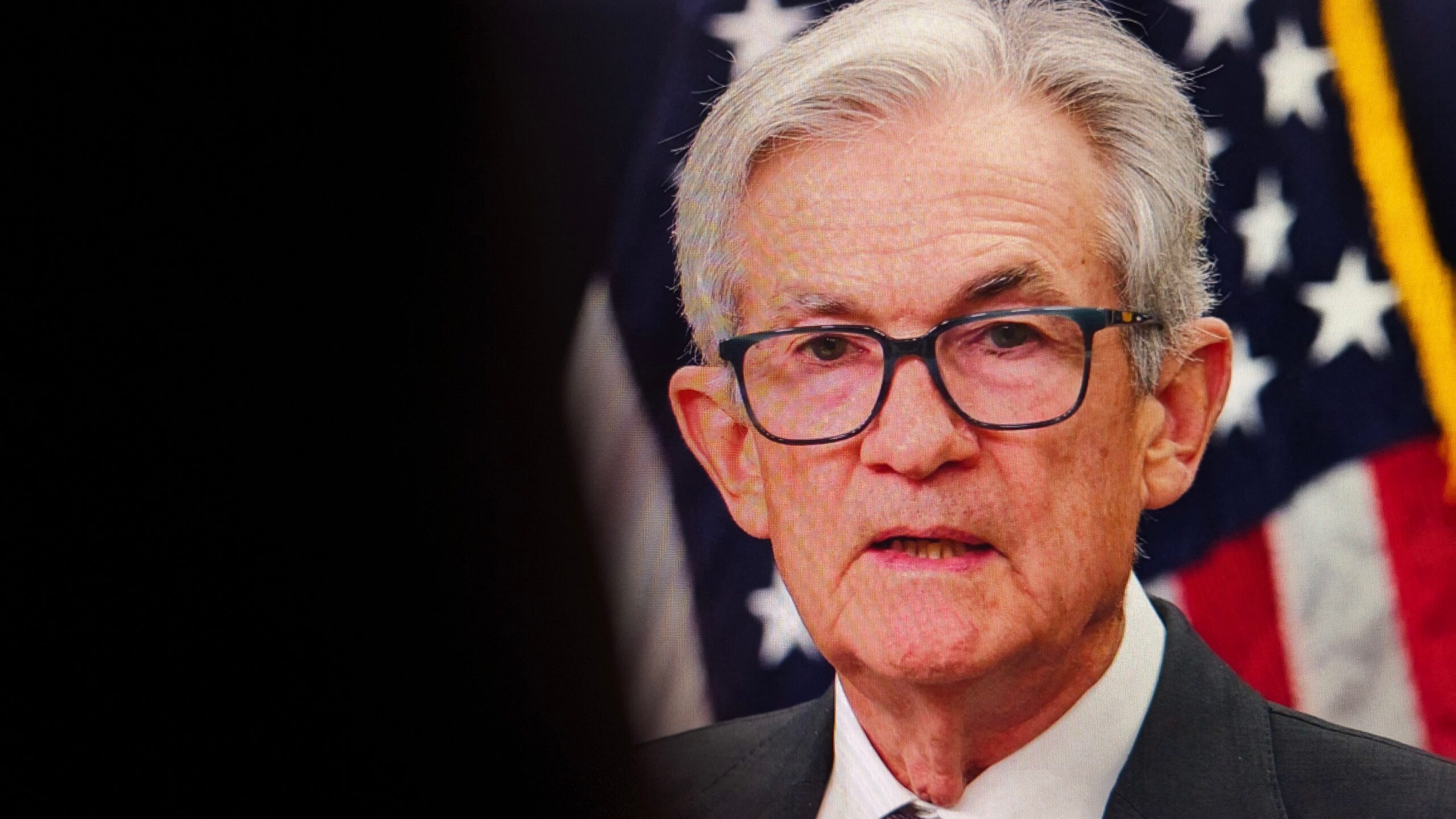
He repeatedly threatened his president, prompted a criminal investigation, attempted to oust a sitting governor and demanded deep interest rate cuts to boost the economy. On Wednesday of last week he discovered how badly the operation had gone wrong. In his last press conference as chairman of the Federal Reserve, Jerome H. Powell announced that he would remain on the central bank’s board of governors for a period yet to be determined, a direct consequence of the government’s legal attacks against the institution.
This decision deprives the White House of a crucial seat on the seven-member Federal Reserve board, which will likely delay Trump’s ambitions to make sweeping changes at the central bank. Unless another governor resigns, Trump will not have another vacancy to fill until Powell’s term as governor ends in January 2028. Powell’s act of institutional resistance may not be the last.
The central bank’s monetary policy committee split in an 8-4 vote in favor of keeping interest rates unchanged, the largest dissent since 1992,before the central bank immediately revealed its monetary policy decisions. Three of the four dissidents were regional Federal Reserve bank presidents who supported keeping rates unchanged but indicated they had no interest in resuming rate cuts, as the White House has demanded.
In short, the Federal Reserve is preparing for a protracted confrontation that Trump’s own actions helped create, analysts say. “So far, the Federal Reserve’s resistance has been effective —probably more than any other agency—and I get the impression that Trump finds it extremely frustrating,” said David Wilcox, a senior fellow at the Peterson Institute for International Economics and director of U.S. economic research at Bloomberg Economics.
The legislative protections put in place to insulate the Federal Reserve from political control — some dating to 1913, others to 1935 — were well designed, he added. This is not the first time that a president has discovered that pressuring the Federal Reserve often has the opposite effect than desired. Only Richard M. Nixon achieved it, quietly pressuring the chairman of the Federal ReserveArthur Burns, to keep rates low before his re-election in 1972, in part by spreading a false story that the president had privately requested a pay raise.
Burns agreed, but the episode helped fuel a decade of runaway inflation, which eventually required painful interest rate hikes to bring prices back under control. Others fared no better than Trump. Harry S. Truman summoned the entire Federal Reserve monetary policy committee to the White House in a tense showdown over interest rates, resulting in a historic agreement that reaffirmed the independence of the central bank.
George HW Bush called for lower interest rates as the recession took hold; these were not implemented, and he later blamed restrictive monetary policy for costing him his re-election. During his first term, Trump repeatedly attacked Powell on social media and speculated with his advisors about the possibility of firing him. The Federal Reserve did not change course, and Powell generally ignored the president’s barbs.
When Trump returned to the White House last year, he tried a more aggressive approach: He repeatedly flirted with the idea of firing Powell; attempted to oust another Federal Reserve governor, Lisa Cook; and subsequently encouraged the Justice Department’s criminal investigation into Powell and cost overruns related to renovations to the Federal Reserve headquarters in Washington. Powell and Cook have denied wrongdoing.
In March, a federal judge blocked two grand jury subpoenas related to the Justice Department investigation, after prosecutors acknowledged in a hearing closed door that lacked evidence of fraud or irregularities. The investigation was shelved last week. However, the prosecutor, Jeanine Pirro, federal prosecutor for the District of Columbia, has stated that she would not hesitate to reopen the case if the Federal Reserve’s internal watchdog, which was already reviewing the renovation costs at Powell’s request, files a criminal complaint.
Powell declared Wednesday that he will remain in office until the investigation is “completely completed transparently and definitively” — a phrase he had used before — and that months of legal pressure had left him “no other option.” By remaining in her position, Powell denies Trump an immediate vacancy on the board of directors. Kevin Warsh, whose nomination was approved Wednesday by the Senate Banking Committee on a 13-11 vote along party lines, was nominated to fill outgoing Gov. Stephen Miran’s seat, a position that was determined at the time of Warsh’s nomination in January and is separate from Powell’s position.
If it stays, it stays. I just wanted to make sure Kevin became the boss.
Trump was dismissive, taking to social media to say Powell was left alone because “he can’t get a job anywhere else; no one wants him.” Treasury Secretary Scott Bessent also criticized Powell, saying she was violating “all Federal Reserve rules.” Trump said Thursday: “If he stays, he stays. I just wanted to make sure Kevin became the boss.”
Three of the four lawmakers who dissented on this week’s rate decision — Beth Hammack of Cleveland, Neel Kashkari of Minneapolis and Lorie Logan of Dallas — objected not to the rate decision itself, but to language in the monetary policy statement that implied a future trend toward cuts, which some Fed watchers described as a direct rejection of pressure from the White House.
Patrick Harker, who was president of the Philadelphia Fed for a decade before retiring last year, said political pressure from the White House tended to have the opposite effect than desired, at least in his case. In fact, according to him, it made him more skeptical. “If someone comes to you desperate for something,” he said, “don’t react by saying, ‘Huh? What’s their motivation?'”