
Tourist access to the country depends mainly on land and air, while internal connectivity presents lags, with poor public transportation, the absence of a railway system and a limited supply of domestic flights. These conditions affect transportation between and within destinations, where deficiencies such as the lack of bike lanes, alternative transportation systems and safe urban mobility options are also evident.
This vision is provided by Jorge Mario Chajón, current director of inter-institutional relations at Irtra and former director of the Guatemalan Tourism Institute (Inguat) between 2016 and 2020.
Although the executive warns that tourist mobility in Guatemala continues to be marked by structural limitations in transportation and infrastructure, he sees a great opportunity in public-private alliance schemes to promote these works, to the extent that there are conditions that allow their execution and the participation of the private sector.
Chajón points out that the development of tourism is conditioned by the ability to improve connectivity, especially in destinations with high demand such as Antigua Guatemala, Atitlán or the South Coast.
Among the options proposed are projects such as cable cars, more efficient road networks and the possible implementation of a railway system that connects strategic regions of the country.
This is an excerpt from the conversation he had with Free press.
When talking about tourist mobility, what specific aspects are referred to?
In the case of Guatemala, access is mainly by land —especially from El Salvador, which continues to be an important market, with potential also in Honduras and Mexico—, by air and, to a lesser extent, by sea through cruise ships that arrive during the day.
In air transport, the main entry point is La Aurora International Airport, while Mundo Maya International Airport in Petén is still seeking to consolidate direct flights from the United States.
Within the country, Guatemala City functions as the main distribution point to different destinations, but there are limitations on internal mobility. Public transportation by bus is unsafe, there is no rail system and internal flights are limited, although there are some better served routes, such as those that connect with Flores, in Petén, and to a lesser extent with Puerto Barrios and Huehuetenango.
Regarding mobility within destinations, what aspects should be considered?
There is no adequate network of cycle paths that connect with nearby tourist attractions, unlike other countries where this type of infrastructure facilitates travel. Places like Antigua Guatemala could be candidates for implementing bike lanes or even systems like cable cars, which are currently not available in the country.
Within destinations, the situation is also complicated. Many tourists who do not use taxis travel by tuc-tuc, which has questionable safety conditions, while taxis and urban public transport do not offer a good service either. I believe that the country has a great opportunity and a great challenge in improving its mobility routes for tourists and obviously, for the Guatemalan population as well.
What do you think of the tourism plan that Sololá plans to implement with a cable car?
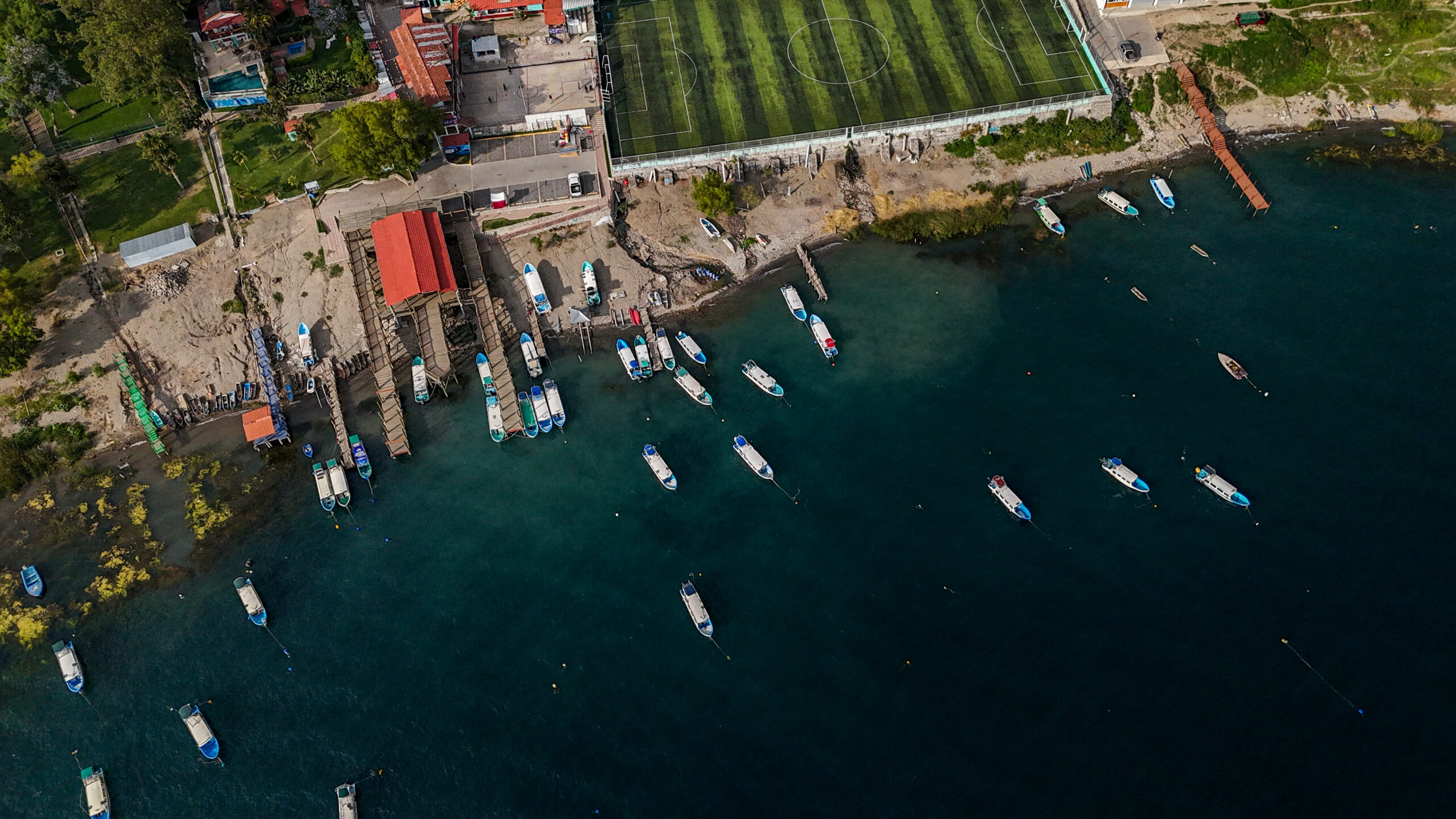
It seems to me that connecting the different destinations or towns around the lake could be a good opportunity. Likewise, linking the departmental capital, which is located in an elevated area above the lake, by a cable car would allow us to avoid the descent from Sololá to Panajachel along a road that sometimes presents problems.
At certain times, the lake presents conditions such as waves, wind and the Xocomil phenomenon, which has even caused some boats to capsize. I think that the cable car is proposed as an option to connect nearby towns, not necessarily crossing the lake, but traveling along its edges as an alternative for mobility.
What is the current situation of public-private alliances in the country?
Public-private alliances have not been further developed, in part due to mistrust in the public sector and the lack of conditions that facilitate their execution. A law was recently approved in Congress that seeks to promote this type of schemes, with the aim of expanding the possibilities of joint projects between both sectors.
I would expect the public sector, even without providing financial resources, to provide the operational, legal and environmental facilities necessary for its development. For its part, the private sector would provide the capital and administrative capacity to execute infrastructure projects, with models that include mechanisms such as charging for use, for example in roads or transportation systems.
The problem and the most expensive transportation is the one that does not exist. Tourists are spending a lot of money to get to taxis and tuk-tuk are a high safety risk. We are talking about security that they can get into accidents, but also security that they can be assaulted and we are obtaining a poor result.
I would hope that with this law really in the public sector, they can have the political decision to support all the projects in which the private sector wants to participate. In the private sector we hope that they have the courage to put large amounts of money into the country’s infrastructure and that they can also at some point have a return on the capital they are investing.
What destinations or departments of the country do you consider have the potential to develop tourism?
I would say that the private sector is going to invest its money where it has a guarantee of return. So, it will do so in destinations that at this moment already represent a volume that can be representative of winning, such as Antigua Guatemala or Sololá.
I don’t think they will do so towards destinations that have little demand because it would be betting on a still very distant future.
What types of infrastructure do you specifically propose?
There is a road network and the possibility of developing a railway network that connects to the Pacific coast of Guatemala. From there, a station could be established that would allow visitors to be distributed on buses or other means of transportation to the beaches of departments such as Escuintla and Santa Rosa, which currently register high demand.
The interconnection of this railway line with a branch from Suchitepéquez to Retalhuleu is also proposed, which is the second most visited destination in the country according to Inguat and has a consolidated offer in Irtra amusement parks.
On the other hand, the possibility of establishing a direct connection, either by rail or road, to Cobán, Alta Verapaz, is proposed, considering that in a straight line the distance is between 90 and 100 kilometers. Currently, the route extends to more than 200 kilometers due to the detour through El Rancho, using a road shared with heavy transport towards Puerto Barrios and Santo Tomás de Castilla.
Likewise, the option of connecting Cobán with Petén through Sayaxché is being considered, which would reduce the current route that passes through Izabal and Río Dulce, taking advantage of more direct routes to improve connectivity between these destinations.