
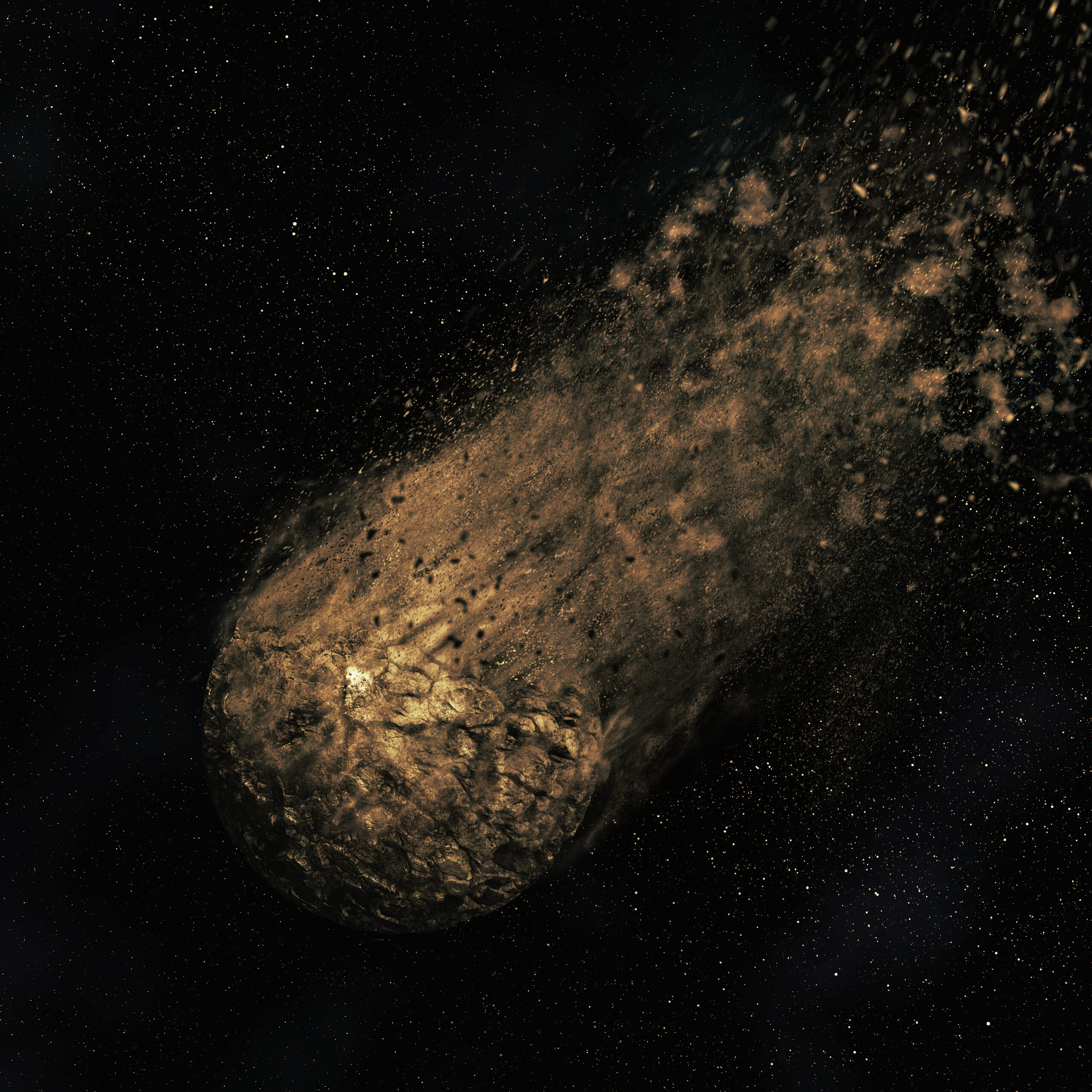
“Today and tomorrow a rather rare phenomenon will occur: the passage in unison of two large asteroids in the vicinity of the Earth,” the scientific study center reported on its Telegram channel, which jokingly called the celestial bodies “Chelyabinsk meteorites.”
According to the Laboratory, asteroids 2026 JH2 and 2026 KB were discovered by chance by astronomers a few days before approaching Earth, on May 10 and 13, respectively.
“This shows once again how unexpectedly a fairly large celestial body can emerge from space, capable of causing considerable damage” to our planet, he indicated.
The Laboratory noted that both have “a similar size, probably about 20 meters, which makes them almost twins of the Chelyabinsk meteorite, which fell to Earth on February 15, 2013 and is probably the largest celestial body that has collided with the planet in the 21st century.”
“The asteroid 2026 KB, slightly smaller, will pass about 230 thousand kilometers from Earth. Its closest approach occurred today (Monday the 18th) at 9:15 a.m. in Guatemala (6:15 p.m. Moscow time and 3:15 p.m. GMT),” according to the scientists.
The second, 2026 JH2, slightly larger, will pass near the Earth this Tuesday the 19th, at 3:00 p.m. in Guatemala (1 hour in Moscow and 9:00 p.m. GMT on Monday), at a distance of approximately 91,000 kilometers, they noted.
They added that it is not the closest approach seen, “but it appears to be the closest to the planet of an object of this size this year.”
“Both bodies do not represent any danger to the Earth,” the Laboratory assured, indicating that “in this case, a few hours before its passage, no force of nature, except divine intervention, can alter the movement of the asteroid and direct it towards the Earth.”
2026 JH2, thanks to its closer proximity, could be visible from Earth with semi-professional instruments, such as spotting scopes with +12 magnification, although due to its high speed it will be difficult to capture it with a lens.
“So let’s say hello to the rocks today and look forward to our next visitors,” the Laboratory concluded jokingly.