
The ball has traveled the world since it began rolling for the first time in the 1930 World Cup and, after almost a century of history and 22 editions played, the most important tournament in football is preparing to enter a new era with the expansion to 48 teams in the 2026 World Cup.
The journey began in Montevideo, Uruguay, with only 13 teams participating in the first edition organized by FIFA. Since then, the World Cup It became much more than a sports tournament: it became one of the largest mass spectacles and one of the most influential events on the planet.
Throughout its history, the World Cup was growing both in size and global impact. The championship went from 16 to 24 and then to 32 teamsin addition to incorporating important technological and symbolic changes, such as the arrival of color transmissions in 1970 or the use of VAR starting in Russia 2018.
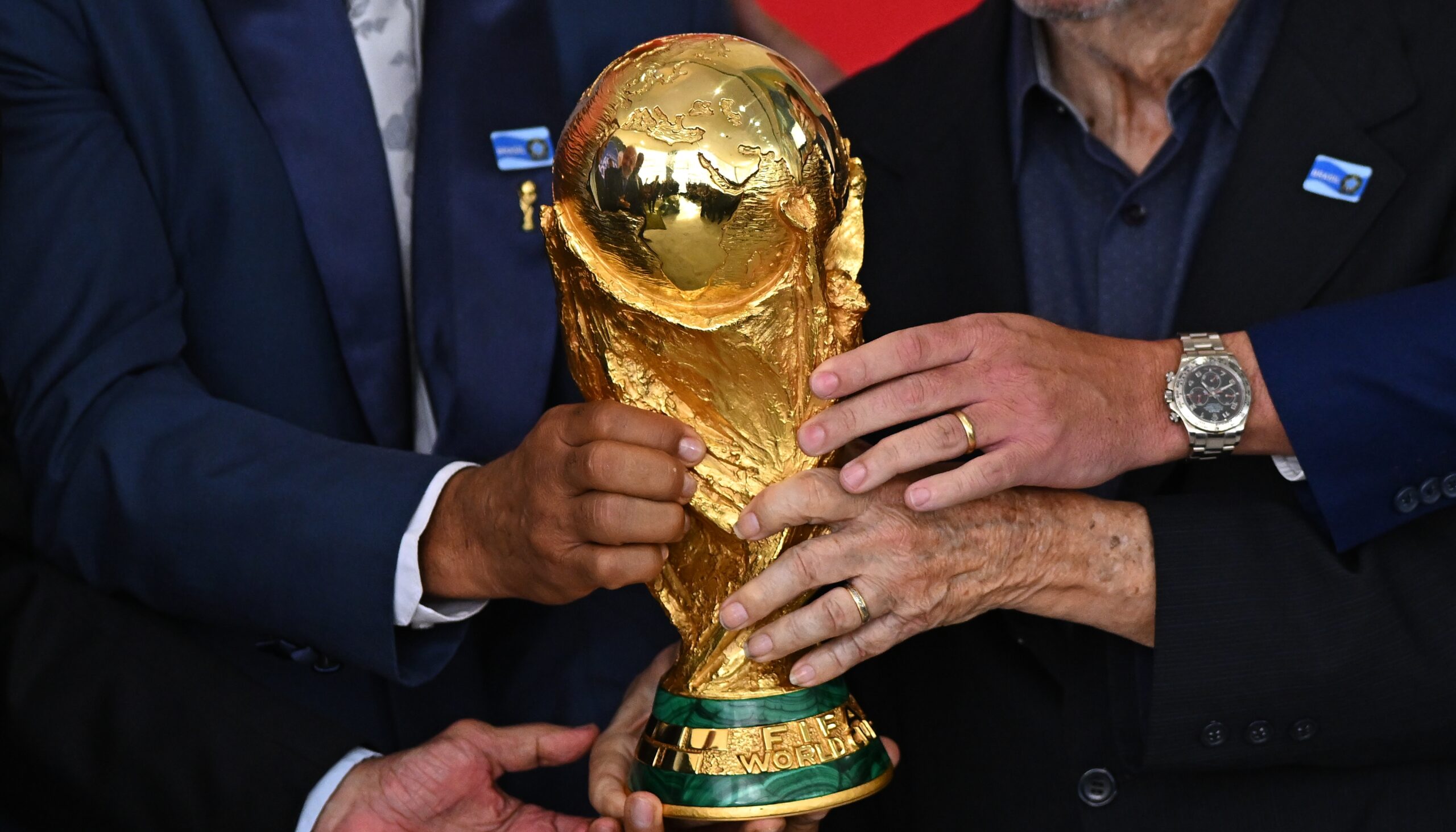
The trophy also evolved. The traditional Jules Rimet Cup gave way in 1974 to the current design that today represents the greatest glory of world football.
However, despite the fact that dozens of countries have participated in the tournament, only eight teams have managed to lift the trophy in all of history. Brazil leads the list with five titles, followed by Germany and Italy, both with four championships.
The latest edition with the traditional format of 32 teams competed in Qatar 2022, a historic World Cup for multiple reasons. It was the first World Cup held in the Middle East and in an Arab country, in addition to breaking the usual calendar by being played between November and December.
Qatar also offered an unprecedented experience due to the proximity between venues, since all the stadiums were within a small radius, something never before seen in a World Cup.
The edition left memorable moments, such as the surprising elimination of Germany in the group stage and Morocco’s historic qualification to the semifinals, becoming the first African team to reach that stage.
At the individual level, Kylian Mbappé shone as the tournament’s top scorer and starred in an unforgettable final by scoring a hat trick against Argentina.
Precisely, the perfect closure for this historic stage came with the consecration of Lionel Messi and the Argentine team in one of the most exciting finals of all time, decided on penalties against France at the Lusail stadium.
That title also meant the symbolic closing of an era marked by legendary figures such as Pelé, Diego Maradona, Franz Beckenbauer, Johan Cruyff and Messi himself.
Now, the World Cup is preparing for a historic transformation. Starting in 2026, 48 teams will participate for the first time, opening space for more countries and new stories, although the 22 editions Previous ones will forever remain part of the most emblematic and traditional era of world football.