
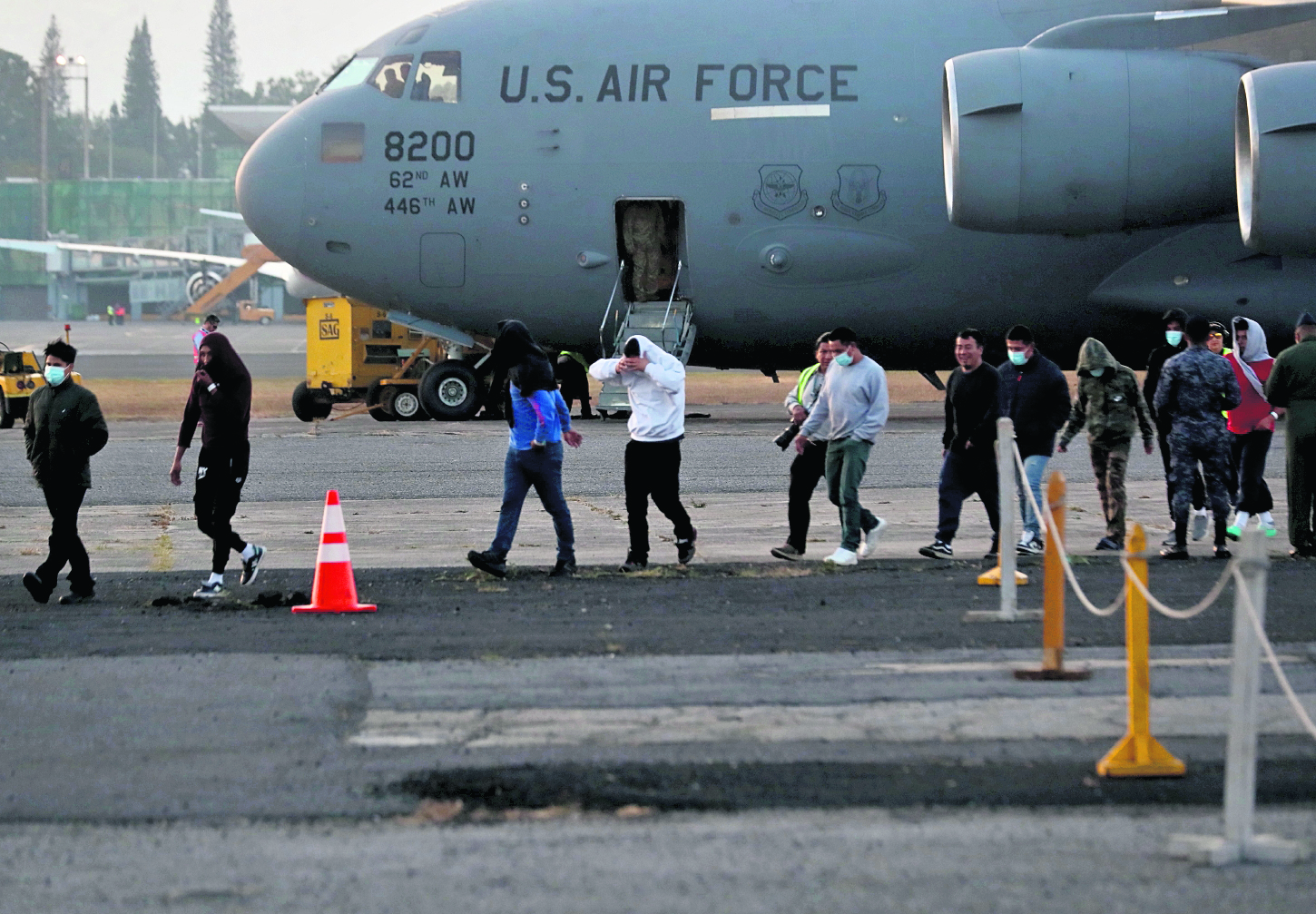
The arrests of Guatemalan migrants without regular status in the United States they do not stop. From January to May, they returned to Guatemala 10,234 more undocumented migrants than those reported last year in the same period, according to the registry of the Guatemalan Migration Institute (IGM).
The report indicates that in 2025, 14,125 nationals, including adults and minors, entered by air. The number increased to 24,359 this year, which represents a increase of 72.4%.
“The arrests have not stopped. Now it is no longer as visible or in the media, but every day there are arrests of people without an immigration status,” says Walter Batres, of the Guatemalan Migrant Network in Los Angeles, California, United States.
He adds that municipal or state police agencies arrest people for traffic violations, hold them in jails until ICE—U.S. Immigration and Customs Enforcement—arrives for them to transfer them to detention centers, where they face long processes before expulsion to Guatemala.
In Houston, Texas, where the Guatemalan Paulino García lives, the panorama is different. He points out that the raids are less frequent, but that the concern of his fellow citizens has increased over Donald Trump’s new policies, such as the tightening supervision of financial services and the credit evaluation of migrants without work authorization.
Increase
According to the IGM report, this year the monthly average of Guatemalan migrants returned from the United States, until May, ranges from 4 thousand 800 people. Nine out of ten are men.
The data also indicate that two out of every ten people are originally from Huehuetenangowhich makes that department the place from which the most Guatemalans return from US territory, after remaining in a detention center.
The other places on the list are San Marcos and Quiché, where two out of every ten migrants are from, respectively. However, among the returnees there are people from the 22 departments of the country.
According to immigration analyst Fernando Castro, these departments have a high expulsion rate due to the historical lack of formal employment, high levels of chronic poverty and the need to seek sustenance abroad due to the lack of opportunities and development in their communities.
The undocumented nationals returned to the country in 236 flights. Half (117) came from the state of Texas, while 97 came from Louisiana, 20 from Florida and two from Arizona.
There are also Guatemalan migrants returned from Mexico. This year, at the end of May, 2,503 people entered by land, while in 2025 2,761 were deported. Of the total, 46% entered by air and 54% did so by land, according to an official report.
What did they work on?
At the end of May, the IGM reports that 22,998 people worked in different areas in the United States and Mexico before deportation.
The compatriots worked in more than 180 jobs, and that of greatest demand was construction: one in two people worked in that sector.
Although the majority of workers are men, there are 7.5% of women who were employed in one of the registered areas.
On the other hand, the data also reveal that two out of every ten migrants returned to Guatemala speak English.
They were traveling alone
The report indicates that two out of every ten deportees are minors. 69.73% traveled with their parents, but 30.63% returned alone.
The number of unaccompanied minors returned from the United States by air also increased, but in this case it is three times greater than that registered in the first five months of the previous year.
The children and adolescents who migrated alone and were deported until May 2025 were 51; this year, in the same period, there are 163. This represents an increase of 219%, above the increase in total deportations registered during the first five months of the year.
In the group of minors who returned to the country in 2026, the IGM indicates that there are 43 adolescents between 15 and 17 years old who worked while residing in the country from which they were deported.
Actions
The IGM confirms that deportations increased this year compared to the 2025 record; However, in 2024 there was a decrease. This variation responds to “multiple factors,” he indicates.
Castro views this increase with concern, considering that it is a reflection that “the current economic model fails to absorb or guarantee the living conditions of the population in their places of origin due to the lack of employment and development,” which is why many people decide to migrate.
The analyst does not rule out that deportations remain at high levels and that the 2025 numbers will be exceeded, mainly due to the “hardening of border policies in the United States and the sustained increase in deportation flights agreed with the North American authorities.”
He adds that the Guatemalan State is obliged to guarantee a dignified reintegration of returned compatriots, which to date has not been achieved effectively, since only around 1,400 have been incorporated into the economy through private initiative.
For its part, the IGM points out that it maintains the reception, registration, orientation and care of returned people. Furthermore, it has the Return Home Planimplemented by the Government, to assist and socially and economically reintegrate this population through different inter-institutional actions.