
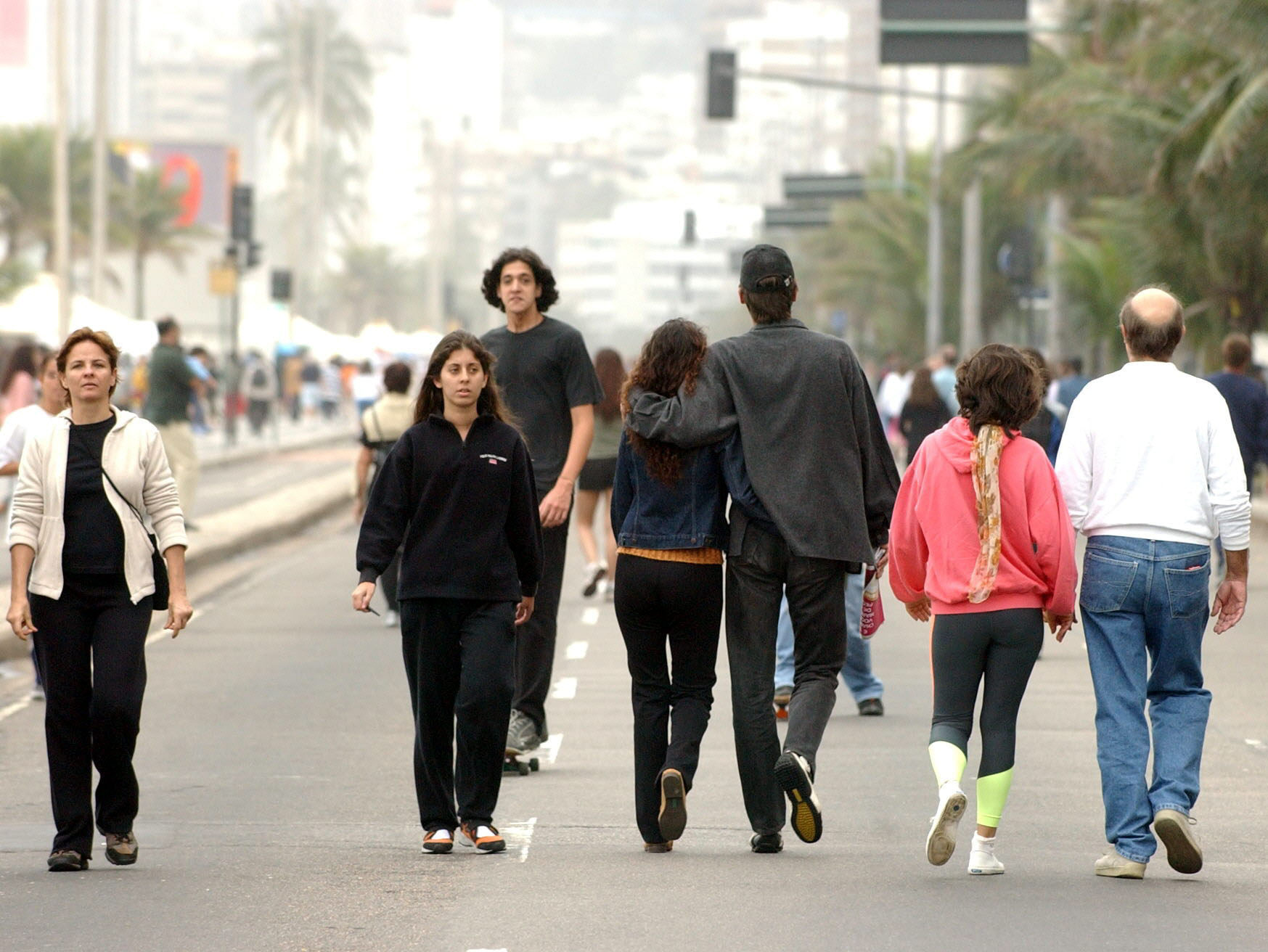
In the era of screens, and on the occasion of World Walking Day, which is commemorated on June 19, experts remember that walking outdoors is a simple habit that helps protect the visual health. Spending more time outdoors helps rest the eyes, punished by excessive hours in front of screens, and can help slow the progression of myopia in children and adolescents.
Walking outdoors, without keeping your eyes glued to your mobile phone, is a simple habit that has been lost among the youngest and that helps protect visual health in the age of screens. Spending more time outdoors promotes visual rest and helps slow the progression of myopia in children and adolescents, a disorder that has increased in recent years due to the excessive use of these technologies.
Doctors and ophthalmology specialists remember that incorporating daily walks of about 30 minutes can help reduce eye fatigue derived from the intensive use of digital devices.
In a society that is increasingly connected and exposed to screens, taking care of visual health has become a daily challenge. On the occasion of World Walking Day, Bavarian specialists highlight the benefits of an activity as simple as walking or staying outdoors without using your mobile phone.
In addition to helping to improve cardiovascular health, control weight and reduce stress levels, walking promotes visual health.
One of the main benefits of walking outdoors is that it allows you to reduce exposure time to screens, makes it easier for your eyes to rest, and can become an ally in preventing some of the most frequent visual disturbances associated with today’s lifestyle.
Computers, mobile phones and tablets are part of the daily lives of millions of people, and their prolonged use is directly related to the appearance of symptoms of digital eye strain, such as dry eyes, blurred vision, stinging, feeling of tiredness in the eyes or difficulty maintaining focus.
In addition, walking allows the eyes to work naturally by focusing on objects located at different distances, which helps to relax the visual system, especially after long periods dedicated to close vision tasks.
Spending more time outdoors can also play an important role in the prevention and control of childhood myopia. Various studies have observed that children and adolescents who regularly engage in outdoor activities are less likely to develop myopia or have it progress more quickly.
Exposure to natural light appears to exert a protective effect on visual development during the growth stages.
Walking can also help reduce stress levels, a factor that can impact visual well-being. Accumulated tension can lead to the appearance of discomfort such as sensitivity to light, temporary blurred vision or eyelid spasms, symptoms that can improve with habits that promote relaxation and rest.

Tips to incorporate into your daily routine
From Baviera they remember that it is not necessary to carry out intense physical activity to obtain benefits for visual and general health, and that small changes in daily routines can significantly contribute to preserving visual health and improving quality of life in the long term:
- Take daily walks of at least 20 or 30 minutes.
- Take advantage of daily trips to carry out part of the journey on foot.
- Reduce leisure time in front of screens and replace it with outdoor activities.
- Rest your eyes periodically during the workday following a simple guideline: every 20 minutes, spend 20 seconds looking at a distant point, approximately six meters away.
- Use adequate lighting during study or work, preferably natural light.
- Wear approved sunglasses with UV protection when doing outdoor activities.
- Maintain periodic ophthalmological check-ups to detect possible visual alterations early.
“In a context in which we spend more and more hours in front of digital devices, it is important to remember that small daily habits such as walking outdoors can make a big difference in our visual health. Incorporating moments of rest for the eyes and encouraging outdoor activities not only helps reduce visual fatigue, but also contributes to preventing long-term visual problems, especially when these recommendations are adopted at an early age,” explains Dr. Fernando Llovet, co-founding ophthalmologist of Bavaria, who offers a comprehensive service for the treatment of problems and diseases. oculars based on quality criteria and the use of the latest microsurgery techniques.
Walking is one of the most recommended exercises to reduce the risk of suffering from chronic diseases, cognitive decline and death, especially if the goal is to reach seven thousand steps a day, according to a study recently published in The Lancet.
Experts from the University of Sydney, Australia, analyzed data to find that even reaching four thousand steps a day, compared to a low average of two thousand, can provide significant health benefits. The authors highlight that seven thousand steps a day, that is, about five kilometers, constitute a more realistic goal for the majority of the population than the ten thousand traditionally recommended, without giving up important health benefits.
Reaching that number is associated with reductions in the risk of a variety of serious problems, including up to a 47% decrease in all-cause mortality. Although the minimum of four thousand steps a day already produces positive effects, the benefits increase as physical activity increases. In most conditions they tend to stabilize when reaching that level, while in cardiovascular diseases they continue to grow beyond that figure.