
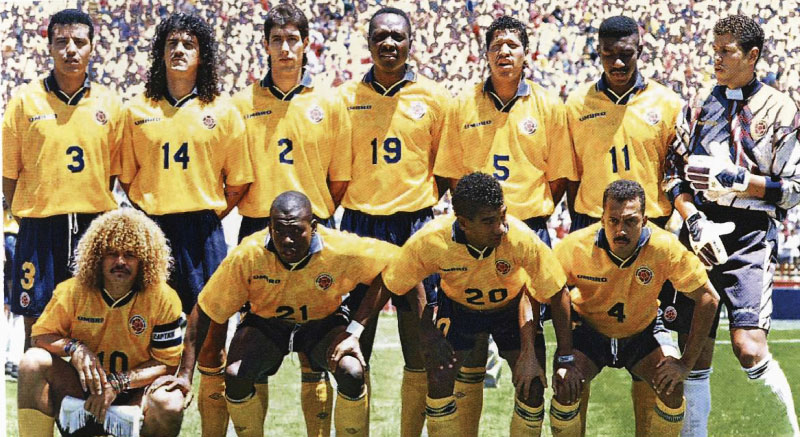
The confrontation between Colombia and Switzerland in the round of 16 of the 2026 FIFA World Cup reactivates one of the most sensitive memories in the history of Colombian football.
The last time both teams met in a World Cup was on June 26, 1994, also on American soil. That day, Colombia defeated Switzerland 2-0 at Stanford Stadium in Palo Alto, California, with goals from Hernán Gaviria and Harold Lozano.
Colombia arrived at that match with no chance of advancing to the round of 16, after defeats against Romania and the United States. The victory over Switzerland only served to say goodbye to the tournament with a victory that, over the years, became associated with the most tragic outcome in the history of Colombian soccer.
That match was also Andrés Escobar Saldarriaga’s last official match with the Colombian team.
After the World Cup, Escobar returned to Medellín. In the early hours of July 2, 1994, he was shot dead in the parking lot of a night establishment, a few days after the own goal he had scored against the United States.
The investigations identified Humberto Muñoz Castro as the perpetrator of the homicide, who was initially sentenced to 43 years in prison. Subsequently, the sentence was reduced in accordance with current Colombian legislation and he was released after serving 11 years in prison.
Thirty-two years later, Colombia and Switzerland will cross paths again in a World Cup, again on American soil. This time they will do it in a direct elimination match for a place in the quarterfinals, although the precedent from 1994 continues to occupy a special place in the memory of world football: it was Andrés Escobar’s last match with the Colombia shirt and a victory that ended up overshadowed by the tragedy that occurred just six days later.