
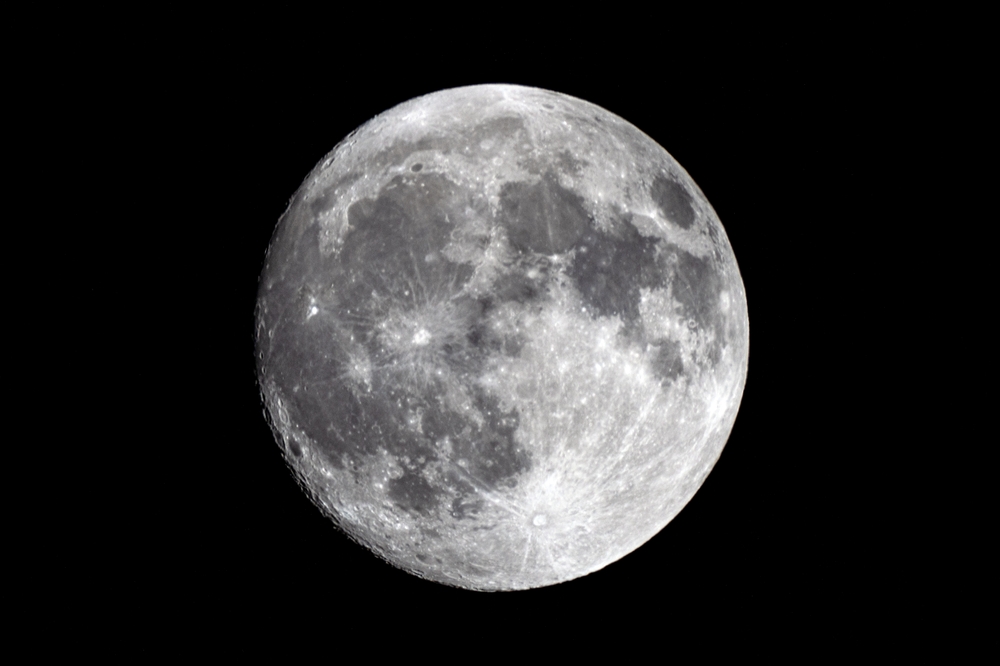
Every month, the full moon It receives a different name, according to cultural traditions and observations of nature associated with that time of year. In July, the celestial phenomenon corresponding to the northern hemisphere is known as the Deer Moon.
This natural satellite captivates the attention of millions of astronomy fans month after month due to its brightness and the ancestral beliefs that hold that the Moon, especially in its full phase, influences daily life and even the mood of people. However, these theories have not been scientifically proven.
What is certain is that, during this phase, the satellite appears completely illuminated and offers an unparalleled night show.
According to the site Date and Timethe full moon of July 2026 will occur on Wednesday, July 29. That day, the Moon and the Sun will be located on opposite sides of the Earth, at which time the natural satellite will reach its maximum illumination.
Although the exact moment of the full moon is brief, the lunar disk will appear large and bright for several consecutive nights, particularly on July 28, 29 and 30.
During this period, the Moon will be located in the constellation of Capricorn, although, in astrological terms, it is associated with the sign of Aquarius. This difference responds to the different criteria with which astronomy and astrology divide the sky.
Before that date, the new moon will occur on July 14, a phase in which the satellite will be invisible to the naked eye because it is located between the Earth and the Sun. This time of the month is usually favorable for observing deep sky objects, such as nebulae and star clusters, due to the absence of interference from lunar light.
The origin of the name “Deer Moon”
The name has its origins in indigenous peoples of North America, who associated this full moon with a recurring wildlife phenomenon during July: the beginning of the growth of new antlers in male deer. This biological process marked a recognizable moment in the natural calendar and, over time, gave its name to the full moon of that month.
The name is not the only one that receives this full moon. In some traditions it is also called the Thunder Moon, due to the frequency of summer storms at that time, while in Alaska it is known as the Salmon Moon, coinciding with the spawning season of that species.
A temporary closure for Jupiter
The date of the full moon in July will also coincide with a planetary event: Jupiter will reach its solar conjunction, that is, it will be too close to the Sun from Earth’s perspective, so it will not be able to be observed with the naked eye for several weeks.
Likewise, this will be the last full moon before the lunar eclipse scheduled for August 27.