

In 2023, according to data from the National Institute of Statistics (INE), of the total number of students enrolled at the University of San Carlos de Guatemala (USAC), 57.5% was made up of women, and in private universities, 53.6%, also in that year. However, from the colony and until a little less than a hundred years ago, he was not allowed to study higher than the woman, and it was not even in 1919 that the first Guatemalan received the degree.
This space remembers the names of exemplary and brave women who, despite vicissitudes such as discrimination, They began to close the gap in terms of equity between the sexes, having been the first to finish university careers in Guatemala.
It should be taken into account that after the arrival of the Spaniards, in 1524, the formation of girls and young adults of the new social elite was in charge of religious and “good ladies of society.” The educational institutions for women were convents, teaching houses and Beaterios. The cultural pattern relegated them to the learning of domestic tasks, such as culinary art or home cleanliness and, from childhood, to a subaltern position in relation to men, in addition to preparing them to devote themselves to “reproduction activities”.
In the USAC, a single woman was not registered in her classrooms, during the almost 300 years of the colonial period, At the end of which the woman continued submissive and a limited education for her prevailed.
From the liberal revolution, 1871, to girls and young adults They were given an education that understood, in addition to the main subjects, the classes of “works of needle and domestic economy”.
It was not until 1875 when primary education was given importance and, for the first time, the obligation of the formal education of girls was recognized, but participation was unequal. In 1881, of the 37 thousand 469 students who went to schools, 10 thousand 696 were women. In that year, secondary instruction establishments for both sexes were created. However, the woman continued to see the admission to the university. A normal ladies school was inaugurated in 1893.
One of the first women graduated from the secondary level was Elisa Zirion, Who in 1887 graduated in a private establishment as a primary education teacher, with his thesis, “the importance of women’s education.”
Pioneers
The first to register at the University faced patriarchal standards.
Subscriber content
In 1895, 130 years ago, for the first time, women were granted the right to study a short university career – two and a half years. In the annexed school of midwives of the Faculty of Medicine and Pharmacy of the National University – as the USAC was called at that time – this was the only allowed career for women, considering it “feminine”. The first seven midwives to graduate were Piedad Rogel, Pilar Rivera de Villeda, Amalia San Germán de Montiel, María Castro de Morales, Paula Rückwardt, Jesusa Rodríguez Castillo and Isabel Ardón. This milestone occurred 214 years after women were denied higher studies, since only men had registered since 1681. From 1897 to 1905, 25 midwives graduated.
However, more requirements were required than men to be admitted – a good behavior, to have been vaccinated and a letter of recognized citizen to attract their honesty, among others.
Olimpia R. Altuve, A native of Quetzaltenango, she was the first woman to graduate from the University as a degree in Pharmacy, on November 23, 1919with the thesis “Contribution to the study of the Mexican Cecropia (Guarumo)”, who sustained “brilliantly” his public examination and who dictator Manuel Estrada Cabrera handed him his title. The ruler congratulated her and four nurses who also graduated on that date, when he commemorates the day of the university woman.
Olimpia Altuve was the first woman to obtain a degree in Guatemala. (Photo Press Libre, magazine Nosotras (1938)/ Courtesy of Ana Patricia Borrayo)
He had started studying medicine, but – fell to colleagues harassment – decided to change career. The second woman to graduate from the university was also the Quetzalteca Blanca Chávez Altuve, also of the Pharmacy career, in 1920.
Luz Castillo Díaz-Aordaz was the first Guatemalan-and Central American-that on June 4, 1927 he obtained, at 23, the lawyer and notary titlein the then Law of Law and Notaries of the West, in Quetzaltenango, a Center for Higher Studies dependent on the National University. He titled his thesis: “The woman, one of the problems that has most worried humanity.” She was the first woman to address the status of subordination and legal and social inequalities of her peers, and was honored with numerous awards; However, he had to face the reality of that time, that did not allow him to exercise his profession for not enjoying his civic-political rights.
The few women who in those years enrolled had to endure denigrating situations, as they reached an aggressive male space in which they were not heard and were not given their place intellectually, because the traditional position relegated them to their role of wives and mothers. With perseverance and waters, their rights were respected and enforced.
So, María Isabel Escobar was the first graduate as a doctor and surgeon at the State University of Guatemala City, on December 22, 1942. “… Other Guatemalan women will go further, will conquer true triumphs, they will found the scientific tradition of women in our homeland and, then, we will savor the satisfaction – both you like me – having encouraged these triumphs of the future,” said Escobar in one of the tributes that were rendered for such a milestone. He specialized in Pediatrics in the United States (1945-1946) and was co-founded by the College of Physicians and Surgeons in Guatemala.
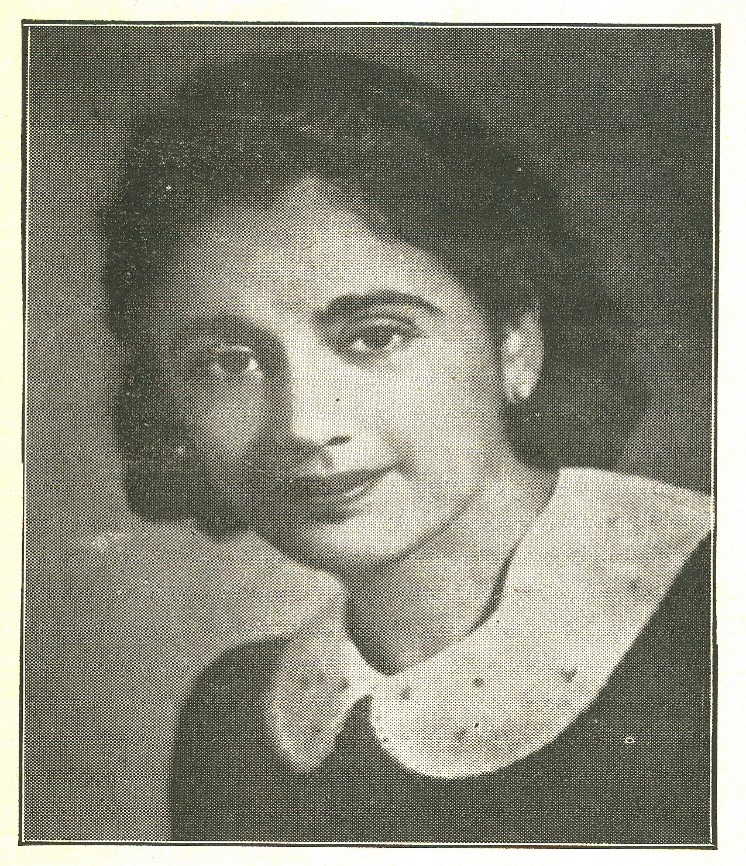
María Isabel Escobar was the first woman graduated as a doctor and surgeon in Guatemala. (Photo Press Libre, La Gaceta No. 26 (1941)/ Courtesy of Ana Patricia Borrayo).
In addition to the graduates of the annexed school of Comadrones (1897-1905), until 1942, only three women had been graduated in higher studies: a pharmacist, a lawyer and a medical and surgeon.
Subscriber content
Then the achievement of Graciela Quan Valenzuela would continue, who became the first female to have obtained her law enforcement and notary at the Faculty of Legal and Social Sciences, In 1943, with the thesis: “Optional citizenship for the Guatemalan woman”, and refers, particularly, to claim female suffrage. He studied social welfare in the United States and was president of the Guatemalan Women’s Union. Recently graduated, he could not exercise his profession. In 1942 it was established that: “… the lawyers of lawyer and notary granted to female people are only academics.”
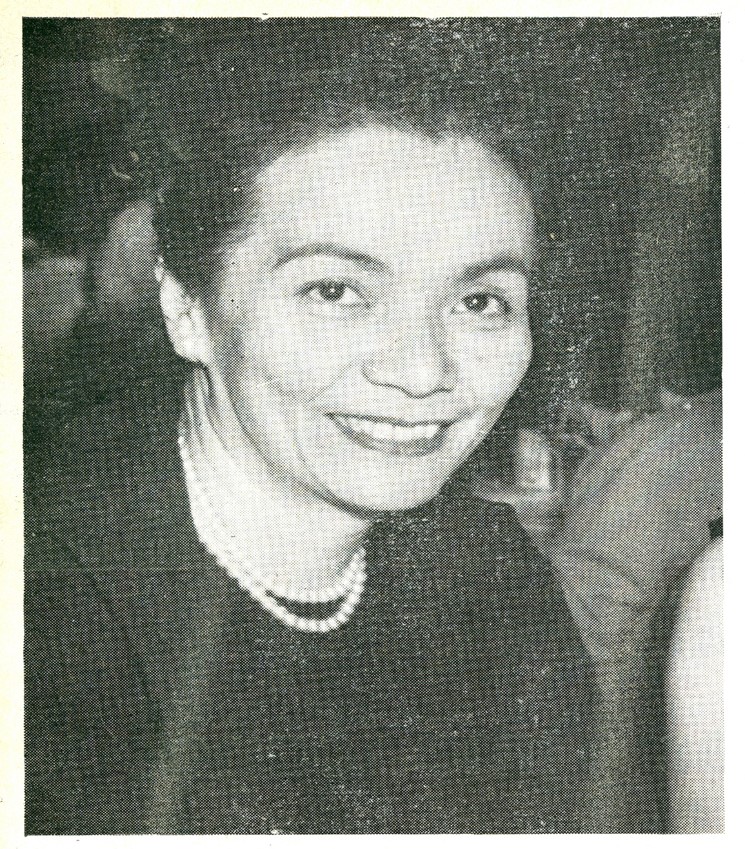
Graciela Quan Valenzuela became the first female to having obtained her lawyer and notary title. (Free Press Photo: Spiral Magazine No. 14 (1961)/ Courtesy of Ana Patricia Borrayo).
The women who concluded their university career at that time, in addition, they had to face obstacles in the labor field, because they were not citizens. Thanks to the revolution of October 20, 1944, partial citizenship was confirmed in 1945 and the right to optional vote. The number of women increased in some faculties and the graduation of a woman in the university was already seen as normal.
The first woman with the right to exercise the profession of lawyer and notary was Eunice Lima, Graduated between 1953 and 1954, at 21, and the first to perform in a judiciary was Ana María Vargas de Ortiz.
Francisca Fernández-Hall was the first woman to title Civil Engineer in Guatemala and Central America, In 1947. In the beginning, he showed interest in studying the right to fight against the “white trafficking”, but since he could not exercise, he opted for the Civil Engineering career. To be able to enroll, the Dean asked the ruler Jorge Ubico.
He studied with dedication and obtained the highest grades averages. She was awarded as the best student in the last year of her career. In addition, he taught algebra, geometry and physics classes in several educational centers. He obtained a scholarship to study a postgraduate degree in construction engineering at the Army Technical School, in Brazil, where she was the first woman to be accepted.
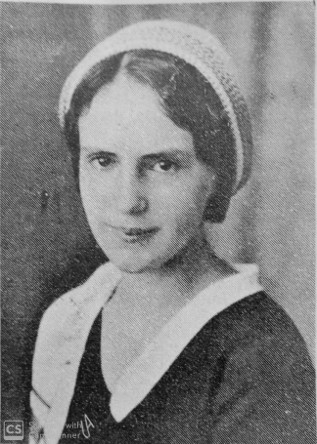
Francisca Fernández-Hall was the first woman to obtain her title as a civil engineer. (Photo Free Press: Magazine Nosotras No. 15 (1933)/ Courtesy of Ana Patricia Borrayo).
Then, he served as a diplomatic and was the first female to be designated as Guatemala ambassador. His career was recognized with multiple tributes, such as the Order of Quetzal.
It also highlights Elena Ruiz Aragón de Barrios-Klée, the first graduate of the Faculty of Humanities, having obtained the academic degree of Bachelor of Pedagogy and Education Sciences, in 1950. He also integrated the first promotion of graduates in that career. Raquel Ibáñez Lara was the first woman to graduate from economist in 1950 Free pressin 1987. For his part, Carmen María Martínez was the first graduated woman of Dentist surgeon in 1953.
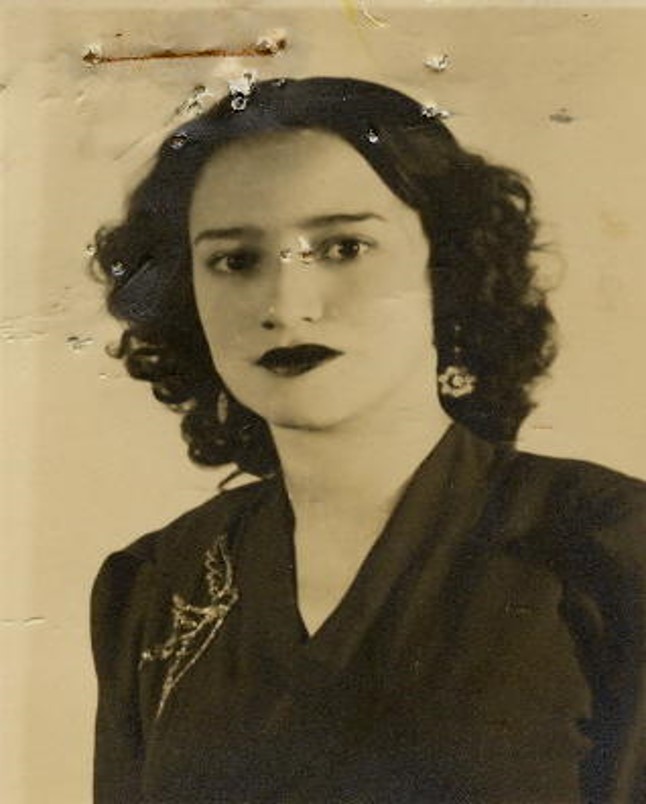
Elena Ruiz Aragón de Barrios-Klée was the first graduate of the Faculty of Humanities. (Photo Press Free, Usac Statistics Section (2006) / Courtesy of Ana Patricia Borrayo).
In 1966, Hilda Baldizón Rodríguez de Lorenzana was the first woman to be titled as veterinary and zootechnical. He founded the Clinical Pathology Laboratory at the USAC. Scholarship, he continued his postgraduate studies in Brazil and the US, and he was a doctorate in Germany.
Subscriber content
María Luisa Martínez stood out for having been the first agronomist in the country, Graduated in 1968, after having challenged the family opposition, since scientific-technological careers were not considered suitable for women. His thesis was awarded as the best of the Faculty of Agronomy of that year. Specialization studies in foreign universities continued.
The name of Amelia Marina Weymann, who was the first woman graduated from the Faculty of Architecture, in 1969, with his thesis “Criminal Rehabilitation Center for Women”.
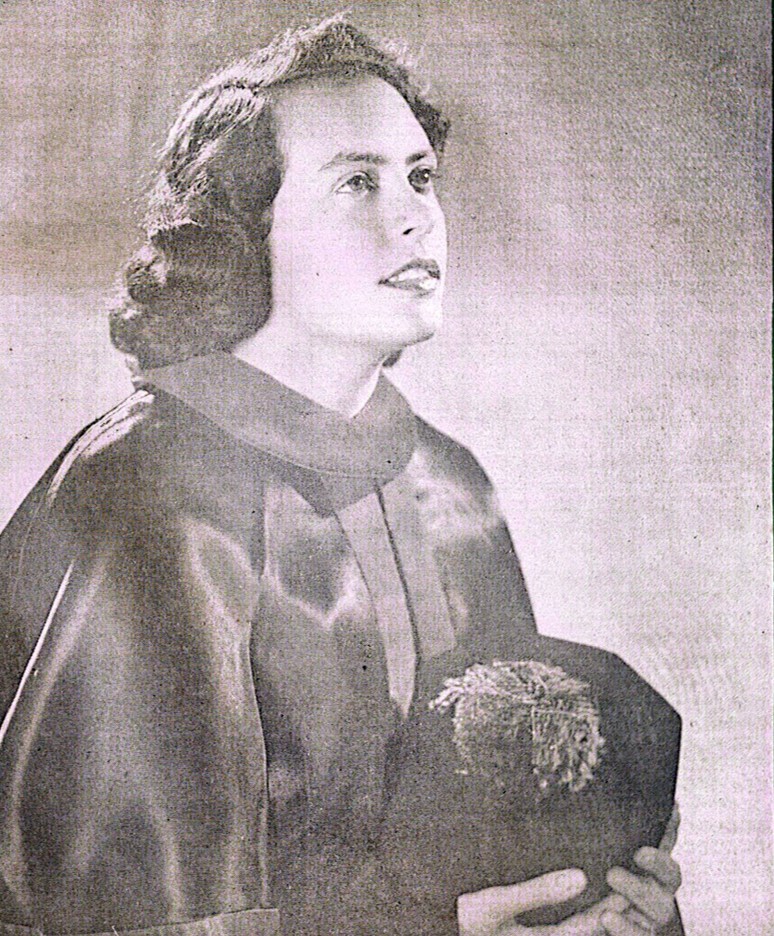
Carmen María Martínez was the first graduated woman of Dentist surgeon in 1953. (Free Press Photo: The Sunday time (1953)/ Courtesy of Ana Patricia Borrayo).
Another pioneer was María Elena Trejo, of Mayan and collegiate origin number 315, who is recognized as the first Guatemalan doctor graduated from a foreign university – in the US. They also titled Doctors Flora Otzoy Cutzal, first woman of Mayan origin, In 1976, and Gregoria Claudina Ellington, first Afro -descendant, in 1985. The first female to be titled as a dentist was Irma Otzoy Colaj, in 1985.
The first graduated psychologist was Carolina Saldaña (1974); the first historian, Ana Beatriz Mendizábal (1975); the first communicator, Amalia Renée Paredes (1976); the first political scientist, Lily Griselda Flores (1980); and the first social worker in the degree of graduate, Sara Gil (1989).
Sources consulted: In the stroke of women. History of precursors in higher education in Usacby Patricia Borrayo (2024), and LAs first Guatemalan women to the National University, 1895, of Mynor Carrera.